
Top Stories
NASA Explores Menstrual Health Solutions for Space Missions

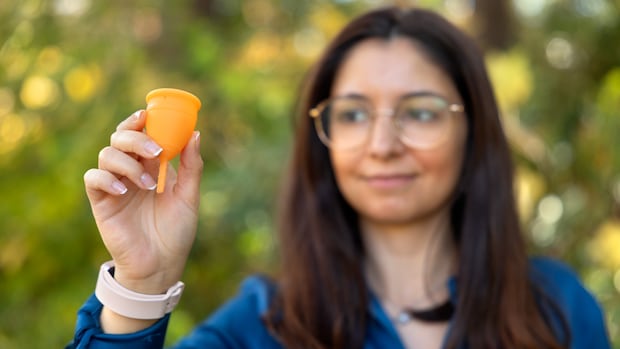
NASA is taking significant steps to address the challenges of menstruation in space, a topic that has historically been overlooked. A recent study published in the journal *NPJ Women’s Health* explores the viability of menstrual cups for astronauts who menstruate, potentially offering a new solution for long-term space missions.
Before Sally Ride became the first American woman in space in 1983 aboard the space shuttle Challenger, she was faced with a question that highlights ongoing challenges: “Would 100 tampons be the right number for her week-long mission?” Her response was a firm “No.” Despite advances, the subject of menstruation remains shrouded in taboo, with many former astronauts declining to discuss the issue with media outlets, including CBC News.
As missions extend beyond low Earth orbit, addressing menstruation is becoming increasingly necessary. Astronauts typically experience their menstrual cycles monthly, lasting an average of four to seven days. Current practices often involve hormonal suppression methods to eliminate periods during missions, but researchers at Cornell University are investigating alternative options.
New Options for Menstrual Management in Space
The study’s co-author, Catarina Miranda, emphasized the need for diverse options beyond menstrual suppression, stating, “We want to give different options to women because right now, astronauts are induced to take menstrual suppression.” The research team tested menstrual cups developed in partnership with Lunette, a company specializing in sustainable period products. The AstroCup mission launched two menstrual cups aboard a suborbital flight, evaluating their performance under conditions that mimic space travel.
The testing involved measuring temperature, acceleration, and humidity, crucial factors for ensuring the cups’ integrity. The results were promising, indicating that the cups remained intact when subjected to conditions similar to those expected in space.
With the Artemis II mission set to launch in early 2026, featuring Canadian astronaut Jeremy Hansen among the crew, the need for innovative solutions is urgent. This mission aims to orbit the Moon, laying the groundwork for future lunar and Mars explorations. As these missions could last several years, finding sustainable options for all astronauts, including those who menstruate, is critical.
Addressing the Needs of All Astronauts
The research sheds light on a previously overlooked issue. Ligia Coelho, another co-author of the study, remarked, “This is just a situation where people didn’t know this could be a problem, because nobody thought about it.” The study’s authors aim to broaden the scope of research to include various menstrual products that could be utilized in space.
Menstrual cups present a lightweight and reusable alternative to traditional pads and tampons, which would require significant space and resources to transport. Additionally, hormonal pills used for menstrual suppression may expire during long missions, further complicating matters. Coelho noted that interest in exploring other menstrual devices is growing, reflecting a shift in how organizations approach women’s health in space.
The research is not limited to menstrual cups. Shawna Pandya, a physician and Canada’s first named commercial female astronaut, has conducted extensive research on women’s health in space. Her work includes studying the feasibility of intrauterine devices (IUDs) for use in microgravity, addressing concerns related to menstrual health management.
As human space exploration evolves, so too must our understanding of the varied needs of astronauts. The implications extend beyond menstruation, as researchers explore broader topics surrounding human health and well-being in space. Pandya commented on the significance of ongoing research: “We are looking at the roadmap and the considerations around human sexuality and reproduction in space flight.”
The next steps for the Cornell researchers involve testing menstrual cups in actual space conditions, assessing their performance against radiation, and developing sterilization methods. The authors are optimistic about the possibilities this research opens for astronauts who menstruate.
In Miranda’s words, “These options are not rocket science. There’s really no excuse not to put them on the table.” As humanity prepares for the next frontier, ensuring that all astronauts have the tools they need for their well-being is essential for the success of future missions.

Meta Plans Major Layoffs as AI Costs Surge

Alberta’s Referendum Could Pave Way for U.S. Statehood

Minooka District 201 Plans Enhanced Bilingual Support for Students

Canmore Approves Multiple Development Permits for New Projects

Remembering Bradly Castillo Shearsmith: A Life of Friendship and Joy

BIS Urges Watchdogs to Integrate Synthetic Risk Transfers in Stress Tests

Teva Transforms: Shifting Focus from Generics to Branded Success

Apple Launches AirPods Max 2 with Enhanced Audio Features

Ontario Ends Funding for Seven Supervised Injection Sites

Toyoake City Proposes Daily Two-Hour Smartphone Use Limit

Pedestrian Fatally Injured in Esquimalt Collision on August 14

B.C. Review Reveals Urgent Need for Rare-Disease Drug Reforms

Dark Adventure Game “Bye Sweet Carole” Set for October Release

Konami Revives Iconic Metal Gear Solid Delta Ahead of Release

Victoria’s Pop-Up Shop Shines Light on B.C.’s Wolf Cull

Jimmy Lai’s Defense Challenges Charges Under National Security Law

Snapmaker U1 Color 3D Printer Redefines Speed and Sustainability

Apple Expands Self-Service Repair Program to Canada
-
 Science11 months ago
Toyoake City Proposes Daily Two-Hour Smartphone Use Limit
-
 Top Stories11 months ago
Pedestrian Fatally Injured in Esquimalt Collision on August 14
-
 Health11 months ago
B.C. Review Reveals Urgent Need for Rare-Disease Drug Reforms
-
 Technology11 months ago
Dark Adventure Game “Bye Sweet Carole” Set for October Release
-
 Technology11 months ago
Konami Revives Iconic Metal Gear Solid Delta Ahead of Release
-
 Lifestyle11 months ago
Victoria’s Pop-Up Shop Shines Light on B.C.’s Wolf Cull
-
 World11 months ago
Jimmy Lai’s Defense Challenges Charges Under National Security Law
-
 Technology11 months ago
Snapmaker U1 Color 3D Printer Redefines Speed and Sustainability
-
 Technology11 months ago
Apple Expands Self-Service Repair Program to Canada
-

 Technology11 months ago
AION Folding Knife: Redefining EDC Design with Premium Materials
-

 Technology11 months ago
Solve Today’s Wordle Challenge: Hints and Answer for August 19
-

 Business11 months ago
Gordon Murray Automotive Unveils S1 LM and Le Mans GTR at Monterey