
Top Stories
Rising Tensions in Iran Impact Germany’s Chemical Industry

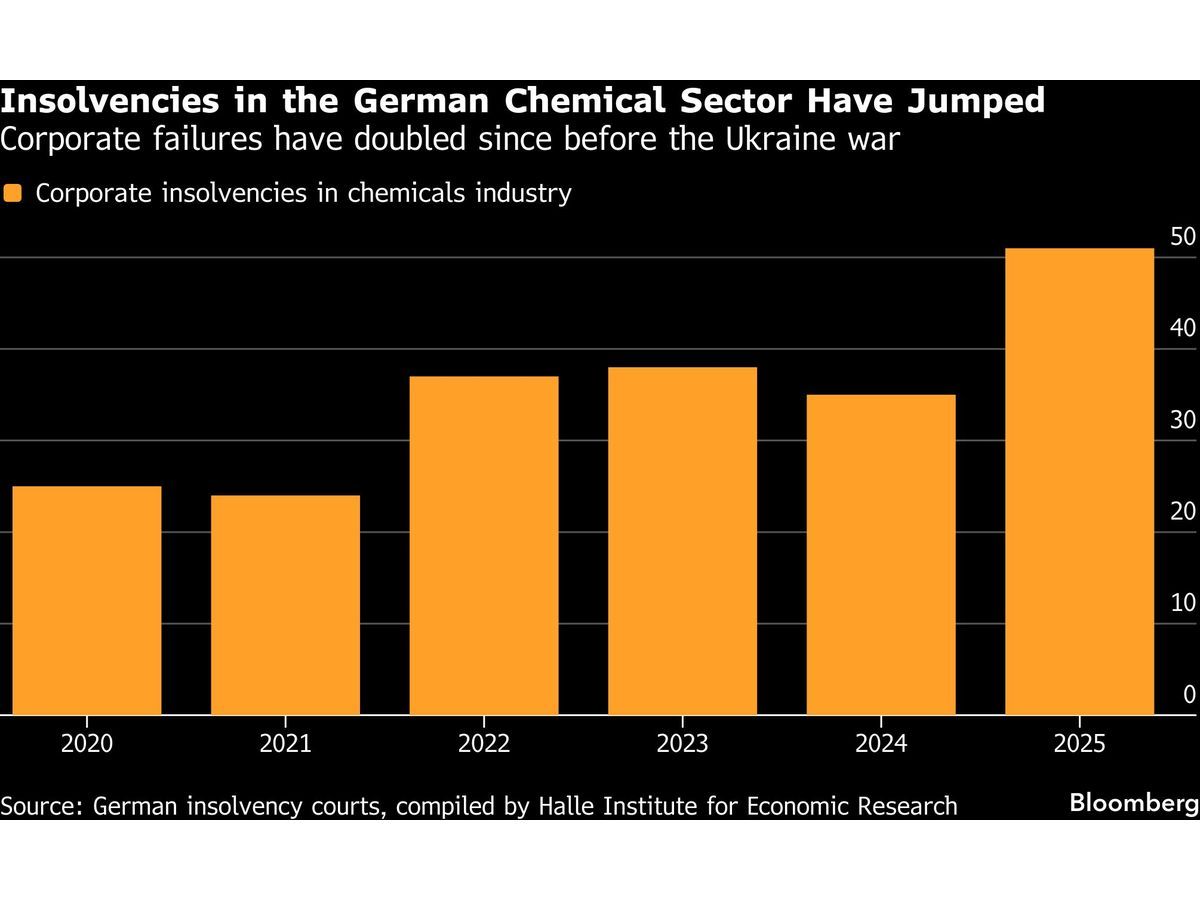
In a significant development for Europe’s industrial landscape, the recent conflict in the Middle East, particularly the assault on Iran, poses a new threat to the already struggling German chemical industry. In the eastern German town of Leuna, Christof Günther, managing director of the local chemical park, faced a crisis when Domo Chemicals unexpectedly filed for insolvency. The company, which produces essential compounds for various industries, was unable to secure funds necessary for operation, risking a potentially disastrous shutdown that could endanger both workers and the surrounding community.
Domo Chemicals, part of a network of chemical plants in the region, has been severely impacted by rising energy costs linked to Russia’s invasion of Ukraine. The effects have been compounded by increasing carbon prices within the European Union and a decline in demand exacerbated by new production capabilities in China. According to estimates from Sebastian Bray, head of chemicals research at Berenberg, the escalation in energy prices may cost Europe’s chemical producers an additional €3 billion ($3.5 billion) annually if the situation continues to deteriorate.
The circumstances surrounding Domo’s insolvency are alarming. The operator of the Leuna chemical complex, InfraLeuna, has seen its monthly gas bill escalate significantly—from approximately €6 million before the war in Ukraine to an estimated €17 million at current prices. Günther emphasizes the critical state of the industry, stating, “In practice, we will see chemical plants being shut down. The chemical industry and energy-intensive industries in Germany are in a state of acute emergency.”
As the situation unfolded, Günther and local officials engaged in urgent discussions to avert a catastrophic closure, ultimately securing emergency financing from the German state of Saxony-Anhalt. This intervention, reminiscent of past communist-era strategies, has temporarily allowed Domo to maintain operations at a minimal safe level. However, the future remains uncertain, with a representative from the preliminary insolvency administration noting that discussions with potential investors are ongoing.
The fallout from the conflict in the Middle East has prompted the European Union to establish an energy task force to prepare for potential disruptions in oil and gas supplies. Veronika Grimm, a member of Germany’s Council of Economic Experts, has highlighted the precarious nature of the economy, which is still recovering from previous energy price surges. The chemical sector, crucial to Europe’s industrial framework, is already facing a notable decline, with a report from consultancy Roland Berger indicating that plant closures have increased sixfold since 2022 and investments in the sector have plummeted by over 80%.
Germany, as Europe’s manufacturing powerhouse, is particularly vulnerable. The chemical industry plays a vital role in sustaining various sectors, and without its stability, the broader economic landscape is at risk. Lawyer Joachim Ponseck from Baker McKenzie expressed concern, stating, “The threat to the chemicals industry is more dangerous for Germany than the crisis in the automotive sector.”
Leuna’s chemical park is an essential part of this narrative. Established after World War II and designed to anchor the region’s industrial resurgence, the site has been linked directly to Russian oil fields via the Druzhba pipeline, providing vital energy resources. This connection, once deemed an advantage, has now become a liability, as geopolitical tensions disrupt supply chains. The difficulties in securing investors for Domo’s operations reflect a larger trend of declining fortunes within the industry.
Looking ahead, Gitta Connemann, a state secretary in the German Ministry for Economy and Energy, emphasized the necessity of maintaining a robust chemical industry for economic resilience. The interconnected nature of chemical parks means that the failure of one plant can impose significant costs on others, further straining the network.
In addition to Domo’s challenges, other operations in the region are also under pressure. Dow Chemical Co. plans to close its ethylene cracker in Böhlen, while ammonia producer SKW Piesteritz has temporarily ceased operations due to soaring gas prices. BASF SE, Europe’s largest chemical company, has reduced its workforce by around 4,800 positions in recent years.
Despite the grim outlook, there are glimmers of hope. New companies, such as MicroHarvest GmbH, are making moves to establish operations in Leuna, focused on producing sustainable food protein through fermentation. Additionally, significant investments, totaling €1.2 billion, have been earmarked for developing a research institute aimed at enhancing sustainability in the chemical sector.
For residents of Leuna, the uncertainty surrounding the chemical industry evokes deep concerns. Many, like Manuela Grieger, who has spent over four decades in the local plants, recognize the essential role that chemical production has played in the community. “In principle, I believe that when something is destroyed, something new can emerge. But at the moment, I’m missing the light at the end of the tunnel,” Grieger remarked, reflecting the sentiment of many who have witnessed the town’s evolution through various economic challenges.
As the situation unfolds, the future of Leuna’s chemical park and the broader German chemical industry hangs in the balance, underscoring the interconnected nature of global markets and the profound impacts of geopolitical events.

Meta Plans Major Layoffs as AI Costs Surge

Alberta’s Referendum Could Pave Way for U.S. Statehood

Minooka District 201 Plans Enhanced Bilingual Support for Students

Canmore Approves Multiple Development Permits for New Projects

Remembering Bradly Castillo Shearsmith: A Life of Friendship and Joy

BIS Urges Watchdogs to Integrate Synthetic Risk Transfers in Stress Tests

Teva Transforms: Shifting Focus from Generics to Branded Success

Apple Launches AirPods Max 2 with Enhanced Audio Features

Ontario Ends Funding for Seven Supervised Injection Sites

Toyoake City Proposes Daily Two-Hour Smartphone Use Limit

Pedestrian Fatally Injured in Esquimalt Collision on August 14

B.C. Review Reveals Urgent Need for Rare-Disease Drug Reforms

Dark Adventure Game “Bye Sweet Carole” Set for October Release

Konami Revives Iconic Metal Gear Solid Delta Ahead of Release

Victoria’s Pop-Up Shop Shines Light on B.C.’s Wolf Cull

Jimmy Lai’s Defense Challenges Charges Under National Security Law

Snapmaker U1 Color 3D Printer Redefines Speed and Sustainability

Apple Expands Self-Service Repair Program to Canada
-
 Science12 months ago
Toyoake City Proposes Daily Two-Hour Smartphone Use Limit
-
 Top Stories12 months ago
Pedestrian Fatally Injured in Esquimalt Collision on August 14
-
 Health12 months ago
B.C. Review Reveals Urgent Need for Rare-Disease Drug Reforms
-
 Technology11 months ago
Dark Adventure Game “Bye Sweet Carole” Set for October Release
-
 Technology12 months ago
Konami Revives Iconic Metal Gear Solid Delta Ahead of Release
-
 Lifestyle12 months ago
Victoria’s Pop-Up Shop Shines Light on B.C.’s Wolf Cull
-
 World12 months ago
Jimmy Lai’s Defense Challenges Charges Under National Security Law
-
 Technology12 months ago
Snapmaker U1 Color 3D Printer Redefines Speed and Sustainability
-
 Technology12 months ago
Apple Expands Self-Service Repair Program to Canada
-

 Technology12 months ago
AION Folding Knife: Redefining EDC Design with Premium Materials
-

 Technology12 months ago
Solve Today’s Wordle Challenge: Hints and Answer for August 19
-

 Business12 months ago
Gordon Murray Automotive Unveils S1 LM and Le Mans GTR at Monterey