
Top Stories
Soy Oil Reaches Two-Year High Following US-Israeli Strikes on Iran

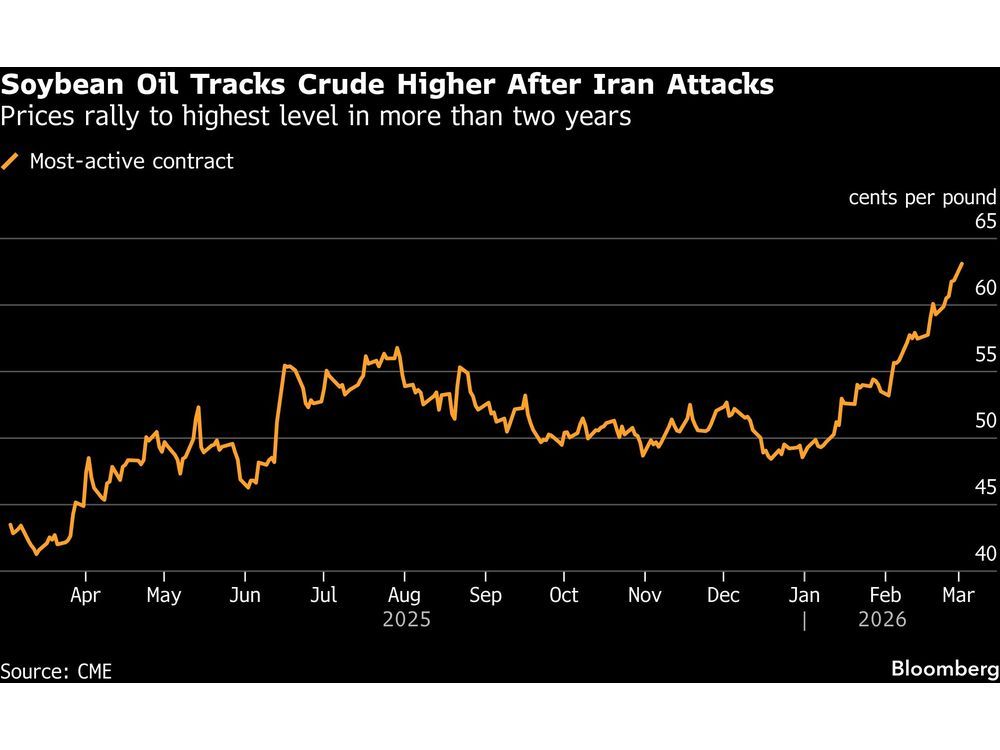
Soybean oil prices surged to their highest levels in over two years, influenced by rising crude oil prices following recent airstrikes by the United States and Israel on Iran. On Monday, futures in Chicago surged by as much as 3.9% before settling slightly lower, marking a potential sixth consecutive session of gains. Concurrently, benchmark palm oil prices in Kuala Lumpur rose by 1.6%.
The increase in energy prices significantly affects the demand for biodiesel, thereby elevating interest in vegetable oils. Joe Davis, director at brokerage Futures International LLC, noted, “It will be like a magnet with crude oil this week following the attacks in Iran,” highlighting the correlation between crude oil movements and soy oil pricing.
Crude oil prices experienced a spike, reflecting the unrest stemming from the US-Israeli military actions, which have raised concerns about potential disruptions in the vital shipping lane of the Strait of Hormuz. This strait is crucial for oil transportation, with approximately 20% of global oil supplies traveling through this route.
While the Middle Eastern market traditionally consumes less palm oil compared to regions like India, China, and the European Union, the implications of the conflict could nonetheless affect supply chains. Nirgunan Tiruchelvam, an analyst at Aletheia Capital, stated that while the conflict may not directly lead to shipment cancellations, alternative routes would incur longer transit times.
Mayur Toshniwal, president of Emami Agrotech Ltd., emphasized the potential for increased costs, stating, “Vessels going to the Middle East are avoiding those routes or asking for expensive freight, which can increase vegetable oil prices for nations of the Gulf Cooperation Council.” The GCC, along with Afghanistan and Pakistan, imports about 5 million tons of vegetable oils annually. According to Toshniwal, the ongoing conflict is likely to keep prices elevated and affect trade volumes for at least one to two months.
In a separate development, China announced plans to impose a 5.9% anti-dumping duty on rapeseed imports from Canada beginning March 1, a significant reduction compared to preliminary levels established last year. This decision follows China’s previous announcement to remove tariffs on Canadian rapeseed meal after a visit from Prime Minister Mark Carney in January.
As the situation unfolds, market watchers will be closely monitoring both the oil and vegetable oil sectors for further developments and potential impacts on global trade.

Meta Plans Major Layoffs as AI Costs Surge

Alberta’s Referendum Could Pave Way for U.S. Statehood

Minooka District 201 Plans Enhanced Bilingual Support for Students

Canmore Approves Multiple Development Permits for New Projects

Remembering Bradly Castillo Shearsmith: A Life of Friendship and Joy

BIS Urges Watchdogs to Integrate Synthetic Risk Transfers in Stress Tests

Teva Transforms: Shifting Focus from Generics to Branded Success

Apple Launches AirPods Max 2 with Enhanced Audio Features

Ontario Ends Funding for Seven Supervised Injection Sites

Toyoake City Proposes Daily Two-Hour Smartphone Use Limit

Pedestrian Fatally Injured in Esquimalt Collision on August 14

B.C. Review Reveals Urgent Need for Rare-Disease Drug Reforms

Dark Adventure Game “Bye Sweet Carole” Set for October Release

Konami Revives Iconic Metal Gear Solid Delta Ahead of Release

Victoria’s Pop-Up Shop Shines Light on B.C.’s Wolf Cull

Jimmy Lai’s Defense Challenges Charges Under National Security Law

Snapmaker U1 Color 3D Printer Redefines Speed and Sustainability

Apple Expands Self-Service Repair Program to Canada
-
 Science12 months ago
Toyoake City Proposes Daily Two-Hour Smartphone Use Limit
-
 Top Stories12 months ago
Pedestrian Fatally Injured in Esquimalt Collision on August 14
-
 Health12 months ago
B.C. Review Reveals Urgent Need for Rare-Disease Drug Reforms
-
 Technology12 months ago
Dark Adventure Game “Bye Sweet Carole” Set for October Release
-
 Technology12 months ago
Konami Revives Iconic Metal Gear Solid Delta Ahead of Release
-
 Lifestyle12 months ago
Victoria’s Pop-Up Shop Shines Light on B.C.’s Wolf Cull
-
 World12 months ago
Jimmy Lai’s Defense Challenges Charges Under National Security Law
-
 Technology12 months ago
Snapmaker U1 Color 3D Printer Redefines Speed and Sustainability
-
 Technology12 months ago
Apple Expands Self-Service Repair Program to Canada
-

 Technology12 months ago
AION Folding Knife: Redefining EDC Design with Premium Materials
-

 Technology12 months ago
Solve Today’s Wordle Challenge: Hints and Answer for August 19
-

 Business12 months ago
Gordon Murray Automotive Unveils S1 LM and Le Mans GTR at Monterey