
Top Stories
TransLink Retires Iconic Mark I SkyTrain Cars as New Era Begins

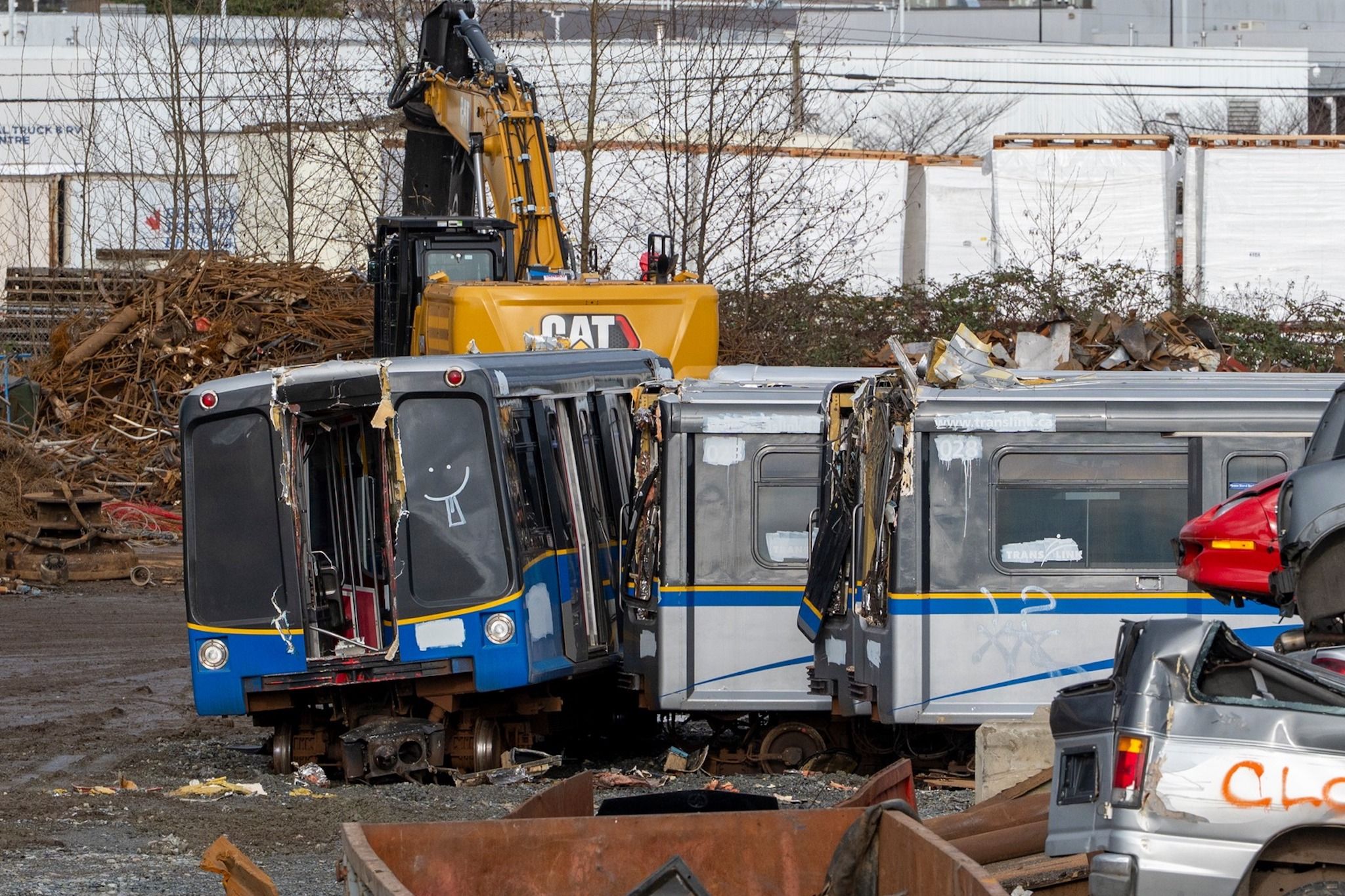
The retirement of the iconic Mark I SkyTrain cars has officially commenced as TransLink, the public transit authority for Metro Vancouver, advances its plans to phase out these historic trains. These original SkyTrain cars, which have been a staple of the region’s transit system since the 1980s, are now being dismantled and sent to scrapyards, marking the end of an era.
The decision to retire the Mark I fleet began in the second half of 2025, coinciding with the introduction of the next-generation Mark V trains designed to replace the aging equipment on the Expo and Millennium lines. The Mark I cars, recognizable for their boxy aluminum frames, have served generations of passengers. However, as they have reached the end of their operational lifespan, it is necessary to clear space in the limited storage facilities for the new Mark V trains, which are longer and designed for higher capacity.
TransLink has initiated a process to repurpose some of these iconic cars, seeking proposals from municipalities, businesses, and organizations to transform the retired units into creative community uses. As of early 2025, the authority had received 11 proposals in this ongoing initiative. Recently, one of the first successful repurposing projects was revealed, with Lumostage Virtual Production converting a Mark I car into Canada’s first standing subway train set for film and television. This project is based in Langley Township.
Another notable proposal came from The Narrow Group, in collaboration with Apartment Sage, which aims to convert some Mark I cars into mobile artist studios, although this initiative has not yet materialized. As the retirement process continues, TransLink plans to announce additional projects, highlighting the historical significance of the Mark I cars.
In total, there are 150 cars in the Mark I fleet, all slated for retirement as the Mark V trains are gradually introduced over the next few years. Currently, TransLink receives about one five-car Mark V train each month, with five Mark V trains (comprising 25 cars) already in service as of early November 2025. The first Mark V train entered service in July 2025, and by 2029, TransLink expects to have a total of 235 Mark V cars forming 47 five-car trains. These new trains will not only replace the aging Mark I fleet but also enhance overall capacity on the Expo and Millennium lines, supporting the upcoming Broadway and Surrey-Langley extensions.
If all 150 Mark I cars were lined up end to end, they would stretch approximately two kilometers, roughly the same distance as Robson Street between Denman Street and Beatty Street next to BC Place Stadium. Given the scale of this fleet, only a limited number of Mark I cars are expected to be preserved for new uses once the retirement process concludes, with the last cars anticipated to be retired by 2027.
The sight of Mark I cars being dismantled has already evoked nostalgia among transit enthusiasts. Images shared by local transit advocate Chris Cassidy depict several cars being reduced to scrap metal at a recycling yard in Surrey. While many view the Mark I trains as iconic symbols of SkyTrain, others welcome their retirement due to issues such as cramped interiors, noisy rides, and inadequate ventilation, including the absence of air conditioning.
Some of the scrapped cars bore TransLink’s modern livery, indicating they had received upgrades in the mid-2010s to extend their service life, unlike the non-refurbished units that sported the older BC Transit-era paint scheme. The Mark II cars, which were introduced in the 2000s, are also nearing retirement, with plans for their replacement already in motion. Reports indicate that TransLink will likely exercise options in 2026 with train manufacturer Alstom to produce additional Mark V trains to retire the entire Mark II fleet.
The anticipated cost for ordering new Mark V cars to replace the early 2000s Mark II fleet is estimated at around $433 million. Repurposing retired trains for community use is a practice seen in various cities worldwide. For instance, retired subway cars in Hong Kong and Montreal have been transformed into community landmarks, while in New York City, old subway cars have been intentionally sunk to create artificial reefs, benefiting marine ecosystems.
As Metro Vancouver transitions to a new era of public transit with the introduction of modern trains, the legacy of the Mark I SkyTrain cars will remain an integral part of the region’s history. The ongoing efforts to repurpose some of these cars reflect a commitment to preserving their heritage while adapting to contemporary transit needs.

Meta Plans Major Layoffs as AI Costs Surge

Alberta’s Referendum Could Pave Way for U.S. Statehood

Minooka District 201 Plans Enhanced Bilingual Support for Students

Canmore Approves Multiple Development Permits for New Projects

Remembering Bradly Castillo Shearsmith: A Life of Friendship and Joy

BIS Urges Watchdogs to Integrate Synthetic Risk Transfers in Stress Tests

Teva Transforms: Shifting Focus from Generics to Branded Success

Apple Launches AirPods Max 2 with Enhanced Audio Features

Ontario Ends Funding for Seven Supervised Injection Sites

Toyoake City Proposes Daily Two-Hour Smartphone Use Limit

Pedestrian Fatally Injured in Esquimalt Collision on August 14

B.C. Review Reveals Urgent Need for Rare-Disease Drug Reforms

Dark Adventure Game “Bye Sweet Carole” Set for October Release

Konami Revives Iconic Metal Gear Solid Delta Ahead of Release

Victoria’s Pop-Up Shop Shines Light on B.C.’s Wolf Cull

Jimmy Lai’s Defense Challenges Charges Under National Security Law

Snapmaker U1 Color 3D Printer Redefines Speed and Sustainability

Apple Expands Self-Service Repair Program to Canada
-
 Science12 months ago
Toyoake City Proposes Daily Two-Hour Smartphone Use Limit
-
 Top Stories12 months ago
Pedestrian Fatally Injured in Esquimalt Collision on August 14
-
 Health12 months ago
B.C. Review Reveals Urgent Need for Rare-Disease Drug Reforms
-
 Technology12 months ago
Dark Adventure Game “Bye Sweet Carole” Set for October Release
-
 Technology12 months ago
Konami Revives Iconic Metal Gear Solid Delta Ahead of Release
-
 Lifestyle12 months ago
Victoria’s Pop-Up Shop Shines Light on B.C.’s Wolf Cull
-
 World12 months ago
Jimmy Lai’s Defense Challenges Charges Under National Security Law
-
 Technology12 months ago
Snapmaker U1 Color 3D Printer Redefines Speed and Sustainability
-
 Technology12 months ago
Apple Expands Self-Service Repair Program to Canada
-

 Technology12 months ago
AION Folding Knife: Redefining EDC Design with Premium Materials
-

 Technology12 months ago
Solve Today’s Wordle Challenge: Hints and Answer for August 19
-

 Business12 months ago
Gordon Murray Automotive Unveils S1 LM and Le Mans GTR at Monterey