
World
Canada’s Mark Carney Engages China Amid Trump’s Shadow

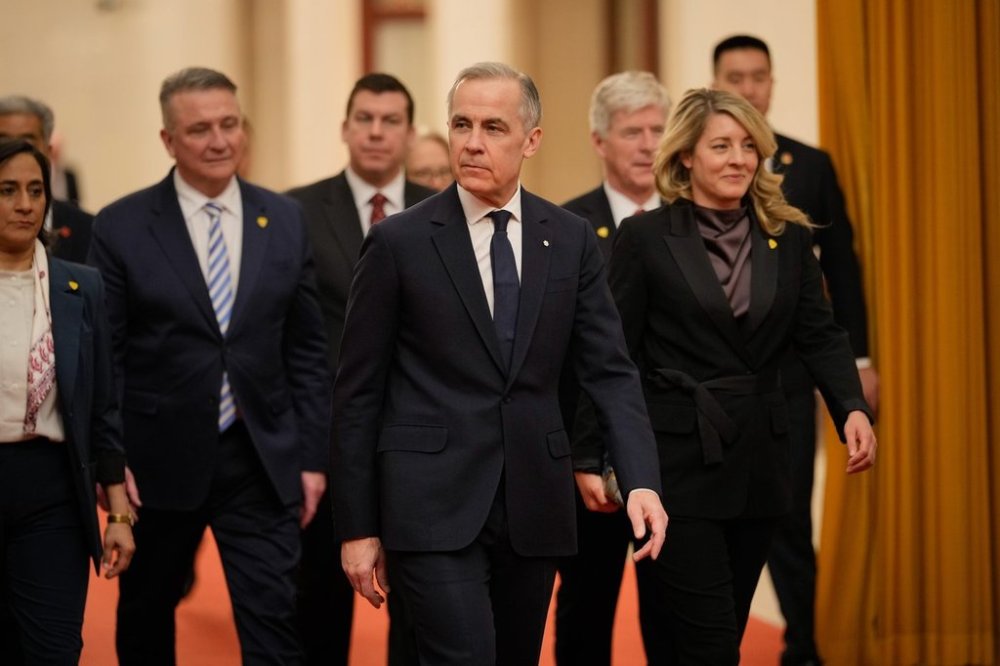
Canadian Prime Minister Mark Carney concluded a significant meeting with Chinese President Xi Jinping this week, marking a potential turning point in bilateral relations that have been strained for nearly a decade. Their discussions focused on revitalizing trade ties, while the influence of former U.S. President Donald Trump loomed over the talks, shaping the context within which Canada and China are attempting to rebuild their partnership.
The backdrop of these meetings reflects a complex international landscape where both nations are navigating the uncertainties of their relationship with the United States. With Canada being heavily reliant on its southern neighbor as a trading partner, the need for strategic autonomy has become increasingly evident. This term, popular in Chinese media, underscores the necessity for Canada to diversify its international alliances amid evolving geopolitical dynamics.
In his remarks following the meetings, Carney acknowledged the cultural and political differences between Canada and China, particularly concerning human rights issues. He emphasized the importance of re-establishing economic connections while recognizing these limitations. “The security landscape continues to change,” Carney stated, underlining the need for alliances to manage emerging global threats.
Concrete outcomes emerged from the discussions. Carney announced that Canada would eliminate its 100% tariff on Chinese electric vehicles in exchange for reduced tariffs on Canadian agricultural products. China will lower its tariff on canola seeds from 84% to approximately 15%, a significant move for Canadian exporters. The initial agreement limits Chinese electric vehicle exports to Canada to 49,000 units at a tariff rate of 6.1%, with plans to gradually increase this cap over the next five years.
While the specifics of the agreements were less detailed from the Chinese side, the mutual benefits were clear. Analysts noted that the discussions could serve as a strategic advantage for Canada, especially given its recent challenges with U.S. trade policies under Trump. The former president’s rhetoric and actions have often complicated Canada’s international relationships, leading to a growing sense of urgency for Carney to forge stronger ties with China.
“China is succeeding in driving a small wedge between Canada and the U.S.,”
observed Nelson Wiseman, a political science professor at the University of Toronto. This sentiment reflects a broader understanding that Canada’s engagement with China could alter its position on the global stage.
As part of its expanding influence, China has actively sought to position itself as a counterbalance to U.S. leadership, particularly in light of the challenges posed by what it perceives as American hegemony. The Chinese government’s official media highlighted the importance of Canada in this context, referring to the need for collaboration amid “economic fragmentation, geopolitical tensions, and resurgent protectionism.”
The diplomatic dance between the two nations is delicate. Carney emphasized the multifaceted nature of Canada’s relationship with the United States during a news conference in Beijing. Yet, he also noted that the recent developments with China have led to a “more predictable” dynamic, although it remains unclear whether he was comparing this predictability to China or the United States.
Analysts are cautious about the long-term implications of Carney’s visit. The unpredictability of U.S. policies, especially under Trump’s influence, means that Canada’s path forward could shift dramatically. Robert Bothwell, a professor of Canadian history and international relations, pointed out the contrasting goals between Trump and China regarding Canada’s future.
Trump acknowledged Carney’s engagement with China, stating, “If you can get a deal with China, you should do that.” This statement, while supportive, underscores the ongoing complexities of Canada’s geopolitical situation, where the interests of two major powers are at play.
As Carney returns to Canada, the immediate benefits of his visit to China are evident, but the longer-term impact remains uncertain. The evolving relationship between Canada and China may provide both nations with new opportunities, but it is also deeply intertwined with the unpredictable nature of U.S. foreign policy. Amid this global uncertainty, China appears to have gained a more substantial ally in North America, a development that could reshape future diplomatic interactions.

Meta Plans Major Layoffs as AI Costs Surge

Alberta’s Referendum Could Pave Way for U.S. Statehood

Minooka District 201 Plans Enhanced Bilingual Support for Students

Canmore Approves Multiple Development Permits for New Projects

Remembering Bradly Castillo Shearsmith: A Life of Friendship and Joy

BIS Urges Watchdogs to Integrate Synthetic Risk Transfers in Stress Tests

Teva Transforms: Shifting Focus from Generics to Branded Success

Apple Launches AirPods Max 2 with Enhanced Audio Features

Ontario Ends Funding for Seven Supervised Injection Sites

Toyoake City Proposes Daily Two-Hour Smartphone Use Limit

Pedestrian Fatally Injured in Esquimalt Collision on August 14

B.C. Review Reveals Urgent Need for Rare-Disease Drug Reforms

Dark Adventure Game “Bye Sweet Carole” Set for October Release

Konami Revives Iconic Metal Gear Solid Delta Ahead of Release

Victoria’s Pop-Up Shop Shines Light on B.C.’s Wolf Cull

Jimmy Lai’s Defense Challenges Charges Under National Security Law

Snapmaker U1 Color 3D Printer Redefines Speed and Sustainability

Apple Expands Self-Service Repair Program to Canada
-
 Science12 months ago
Toyoake City Proposes Daily Two-Hour Smartphone Use Limit
-
 Top Stories12 months ago
Pedestrian Fatally Injured in Esquimalt Collision on August 14
-
 Health12 months ago
B.C. Review Reveals Urgent Need for Rare-Disease Drug Reforms
-
 Technology12 months ago
Dark Adventure Game “Bye Sweet Carole” Set for October Release
-
 Technology12 months ago
Konami Revives Iconic Metal Gear Solid Delta Ahead of Release
-
 Lifestyle12 months ago
Victoria’s Pop-Up Shop Shines Light on B.C.’s Wolf Cull
-
 World12 months ago
Jimmy Lai’s Defense Challenges Charges Under National Security Law
-
 Technology12 months ago
Snapmaker U1 Color 3D Printer Redefines Speed and Sustainability
-
 Technology12 months ago
Apple Expands Self-Service Repair Program to Canada
-

 Technology12 months ago
AION Folding Knife: Redefining EDC Design with Premium Materials
-

 Technology12 months ago
Solve Today’s Wordle Challenge: Hints and Answer for August 19
-

 Business12 months ago
Gordon Murray Automotive Unveils S1 LM and Le Mans GTR at Monterey