
World
China Urges US to Resolve Trade Tensions Amid Geopolitical Strains

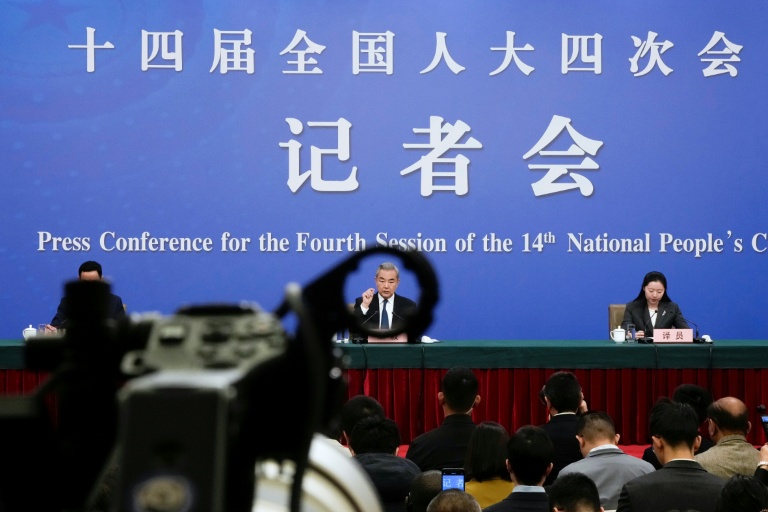
Chinese Foreign Minister Wang Yi called on the United States to address its differences with Beijing during a press conference on March 3, 2024. The appeal comes as tensions escalate between the two largest economies over trade tariffs and significant geopolitical issues. Relations have soured since Donald Trump resumed his presidency, leading to a trade war marked by reciprocal tariffs on each other’s goods.
Wang emphasized that the ongoing trade conflict has disrupted the global economy. He criticized the United States for erecting tariff barriers and attempting to decouple supply chains, stating, “These actions are akin to trying to extinguish a fire with fuel. Ultimately, they will backfire.” His remarks were made during China’s annual political gathering, known as the “Two Sessions,” which commenced this week. This event is closely monitored for insights into the priorities of China’s leadership amidst a challenging geopolitical landscape.
Key Issues in Sino-US Relations
Wang addressed various pressing matters, including the relationship between China and the United States, regional tensions in the South China Sea, and the ongoing conflicts in the Middle East and Ukraine. He characterized 2024 as a pivotal year for Sino-US relations, suggesting that while the two countries cannot fundamentally change one another, they can improve their interactions. He urged both nations to manage existing differences and minimize unnecessary interference.
Despite Wang’s call for cooperation, significant disagreements persist. Beijing has condemned recent US and Israeli military actions against Iran, which have contributed to escalating conflicts in the Middle East. China maintains diplomatic and trade relations with Tehran and has denounced the killing of Iran’s supreme leader, Ayatollah Ali Khamenei. Wang stated that the war “should never have happened,” asserting, “A strong fist does not mean strong reason. The world cannot return to the law of the jungle.”
China’s Position on Global Conflicts
On the topic of the Ukraine war, Wang reaffirmed China’s steadfast relationship with Moscow, despite criticism from Western nations that accuse Beijing of enabling the conflict through trade and diplomatic support. He reiterated China’s desire to be seen as a neutral player in the ongoing crisis.
In contrast, relations between China and the European Union have shown signs of improvement. Leaders from countries such as France, Canada, and the United Kingdom have visited Beijing, indicating a shift away from Trump’s aggressive foreign policy stance. Wang welcomed these diplomatic overtures, noting that more European leaders are recognizing China as a global partner rather than a competitor. He highlighted that there has been a “steady improvement” in EU-China relations over the past year.
To bolster these ties, China announced visa-free travel agreements with approximately 50 countries and reduced tariffs on exports from Canada and the UK.
Taiwan: A Persistent Flashpoint
The issue of Taiwan remains a particularly sensitive topic, with Wang reiterating that Beijing will not tolerate any attempts to separate the self-governed island from China. He referred to Taiwan as a “red line” that could exacerbate tensions with the United States. The Chinese government views Taiwan as part of its territory and has not ruled out the use of force to achieve reunification.
Former President Trump has suggested increasing military support for Taiwan, raising concerns in Beijing. Wang’s comments come ahead of a scheduled meeting between Trump and Chinese President Xi Jinping in Beijing in April. The Taiwan issue has also strained relations between China and Japan, particularly after Japanese Prime Minister Sanae Takaichi hinted at potential military intervention should Taiwan face aggression.
In light of these complex dynamics, the international community continues to watch closely as China navigates its relationships with both the United States and other global powers.

Meta Plans Major Layoffs as AI Costs Surge

Alberta’s Referendum Could Pave Way for U.S. Statehood

Minooka District 201 Plans Enhanced Bilingual Support for Students

Canmore Approves Multiple Development Permits for New Projects

Remembering Bradly Castillo Shearsmith: A Life of Friendship and Joy

BIS Urges Watchdogs to Integrate Synthetic Risk Transfers in Stress Tests

Teva Transforms: Shifting Focus from Generics to Branded Success

Apple Launches AirPods Max 2 with Enhanced Audio Features

Ontario Ends Funding for Seven Supervised Injection Sites

Toyoake City Proposes Daily Two-Hour Smartphone Use Limit

Pedestrian Fatally Injured in Esquimalt Collision on August 14

B.C. Review Reveals Urgent Need for Rare-Disease Drug Reforms

Dark Adventure Game “Bye Sweet Carole” Set for October Release

Konami Revives Iconic Metal Gear Solid Delta Ahead of Release

Victoria’s Pop-Up Shop Shines Light on B.C.’s Wolf Cull

Jimmy Lai’s Defense Challenges Charges Under National Security Law

Snapmaker U1 Color 3D Printer Redefines Speed and Sustainability

Apple Expands Self-Service Repair Program to Canada
-
 Science12 months ago
Toyoake City Proposes Daily Two-Hour Smartphone Use Limit
-
 Top Stories1 year ago
Pedestrian Fatally Injured in Esquimalt Collision on August 14
-
 Health1 year ago
B.C. Review Reveals Urgent Need for Rare-Disease Drug Reforms
-
 Technology12 months ago
Dark Adventure Game “Bye Sweet Carole” Set for October Release
-
 Technology1 year ago
Konami Revives Iconic Metal Gear Solid Delta Ahead of Release
-
 Lifestyle1 year ago
Victoria’s Pop-Up Shop Shines Light on B.C.’s Wolf Cull
-
 World12 months ago
Jimmy Lai’s Defense Challenges Charges Under National Security Law
-
 Technology1 year ago
Snapmaker U1 Color 3D Printer Redefines Speed and Sustainability
-
 Technology1 year ago
Apple Expands Self-Service Repair Program to Canada
-

 Technology12 months ago
AION Folding Knife: Redefining EDC Design with Premium Materials
-

 Technology1 year ago
Solve Today’s Wordle Challenge: Hints and Answer for August 19
-

 Business1 year ago
Gordon Murray Automotive Unveils S1 LM and Le Mans GTR at Monterey