
World
Colombia Faces Deadliest Election Campaign in Decades as Violence Escalates

Colombia’s upcoming elections have plunged into turmoil as violence escalates, marking the deadliest campaign in decades. With a presidential candidate assassinated and rebel attacks on major cities, the situation has become increasingly perilous for those seeking political office. The country’s 2026 election campaign is particularly hostile, with approximately one-third of Colombia deemed unsafe for candidates, according to the Electoral Observation Mission.
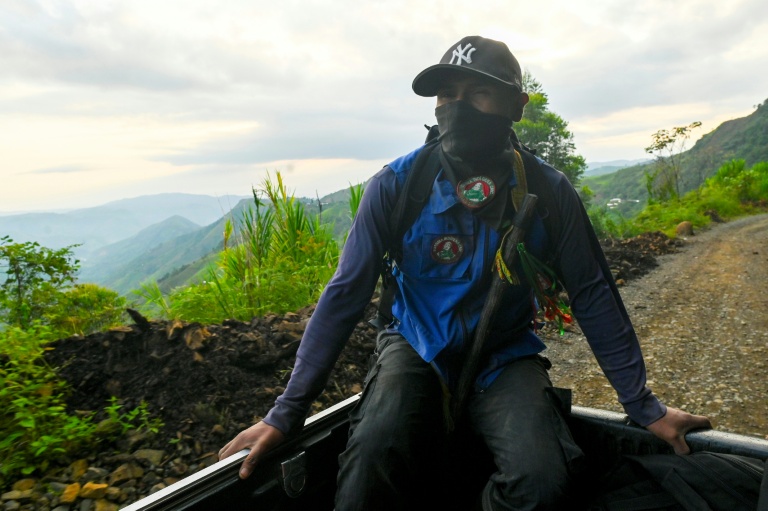
The danger is most evident in the Cauca region, where candidates like Esneyder Gomez navigate treacherous territory. Gomez, a 46-year-old Indigenous candidate running for a seat in Colombia’s Congress on March 8, 2026, faces threats from guerrilla groups as he seeks votes in areas known for their lawlessness. Recently, his vehicle was shot at during a political event, underscoring the risks he faces on a daily basis.
Just days before, Indigenous legislator Aida Quilcue was kidnapped in the same region but was eventually released following intense negotiations. As Gomez travels through remote villages to garner support, he is accompanied by a group of around 30 Indigenous Guards who provide protection, albeit with limited resources. This band of young volunteers, armed only with batons, reflects the dire security situation in the area.
Gomez expresses frustration over the deteriorating security climate, highlighting that the peace established after the 2016 agreement with the Revolutionary Armed Forces of Colombia (FARC) has failed to materialize. He states, “Post-conflict is turning out harsher than the conflict itself,” noting that violence has surged in recent years.
The violence has claimed the lives of at least 61 political leaders since the beginning of the campaign season. This alarming trend was starkly illustrated in June 2023 when presidential frontrunner Miguel Uribe Turbay was shot and killed while campaigning in Bogotá. Violence has been reported in 130 municipalities across the country, affecting candidates as they seek to secure positions in the upcoming legislative and presidential elections scheduled for May 31, 2026.
Many citizens recall the tumultuous times of the 1980s and 1990s when the country was plagued by violence and assassinations of political figures, often orchestrated by drug lords like Pablo Escobar. In response to the current wave of violence, Defense Minister Pedro Sanchez announced the deployment of security forces to ensure safer elections. Yet, critics point to the current government’s approach of negotiating with armed groups as a contributing factor to the escalating violence.
Under the leadership of incumbent president Gustavo Petro, Colombia has witnessed a surge in coca production, reaching record levels of over 1,700 tonnes according to UN figures. This resurgence of coca cultivation has empowered armed groups, allowing them to expand their influence and territory. Gomez emphasizes the consequences of this ongoing conflict, stating, “I’ve seen many, many colleagues fall” to armed groups.
As Gomez traverses the rugged terrain of Cauca, evidence of the drug trade is evident, with lush green coca crops lining the mountainsides. He describes the stark contrast to the post-peace agreement era when communities felt a sense of safety. Today, however, dissident factions continue to exert control, making it increasingly challenging for candidates like him to operate.
The rebels openly display their presence, with posters proclaiming “61 years of struggle” and armed checkpoints demanding identification from travelers. Gomez’s Indigenous bodyguards remain unarmed, hoping to avoid confrontation while acknowledging that their protectee is at risk due to his past as a social leader and current candidacy.
In this volatile environment, the upcoming elections will serve as a critical test for Colombia’s ability to conduct free, fair, and safe elections. Local leader Luz Dary Munoz expresses the sentiments of many in the region, stating, “We have been a forgotten territory,” emphasizing the need for support and recognition from the state.
As Colombia approaches its election dates, the situation remains precarious, with the stakes higher than ever for candidates and voters alike.

Meta Plans Major Layoffs as AI Costs Surge

Alberta’s Referendum Could Pave Way for U.S. Statehood

Minooka District 201 Plans Enhanced Bilingual Support for Students

Canmore Approves Multiple Development Permits for New Projects

Remembering Bradly Castillo Shearsmith: A Life of Friendship and Joy

BIS Urges Watchdogs to Integrate Synthetic Risk Transfers in Stress Tests

Teva Transforms: Shifting Focus from Generics to Branded Success

Apple Launches AirPods Max 2 with Enhanced Audio Features

Ontario Ends Funding for Seven Supervised Injection Sites

Toyoake City Proposes Daily Two-Hour Smartphone Use Limit

Pedestrian Fatally Injured in Esquimalt Collision on August 14

B.C. Review Reveals Urgent Need for Rare-Disease Drug Reforms

Dark Adventure Game “Bye Sweet Carole” Set for October Release

Konami Revives Iconic Metal Gear Solid Delta Ahead of Release

Victoria’s Pop-Up Shop Shines Light on B.C.’s Wolf Cull

Jimmy Lai’s Defense Challenges Charges Under National Security Law

Snapmaker U1 Color 3D Printer Redefines Speed and Sustainability

Apple Expands Self-Service Repair Program to Canada
-
 Science1 year ago
Toyoake City Proposes Daily Two-Hour Smartphone Use Limit
-
 Top Stories1 year ago
Pedestrian Fatally Injured in Esquimalt Collision on August 14
-
 Health1 year ago
B.C. Review Reveals Urgent Need for Rare-Disease Drug Reforms
-
 Technology12 months ago
Dark Adventure Game “Bye Sweet Carole” Set for October Release
-
 Technology1 year ago
Konami Revives Iconic Metal Gear Solid Delta Ahead of Release
-
 Lifestyle1 year ago
Victoria’s Pop-Up Shop Shines Light on B.C.’s Wolf Cull
-
 World1 year ago
Jimmy Lai’s Defense Challenges Charges Under National Security Law
-
 Technology1 year ago
Snapmaker U1 Color 3D Printer Redefines Speed and Sustainability
-
 Technology1 year ago
Apple Expands Self-Service Repair Program to Canada
-

 Technology1 year ago
AION Folding Knife: Redefining EDC Design with Premium Materials
-

 Technology1 year ago
Solve Today’s Wordle Challenge: Hints and Answer for August 19
-

 Business1 year ago
Gordon Murray Automotive Unveils S1 LM and Le Mans GTR at Monterey