
World
Exploring the Speed and Legacy of the F-4 Phantom II Fighter Jet

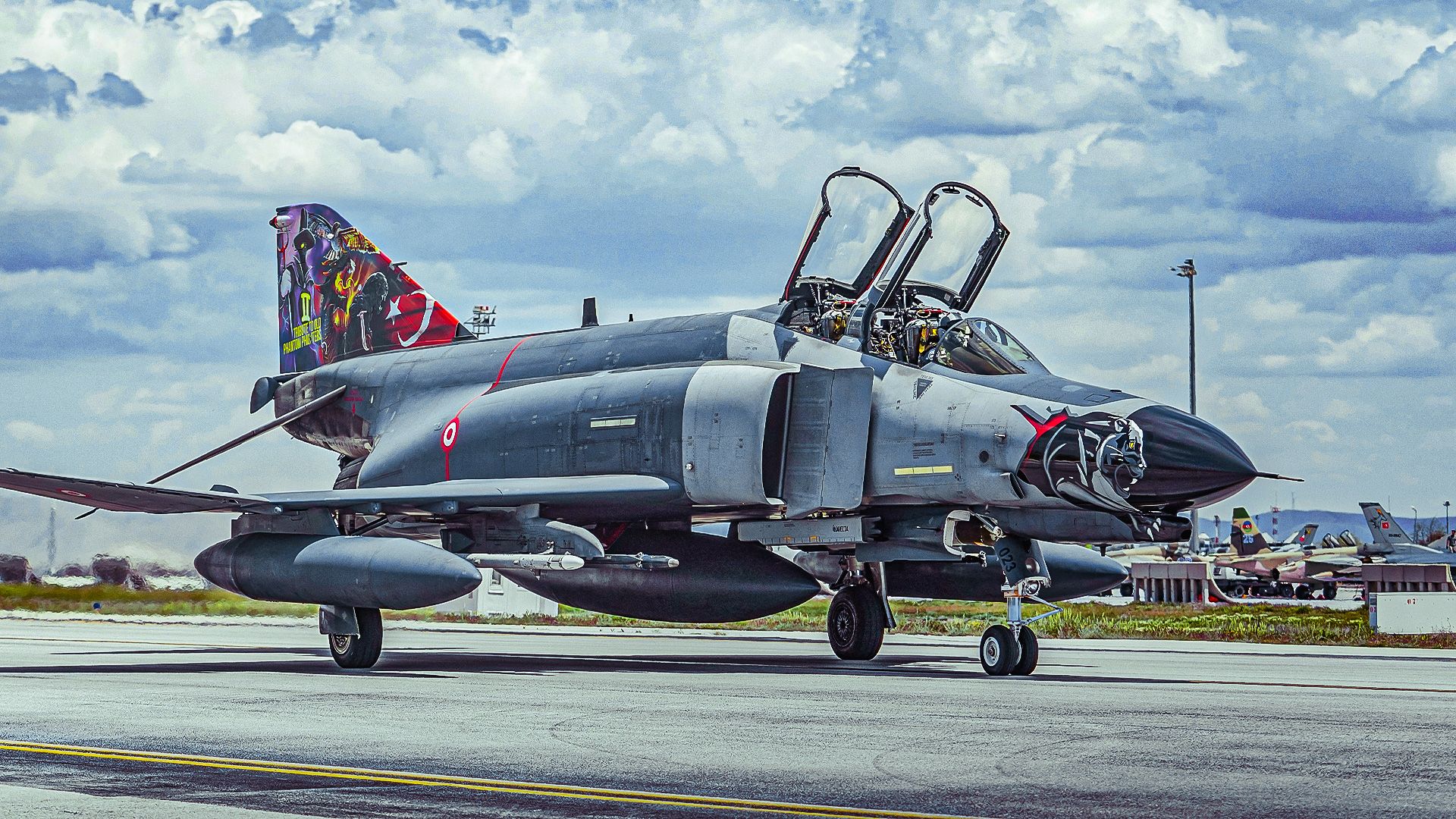
The McDonnell Douglas F-4 Phantom II remains one of the most significant fighter jets in the history of military aviation. With its first flight in 1958 and official entry into service with the United States Navy in December 1960, the F-4 was designed for high performance and became a symbol of Cold War aviation technology. It was the fastest aircraft of its era, achieving a top speed of Mach 2.23 and establishing records for altitude and speed that still impress today.
Overview of the F-4 Phantom II
The F-4 Phantom II was developed primarily as an interceptor and fighter-bomber by McDonnell Aircraft, later produced by McDonnell Douglas after the companies merged in 1967. Originally designed to meet the U.S. Navy’s requirements for a carrier-based interceptor, the F-4 soon proved its versatility in various roles. It became the most widely produced American supersonic fighter, with nearly 5,200 units manufactured between 1958 and 1981.
The aircraft served in several conflicts, including the Vietnam War, where it achieved over 100 victories against enemy aircraft. Its operational history also extended to various global conflicts, with sales to countries such as Australia, Egypt, and South Korea. Despite being retired from U.S. Navy service in 1986, the F-4 remained in use in different capacities until its final retirement as a target drone in 2016.
Performance Capabilities
The F-4 Phantom II’s performance was remarkable for its time. It could reach a maximum takeoff weight of over 27 tons while still achieving a maximum climb rate of approximately 41,000 feet per minute. In 1961, the F-4 set a record altitude of over 66,443 feet, showcasing its capabilities as a high-altitude interceptor.
Equipped with two General Electric J79 afterburning turbojets, each producing over 17,000 lbs of thrust, the F-4 was known for its exceptional acceleration. Its design emphasized long-range and high-altitude engagements, where advanced missile technology and radar played crucial roles. Although it lacked an internal gun in its early versions, the F-4 was armed with various air-to-air and air-to-surface missiles, as well as bombs, including thermonuclear options.
Despite its impressive specifications, the F-4 faced challenges in combat, particularly during the Vietnam War, where it was deployed as an air superiority fighter. The aircraft struggled to adapt to the close-quarters dogfighting that became prevalent in the conflict. Initial combat experiences revealed issues with its radar system, which struggled to distinguish friendly from enemy aircraft, and its missile targeting systems often proved inaccurate.
As a result, the F-4 Phantom II suffered significant losses early in the Vietnam War. Pilots frequently engaged in close combat against nimble opponents like the MiG-21, leading to a reassessment of its role within the U.S. military.
Improvements and Adaptations
In response to the F-4’s early struggles, significant improvements were made over time. The most notable upgrade was the addition of an internal Gatling cannon in the F-4E variant, which transformed its close-range combat capabilities. Alongside this modification, the F-4E and F-4D versions featured leading-edge slats, enhancing maneuverability at high angles of attack, albeit at the cost of some top speed.
The introduction of smokeless engines in later models, such as the F-4S, improved the aircraft’s stealth and overall performance in combat scenarios. Additionally, pilots received more comprehensive training for dogfighting, addressing earlier shortcomings.
Despite its evolution, the F-4 maintained its primary identity as an interceptor adapted for air superiority. The aircraft’s distinctive design and capabilities earned it a place of respect among pilots and military personnel alike, solidifying its legacy.
The F-4 Phantom II’s influence extended beyond its operational life. As a precursor to future fighter aircraft, it informed the design of the McDonnell Douglas F-15 Eagle. The F-15 was engineered specifically as an air superiority fighter, focusing on agility and maneuverability rather than just speed. With a top speed of Mach 2.5, the F-15 has achieved significant success, boasting 104 victories and zero losses during its service.
In conclusion, the F-4 Phantom II not only shaped air combat strategies during the Cold War but also set the stage for advancements in military aviation. Its legacy continues to resonate, reminding us of a pivotal era in the development of fighter jets and the ongoing evolution of aerial warfare.

Meta Plans Major Layoffs as AI Costs Surge

Alberta’s Referendum Could Pave Way for U.S. Statehood

Minooka District 201 Plans Enhanced Bilingual Support for Students

Canmore Approves Multiple Development Permits for New Projects

Remembering Bradly Castillo Shearsmith: A Life of Friendship and Joy

BIS Urges Watchdogs to Integrate Synthetic Risk Transfers in Stress Tests

Teva Transforms: Shifting Focus from Generics to Branded Success

Apple Launches AirPods Max 2 with Enhanced Audio Features

Ontario Ends Funding for Seven Supervised Injection Sites

Toyoake City Proposes Daily Two-Hour Smartphone Use Limit

Pedestrian Fatally Injured in Esquimalt Collision on August 14

B.C. Review Reveals Urgent Need for Rare-Disease Drug Reforms

Dark Adventure Game “Bye Sweet Carole” Set for October Release

Konami Revives Iconic Metal Gear Solid Delta Ahead of Release

Victoria’s Pop-Up Shop Shines Light on B.C.’s Wolf Cull

Jimmy Lai’s Defense Challenges Charges Under National Security Law

Snapmaker U1 Color 3D Printer Redefines Speed and Sustainability

Apple Expands Self-Service Repair Program to Canada
-
 Science1 year ago
Toyoake City Proposes Daily Two-Hour Smartphone Use Limit
-
 Top Stories1 year ago
Pedestrian Fatally Injured in Esquimalt Collision on August 14
-
 Health1 year ago
B.C. Review Reveals Urgent Need for Rare-Disease Drug Reforms
-
 Technology12 months ago
Dark Adventure Game “Bye Sweet Carole” Set for October Release
-
 Technology1 year ago
Konami Revives Iconic Metal Gear Solid Delta Ahead of Release
-
 Lifestyle1 year ago
Victoria’s Pop-Up Shop Shines Light on B.C.’s Wolf Cull
-
 World1 year ago
Jimmy Lai’s Defense Challenges Charges Under National Security Law
-
 Technology1 year ago
Snapmaker U1 Color 3D Printer Redefines Speed and Sustainability
-
 Technology1 year ago
Apple Expands Self-Service Repair Program to Canada
-

 Technology1 year ago
AION Folding Knife: Redefining EDC Design with Premium Materials
-

 Technology1 year ago
Solve Today’s Wordle Challenge: Hints and Answer for August 19
-

 Business1 year ago
Gordon Murray Automotive Unveils S1 LM and Le Mans GTR at Monterey