
World
Global Freedoms Decline: Fraser Institute Reports Alarming Trends

A new report from the Fraser Institute reveals a significant decline in freedoms worldwide, with nearly nine out of ten citizens experiencing reductions in their liberties. The annual Human Freedom Index, co-authored by Matthew D. Mitchell from the Fraser Institute and the Cato Institute in Washington, D.C., highlights a troubling trend that began around 2007 and has accelerated since the COVID-19 pandemic.
The report emphasizes that while human freedom had been on the rise for decades, it has now taken a sharp downturn. “It entered a slow and steady decline starting around the year 2007, and then that really accelerated post-COVID,” Mitchell stated, reflecting on the drastic changes observed in recent years.
Top Countries for Freedom
According to the index, Switzerland ranks as the most free country in the world, followed closely by Denmark, New Zealand, Ireland, and Luxembourg. Other top nations include Estonia, Finland, Czech Republic, Netherlands, and Australia. Canada holds the 12th position, a consistent rank that has seen little change over time.
Mitchell noted that Canada has fluctuated between 10th and 14th place since the inception of the index. He pointed out that while the country performs well in civil liberties and expression, it struggles with economic freedoms. “There’s not been a lot of movement over time,” he added, reflecting on Canada’s static position in the rankings.
Significant Declines in Specific Regions
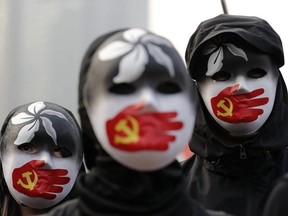
The report also highlights stark declines in freedom for several countries. Hong Kong, once celebrated for its civil liberties and economic freedoms, has seen a dramatic fall from the third position in 2011 to 53rd place today. Mitchell attributes this decline to recent reforms imposed by Beijing, particularly the National Security Laws enacted in 2020, which have significantly undermined local governance and civil rights.
“Hong Kong was typically talked about as one of the freest places on the planet,” he noted. The impact of these laws allows cases to be tried in mainland China, grants Beijing greater control over legal interpretations, and increases surveillance capabilities on individuals.
Other countries facing significant freedom declines include Egypt, Nicaragua, Turkey, and the ongoing situation in Hong Kong. These nations have experienced severe curtailing of personal freedoms and civil rights.
In contrast, Estonia has emerged as a notable example of progress, moving up in the rankings since its independence from Soviet rule. “It’s managed to ascend very, very quickly,” Mitchell remarked, highlighting the transformation from one of the least free nations in 1991 to its current sixth-place ranking.
The report also provides insight into the standings of several other prominent nations. The United States holds the 15th position, with Taiwan at 14th, and both Japan and the United Kingdom tied for 19th. Countries such as Italy, Mexico, India, Saudi Arabia, China, and Russia scored significantly lower, with Russia ranking 152nd.
The index paints a concerning picture of the state of global freedoms. As citizens in various regions grapple with increasing restrictions, the report serves as a crucial reminder of the ongoing challenges faced in maintaining and promoting human liberties worldwide.

Meta Plans Major Layoffs as AI Costs Surge

Alberta’s Referendum Could Pave Way for U.S. Statehood

Minooka District 201 Plans Enhanced Bilingual Support for Students

Canmore Approves Multiple Development Permits for New Projects

Remembering Bradly Castillo Shearsmith: A Life of Friendship and Joy

BIS Urges Watchdogs to Integrate Synthetic Risk Transfers in Stress Tests

Teva Transforms: Shifting Focus from Generics to Branded Success

Apple Launches AirPods Max 2 with Enhanced Audio Features

Ontario Ends Funding for Seven Supervised Injection Sites

Toyoake City Proposes Daily Two-Hour Smartphone Use Limit

Pedestrian Fatally Injured in Esquimalt Collision on August 14

B.C. Review Reveals Urgent Need for Rare-Disease Drug Reforms

Dark Adventure Game “Bye Sweet Carole” Set for October Release

Konami Revives Iconic Metal Gear Solid Delta Ahead of Release

Victoria’s Pop-Up Shop Shines Light on B.C.’s Wolf Cull

Jimmy Lai’s Defense Challenges Charges Under National Security Law

Snapmaker U1 Color 3D Printer Redefines Speed and Sustainability

Apple Expands Self-Service Repair Program to Canada
-
 Science11 months ago
Toyoake City Proposes Daily Two-Hour Smartphone Use Limit
-
 Top Stories11 months ago
Pedestrian Fatally Injured in Esquimalt Collision on August 14
-
 Health11 months ago
B.C. Review Reveals Urgent Need for Rare-Disease Drug Reforms
-
 Technology11 months ago
Dark Adventure Game “Bye Sweet Carole” Set for October Release
-
 Technology11 months ago
Konami Revives Iconic Metal Gear Solid Delta Ahead of Release
-
 Lifestyle11 months ago
Victoria’s Pop-Up Shop Shines Light on B.C.’s Wolf Cull
-
 World11 months ago
Jimmy Lai’s Defense Challenges Charges Under National Security Law
-
 Technology11 months ago
Snapmaker U1 Color 3D Printer Redefines Speed and Sustainability
-
 Technology11 months ago
Apple Expands Self-Service Repair Program to Canada
-

 Technology11 months ago
AION Folding Knife: Redefining EDC Design with Premium Materials
-

 Technology11 months ago
Solve Today’s Wordle Challenge: Hints and Answer for August 19
-

 Business11 months ago
Gordon Murray Automotive Unveils S1 LM and Le Mans GTR at Monterey