
World
Indonesia Enforces New Penal Code, Replacing Colonial Law

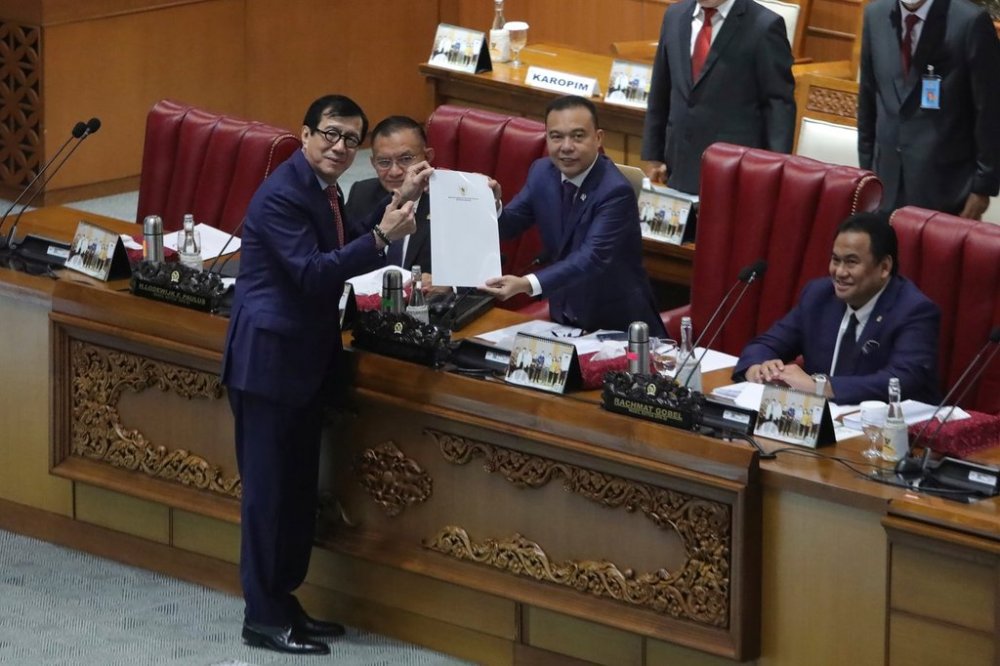
On March 15, 2024, Indonesia officially began enforcing its newly ratified penal code, marking a significant departure from the Dutch-era criminal law that has governed the country for over 80 years. This transition represents a crucial shift in Indonesia’s legal framework, which has faced criticism for being outdated and misaligned with the country’s social values since its independence in 1945.
The revised penal code, known as the KUHP, was passed in 2022 after extensive debate among lawmakers, who grappled with how to integrate human rights, religious norms, and local traditions in the world’s most populous Muslim-majority nation. The new code contains 345 pages of legislation that criminalizes sex outside of marriage, applicable to both citizens and foreign visitors, and reinstates penalties for insulting the president and state institutions.
Historic Legislative Shift
The passing of the KUHP followed a previous attempt to revise the code in 2019, which was delayed amid widespread public protests that involved tens of thousands of citizens. Critics of the earlier proposal argued that it contained provisions that discriminated against minorities and lacked transparency in its legislative process. After much deliberation, a parliamentary taskforce finalized the bill in November 2022, leading to unanimous approval from lawmakers the following month. Deputy Law Minister Edward Hiariej emphasized that the reforms aim to modernize Indonesia’s criminal justice system, shifting the focus toward corrective and rehabilitative justice.
“The new criminal code prioritizes repairing harm and social reintegration, rather than relying solely on punishment,” Hiariej stated during a briefing. He noted that these principles reflect values long embedded in Indonesian society and signify an important step in reforming the justice system.
Key Provisions and Controversies
Under the new code, sex outside marriage carries a penalty of up to one year in prison, while cohabitation can result in a six-month sentence. Importantly, adultery cases can only proceed if a formal complaint is made by a spouse, parent, or child, which aims to prevent arbitrary enforcement, especially against tourists. Despite these measures, rights groups such as Human Rights Watch have expressed concerns that the morality-based provisions could lead to privacy invasions and selective enforcement.
The updated penal code also reinstates a ban on insulting state leaders and institutions, with penalties of up to three years for “attacking the honor or dignity” of the president or vice president. While Hiariej mentioned that strict guidelines have been established to differentiate between criticism and criminal insult, critics argue that these provisions threaten freedom of expression. Usman Hamid, executive director of Amnesty International Indonesia, characterized the KUHP as “a significant blow” to civil liberties, warning that it could facilitate abuse of power.
The new code expands existing blasphemy laws, maintaining prison sentences of up to five years for deviations from the core teachings of Indonesia’s six officially recognized religions. It also retains penalties of up to ten years for associations with Marxist-Leninist organizations and four years for promoting communist ideology. Nevertheless, some advocates hailed lawmakers’ decision to drop a proposed article that would have criminalized gay sex, a move celebrated as a rare positive outcome for the LGBTQ community in Indonesia.
Although the death penalty remains intact under the KUHP, it introduces a ten-year probationary period, after which sentences may be commuted to life imprisonment or 20 years for good behavior. The code also maintains a ban on abortion while formalizing exceptions for life-threatening conditions and pregnancies resulting from rape, provided the fetus is under twelve weeks old.
Legal experts assert that the KUHP signifies a fundamental change in the application of punishment in Indonesia. Hiariej acknowledged that public opinion often favors harsh penalties, a mindset rooted in outdated notions of retribution. He contrasted this with modern systems that emphasize repairing harm and social reintegration. The Institute for Criminal Justice Reform noted that the code expands non-custodial sentences, including community service, and grants judges greater discretion in tailoring penalties. Executive director Erasmus Napitupulu commended these measures as a way to alleviate prison overcrowding and better serve victims.
The implementation of the KUHP marks a pivotal moment in Indonesia’s legal history, reflecting both progress and challenges as the nation navigates the complexities of modern governance and societal values.

Meta Plans Major Layoffs as AI Costs Surge

Alberta’s Referendum Could Pave Way for U.S. Statehood

Minooka District 201 Plans Enhanced Bilingual Support for Students

Canmore Approves Multiple Development Permits for New Projects

Remembering Bradly Castillo Shearsmith: A Life of Friendship and Joy

BIS Urges Watchdogs to Integrate Synthetic Risk Transfers in Stress Tests

Teva Transforms: Shifting Focus from Generics to Branded Success

Apple Launches AirPods Max 2 with Enhanced Audio Features

Ontario Ends Funding for Seven Supervised Injection Sites

Toyoake City Proposes Daily Two-Hour Smartphone Use Limit

Pedestrian Fatally Injured in Esquimalt Collision on August 14

B.C. Review Reveals Urgent Need for Rare-Disease Drug Reforms

Dark Adventure Game “Bye Sweet Carole” Set for October Release

Konami Revives Iconic Metal Gear Solid Delta Ahead of Release

Victoria’s Pop-Up Shop Shines Light on B.C.’s Wolf Cull

Jimmy Lai’s Defense Challenges Charges Under National Security Law

Snapmaker U1 Color 3D Printer Redefines Speed and Sustainability

Apple Expands Self-Service Repair Program to Canada
-
 Science1 year ago
Toyoake City Proposes Daily Two-Hour Smartphone Use Limit
-
 Top Stories1 year ago
Pedestrian Fatally Injured in Esquimalt Collision on August 14
-
 Health1 year ago
B.C. Review Reveals Urgent Need for Rare-Disease Drug Reforms
-
 Technology12 months ago
Dark Adventure Game “Bye Sweet Carole” Set for October Release
-
 Technology1 year ago
Konami Revives Iconic Metal Gear Solid Delta Ahead of Release
-
 Lifestyle1 year ago
Victoria’s Pop-Up Shop Shines Light on B.C.’s Wolf Cull
-
 World1 year ago
Jimmy Lai’s Defense Challenges Charges Under National Security Law
-
 Technology1 year ago
Snapmaker U1 Color 3D Printer Redefines Speed and Sustainability
-
 Technology1 year ago
Apple Expands Self-Service Repair Program to Canada
-

 Technology1 year ago
AION Folding Knife: Redefining EDC Design with Premium Materials
-

 Technology1 year ago
Solve Today’s Wordle Challenge: Hints and Answer for August 19
-

 Business1 year ago
Gordon Murray Automotive Unveils S1 LM and Le Mans GTR at Monterey