
World
Trump Calls for Global Naval Support to Safeguard Hormuz Oil Route

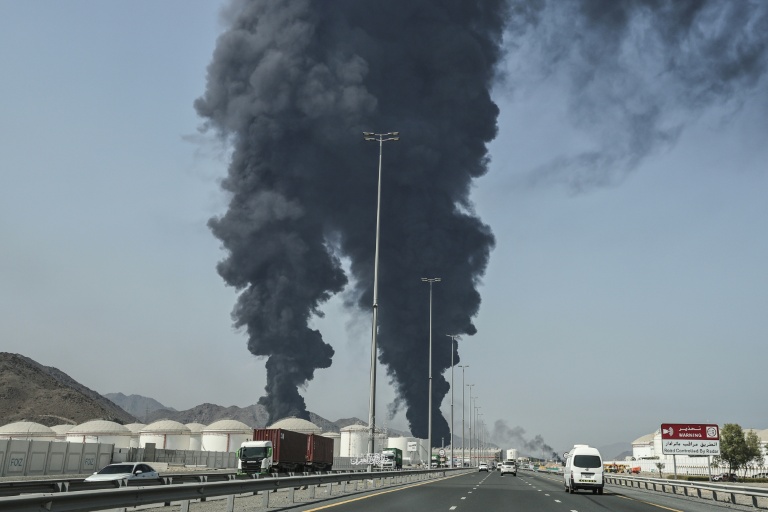
US President Donald Trump has urged other nations to deploy warships to protect critical oil supplies passing through the Strait of Hormuz, which remains under threat from Iranian military actions. The strait is a vital maritime corridor where approximately one-fifth of the world’s oil supply transits. On Sunday, the situation escalated as Iranian attacks disrupted shipping routes, resulting in a significant surge in global petroleum prices.
Despite suffering extensive bombardments since the onset of a conflict with US and Israeli forces on February 28, 2023, Iran’s military capabilities appear resilient. Trump has claimed that Iran’s military infrastructure has been “100%” destroyed, a statement that Tehran contests. Iranian forces have increasingly engaged in military operations, utilizing drones and missiles to target not only Israel but also Gulf energy installations and other strategic sites across the Middle East.
Witnesses in Bahrain reported hearing explosions, and smoke was seen rising from a major oil terminal in the UAE port city of Fujairah. Security sources indicated that the US embassy in Iraq was also targeted by a drone strike.
In a social media post on Saturday, Trump stated, “Many countries, especially those affected by Iran’s attempted closure of the Hormuz Strait, will be sending warships, in conjunction with the United States, to keep the Strait open and safe.” He expressed hope that nations such as China, France, Japan, South Korea, and the UK would contribute naval support to safeguard the passage.
The United States has already intensified its military presence in the region. Reports indicate that the Pentagon has dispatched the amphibious assault ship USS Tripoli along with approximately 2,500 Marines to bolster security efforts. Trump reiterated a commitment to aggressive military action against Iranian assets, stating that the United States will continue “bombing the hell out of the shoreline” while targeting Iranian vessels.
On Friday, US forces conducted airstrikes on Iran’s Kharg Island, a critical hub for Iranian oil exports, claiming to have “obliterated every military target” while sparing civilian energy facilities. Iran has responded with threats against US-affiliated oil firms, warning that they would be “turned into a pile of ashes” if their oil facilities were attacked.
The conflict has led to a staggering humanitarian toll, with reports from the Iranian health ministry estimating over 1,200 fatalities due to US and Israeli strikes, figures that remain unverified. The UN refugee agency states that up to 3.2 million people have been displaced within Iran, primarily from urban areas seeking refuge from the ongoing violence.
Iranian leaders have attempted to project an image of stability despite the chaos. Following the death of supreme leader Ali Khamenei on the first day of the conflict, his son, Mojtaba Khamenei, has been appointed as the new supreme leader, although reports indicate that he has not made public appearances and is reportedly injured.
Military activities have intensified regionally, with missile launches detected over Jerusalem and interception reports coming from the UAE, Kuwait, and Saudi Arabia. The latter reported intercepting six ballistic missiles aimed at the Al-Kharj base, which hosts a significant number of US troops.
The conflict’s ramifications extend beyond military engagement, disrupting international events such as the Bahrain and Saudi Arabia Formula One races scheduled for April. Additionally, the Australian government reported that three members of the visiting Iranian women’s football team decided to return to Iran after initially seeking asylum in Australia, following backlash for their refusal to sing the national anthem.
In Lebanon, the situation has deteriorated further as the Iran-backed militant group Hezbollah has engaged in direct confrontations with Israeli forces. Israeli air and ground assaults have reportedly resulted in at least 826 deaths in Lebanon, according to local authorities, prompting evacuation orders and warnings of a potential humanitarian disaster.
As military tensions continue to escalate, the international community watches closely, grappling with the implications for global energy supplies and regional stability.

Meta Plans Major Layoffs as AI Costs Surge

Alberta’s Referendum Could Pave Way for U.S. Statehood

Minooka District 201 Plans Enhanced Bilingual Support for Students

Canmore Approves Multiple Development Permits for New Projects

Remembering Bradly Castillo Shearsmith: A Life of Friendship and Joy

BIS Urges Watchdogs to Integrate Synthetic Risk Transfers in Stress Tests

Teva Transforms: Shifting Focus from Generics to Branded Success

Apple Launches AirPods Max 2 with Enhanced Audio Features

Ontario Ends Funding for Seven Supervised Injection Sites

Toyoake City Proposes Daily Two-Hour Smartphone Use Limit

Pedestrian Fatally Injured in Esquimalt Collision on August 14

B.C. Review Reveals Urgent Need for Rare-Disease Drug Reforms

Dark Adventure Game “Bye Sweet Carole” Set for October Release

Konami Revives Iconic Metal Gear Solid Delta Ahead of Release

Victoria’s Pop-Up Shop Shines Light on B.C.’s Wolf Cull

Jimmy Lai’s Defense Challenges Charges Under National Security Law

Snapmaker U1 Color 3D Printer Redefines Speed and Sustainability

Apple Expands Self-Service Repair Program to Canada
-
 Science12 months ago
Toyoake City Proposes Daily Two-Hour Smartphone Use Limit
-
 Top Stories12 months ago
Pedestrian Fatally Injured in Esquimalt Collision on August 14
-
 Health12 months ago
B.C. Review Reveals Urgent Need for Rare-Disease Drug Reforms
-
 Technology12 months ago
Dark Adventure Game “Bye Sweet Carole” Set for October Release
-
 Technology12 months ago
Konami Revives Iconic Metal Gear Solid Delta Ahead of Release
-
 Lifestyle12 months ago
Victoria’s Pop-Up Shop Shines Light on B.C.’s Wolf Cull
-
 World12 months ago
Jimmy Lai’s Defense Challenges Charges Under National Security Law
-
 Technology12 months ago
Snapmaker U1 Color 3D Printer Redefines Speed and Sustainability
-
 Technology12 months ago
Apple Expands Self-Service Repair Program to Canada
-

 Technology12 months ago
AION Folding Knife: Redefining EDC Design with Premium Materials
-

 Technology12 months ago
Solve Today’s Wordle Challenge: Hints and Answer for August 19
-

 Business12 months ago
Gordon Murray Automotive Unveils S1 LM and Le Mans GTR at Monterey