
World
Trump Critiques Canada Trade Deal Amid ‘Made in China’ Gifts

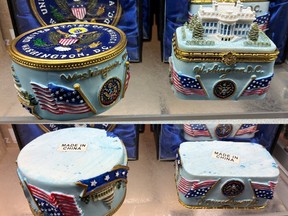
U.S. President Donald Trump is vocalizing his discontent with Canada’s potential trade agreements with China, even as souvenirs produced in China are prominently displayed in American gift shops. This situation presents a striking contradiction, particularly as Trump has condemned Canada’s dealings with what he refers to as “communists.”
At shops like the one located at Reagan National Airport, just a short distance from the White House, a variety of items—including miniature models of the White House and American seals—are marked as “Made in China.” This reality highlights a significant inconsistency: while American retailers can sell these products, similar actions by Canada are met with fierce criticism from the U.S. leader.
Trump’s remarks about Canada’s trade negotiations have been pointed. He stated that if Canada were to finalize a deal with China, it would face severe economic consequences, including a potential 100% tariff on all Canadian goods entering the United States. “If Governor Carney thinks he is going to make Canada a ‘Drop Off Port’ for China to send goods and products into the United States, he is sorely mistaken,” Trump asserted on his social media platform.
The President’s rhetoric suggests a belief that a partnership between Canada and China could threaten the U.S. economy and national security. Trump emphasized, “The last thing the world needs is to have China take over Canada. It’s NOT going to happen, or even come close to happening!”
Despite these warnings, the sale of Chinese-made White House memorabilia raises questions about the perceived hypocrisy in the trade policies of the Trump administration. The reality of American businesses profiting from items produced overseas stands in contrast to the narrative of protecting domestic interests.
Critics have pointed out this discrepancy, noting that while Trump warns against Canadian deals with China, his own administration has engaged in a significant trade agreement with the nation. In October 2025, Trump signed a trade deal with Chinese President Xi Jinping, which is valued at approximately $600 billion. This agreement has drawn scrutiny, particularly in light of Trump’s current stance on Canada.
As the debate continues, the implications of Trump’s comments on Canadian trade are substantial. The potential for retaliatory tariffs could have far-reaching effects on the Canadian economy, particularly in key sectors that rely heavily on exports to the United States.
In the backdrop of this discourse, the question remains: why is it acceptable for American businesses to sell goods made in China while Canada faces scrutiny for similar actions? The resolution of trade relationships between the U.S., Canada, and China will undoubtedly shape the economic landscape for years to come.
As these discussions progress, the international community watches closely, evaluating not only the economic ramifications but also the diplomatic relations that underpin these trade agreements. The situation underscores the complexities of global trade and the challenges that arise when national interests collide with economic realities.

Meta Plans Major Layoffs as AI Costs Surge

Alberta’s Referendum Could Pave Way for U.S. Statehood

Minooka District 201 Plans Enhanced Bilingual Support for Students

Canmore Approves Multiple Development Permits for New Projects

Remembering Bradly Castillo Shearsmith: A Life of Friendship and Joy

BIS Urges Watchdogs to Integrate Synthetic Risk Transfers in Stress Tests

Teva Transforms: Shifting Focus from Generics to Branded Success

Apple Launches AirPods Max 2 with Enhanced Audio Features

Ontario Ends Funding for Seven Supervised Injection Sites

Toyoake City Proposes Daily Two-Hour Smartphone Use Limit

Pedestrian Fatally Injured in Esquimalt Collision on August 14

B.C. Review Reveals Urgent Need for Rare-Disease Drug Reforms

Dark Adventure Game “Bye Sweet Carole” Set for October Release

Konami Revives Iconic Metal Gear Solid Delta Ahead of Release

Victoria’s Pop-Up Shop Shines Light on B.C.’s Wolf Cull

Jimmy Lai’s Defense Challenges Charges Under National Security Law

Snapmaker U1 Color 3D Printer Redefines Speed and Sustainability

Apple Expands Self-Service Repair Program to Canada
-
 Science12 months ago
Toyoake City Proposes Daily Two-Hour Smartphone Use Limit
-
 Top Stories12 months ago
Pedestrian Fatally Injured in Esquimalt Collision on August 14
-
 Health12 months ago
B.C. Review Reveals Urgent Need for Rare-Disease Drug Reforms
-
 Technology11 months ago
Dark Adventure Game “Bye Sweet Carole” Set for October Release
-
 Technology12 months ago
Konami Revives Iconic Metal Gear Solid Delta Ahead of Release
-
 Lifestyle12 months ago
Victoria’s Pop-Up Shop Shines Light on B.C.’s Wolf Cull
-
 World12 months ago
Jimmy Lai’s Defense Challenges Charges Under National Security Law
-
 Technology12 months ago
Snapmaker U1 Color 3D Printer Redefines Speed and Sustainability
-
 Technology12 months ago
Apple Expands Self-Service Repair Program to Canada
-

 Technology12 months ago
AION Folding Knife: Redefining EDC Design with Premium Materials
-

 Technology12 months ago
Solve Today’s Wordle Challenge: Hints and Answer for August 19
-

 Business12 months ago
Gordon Murray Automotive Unveils S1 LM and Le Mans GTR at Monterey