
World
Trump Enforces New ‘Donroe’ Doctrine with Venezuela Operation

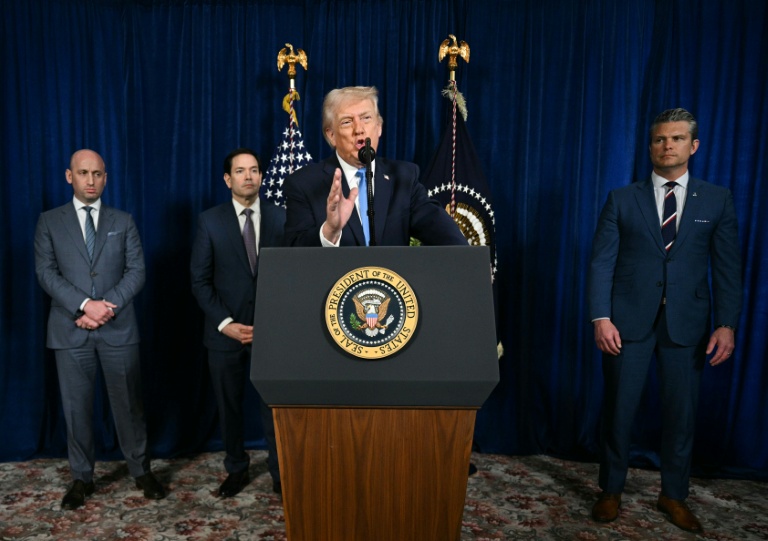
President Donald Trump has escalated U.S. intervention in Latin America with a significant operation targeting Venezuelan leader Nicolas Maduro. This move marks an assertive shift in U.S. foreign policy, echoing the historical Monroe Doctrine from 1823, which sought to limit European influence in the Americas. Trump referred to this updated doctrine as the “Donroe Doctrine,” emphasizing U.S. dominance in the Western Hemisphere.
During a press conference, Trump stated, “The Monroe Doctrine is a big deal, but we’ve superseded it by a lot, by a real lot. American dominance in the Western Hemisphere will never be questioned again.” This declaration coincided with a national security strategy that introduced a “Trump Corollary” to the Monroe Doctrine, allowing for U.S. military intervention in Latin America to pursue objectives such as seizing strategic assets, combating crime, and addressing migration issues.
Venezuela, which possesses the world’s largest proven oil reserves, has been a focal point of U.S. interests, especially given its close ties with China. Trump justified the recent intervention by alleging that drug smuggling operations were linked to Maduro and that immediate action was necessary to protect U.S. interests.
Global Reactions and Historical Context
The intervention in Venezuela has drawn parallels to other global power dynamics, particularly the actions of Russia and China. In February 2022, Russia, led by Vladimir Putin, invaded Ukraine, challenging its sovereignty by claiming historical ties and vowing to remove its elected president, Volodymyr Zelensky. Meanwhile, China has not ruled out the use of force to assert its claims over Taiwan, a self-governing democracy, further complicating regional tensions.
The timing of the U.S. operation was notable, as it followed Chinese military exercises simulating a blockade of Taiwan, demonstrating the interconnectedness of these geopolitical events. A Chinese envoy had met with Maduro in Caracas just hours before his arrest, highlighting the complex web of international relations at play.
Trump’s assertive foreign policy approach is likely to alert U.S. allies, who have been unsettled by his rhetoric regarding strategic resources. For instance, Trump has previously suggested that the U.S. should assert claims over Greenland, an autonomous territory of Denmark, and has mentioned reclaiming the Panama Canal. This aggressive posturing raises questions about the future of U.S. influence in the region.
Shifting Dynamics in U.S. Foreign Policy
The implications of this intervention extend beyond Latin America, as it signals a potential shift in U.S. foreign policy. Jennifer Kavanagh, director of military analysis at Defense Priorities, noted a growing concern regarding the U.S. ability to intervene unilaterally in foreign nations. She remarked, “If the U.S. can declare a leader illegitimate, go and remove him and then run the country, why can’t other countries?”
Historically, the U.S. has engaged in interventions without United Nations authorization, including the 2003 invasion of Iraq. Yet, Kavanagh emphasized that the current global landscape has changed. “The relative power of the U.S. is not what it once was,” she stated. This change raises significant concerns for global stability, as other nations may feel emboldened to act similarly.
The new national security strategy indicates a refocused approach for the U.S., with less emphasis on countering Russia and China. Critics argue that this shift acknowledges their spheres of influence while potentially undermining U.S. authority. Trump’s favorable comments about China and his perceived minimization of the risks associated with a Taiwanese invasion have further complicated this narrative.
As the situation unfolds, analysts predict a more aggressive U.S. stance in Latin America. Alexander Gray, a scholar at the Atlantic Council, highlighted the implications of this intervention, stating, “There will no longer be a level of tolerance for the type of even lower-level Chinese, Russian, and Iranian influence that we’ve seen over the last couple of decades.”
In conclusion, Trump’s declaration of the Donroe Doctrine and the operation against Maduro represent a significant moment in U.S. foreign policy, with potential ramifications for international relations. The long-term effects of this assertive stance remain to be seen, but it has undoubtedly reshaped the dialogue surrounding U.S. involvement in Latin America and beyond.

Meta Plans Major Layoffs as AI Costs Surge

Alberta’s Referendum Could Pave Way for U.S. Statehood

Minooka District 201 Plans Enhanced Bilingual Support for Students

Canmore Approves Multiple Development Permits for New Projects

Remembering Bradly Castillo Shearsmith: A Life of Friendship and Joy

BIS Urges Watchdogs to Integrate Synthetic Risk Transfers in Stress Tests

Teva Transforms: Shifting Focus from Generics to Branded Success

Apple Launches AirPods Max 2 with Enhanced Audio Features

Ontario Ends Funding for Seven Supervised Injection Sites

Toyoake City Proposes Daily Two-Hour Smartphone Use Limit

Pedestrian Fatally Injured in Esquimalt Collision on August 14

B.C. Review Reveals Urgent Need for Rare-Disease Drug Reforms

Dark Adventure Game “Bye Sweet Carole” Set for October Release

Konami Revives Iconic Metal Gear Solid Delta Ahead of Release

Victoria’s Pop-Up Shop Shines Light on B.C.’s Wolf Cull

Jimmy Lai’s Defense Challenges Charges Under National Security Law

Snapmaker U1 Color 3D Printer Redefines Speed and Sustainability

Apple Expands Self-Service Repair Program to Canada
-
 Science12 months ago
Toyoake City Proposes Daily Two-Hour Smartphone Use Limit
-
 Top Stories12 months ago
Pedestrian Fatally Injured in Esquimalt Collision on August 14
-
 Health12 months ago
B.C. Review Reveals Urgent Need for Rare-Disease Drug Reforms
-
 Technology12 months ago
Dark Adventure Game “Bye Sweet Carole” Set for October Release
-
 Technology12 months ago
Konami Revives Iconic Metal Gear Solid Delta Ahead of Release
-
 Lifestyle12 months ago
Victoria’s Pop-Up Shop Shines Light on B.C.’s Wolf Cull
-
 World12 months ago
Jimmy Lai’s Defense Challenges Charges Under National Security Law
-
 Technology12 months ago
Snapmaker U1 Color 3D Printer Redefines Speed and Sustainability
-
 Technology12 months ago
Apple Expands Self-Service Repair Program to Canada
-

 Technology12 months ago
AION Folding Knife: Redefining EDC Design with Premium Materials
-

 Technology12 months ago
Solve Today’s Wordle Challenge: Hints and Answer for August 19
-

 Business12 months ago
Gordon Murray Automotive Unveils S1 LM and Le Mans GTR at Monterey