
World
Trump’s Peace Delegation Faces Stubborn Opposition from Putin

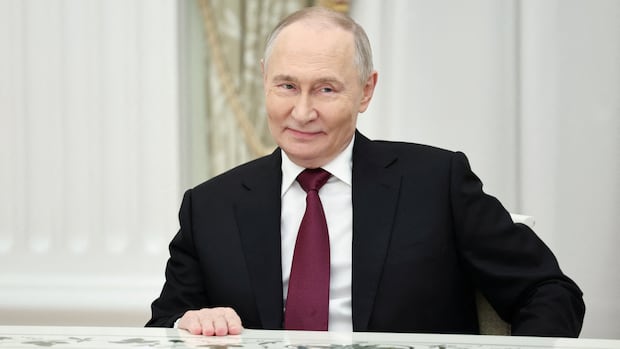
U.S. President Donald Trump dispatched a peace delegation to Moscow, seeking to negotiate an end to the ongoing conflict in Ukraine. This move coincided with a stark assessment from Dmytro Kuleba, Ukraine’s former foreign minister, who acknowledged the challenges facing his country. Speaking to an audience in Kyiv on December 1, 2023, Kuleba warned that Ukraine is likely to experience a “tactical defeat” but emphasized the importance of maintaining its sovereignty as a “strategic victory.”
Kuleba’s remarks reflect the grim reality of the situation, with approximately 19 percent of Ukrainian territory currently under Russian control and significant casualties reported on both sides. He described the situation as a “very, very harsh truth” that Ukrainians must confront. Kuleba urged national unity in the face of what he calls Putin’s attempts to “destroy us as a state and erase us as a nation.”
During the peace discussions in Moscow, Russian President Vladimir Putin met with Trump’s envoys, including Steve Witkoff and Jared Kushner. The U.S. delegation brought a revised proposal aimed at establishing a framework for peace. The plan, initially a 28-point proposal, outlined terms that would allow Russia to retain some territories while ensuring Ukraine’s sovereignty and the autonomy to manage its military and foreign relations.
Despite these negotiations, Putin’s stance remains rigid. His aide, Yuri Ushakov, indicated that Russia’s current military advantage in eastern Ukraine bolsters its negotiating position, and the Kremlin is demanding more than what the U.S. is offering. Specifically, Putin has called for Ukraine to cede control of the entire Donbas region and to limit its military capabilities, including restrictions on NATO membership and long-range missile possession.
“An agreement on a peace plan… was never a genuine possibility,”
stated Tatiana Stanovaya, a Paris-based analyst. She noted that Putin aims to communicate Russia’s demands directly to the U.S. administration, effectively bypassing other intermediaries. Moscow’s strategy appears to rely on pressuring Kyiv into accepting these terms as the only feasible path to peace.
The ongoing conflict has resulted in staggering losses, with British estimates suggesting over 1.1 million Russian casualties. Yet, Putin remains resolute in his goal to eliminate Ukraine as a sovereign state and views Trump’s involvement as potentially advantageous. Despite Trump’s previous emphasis on post-war economic opportunities, there is little indication that such incentives have influenced Putin’s calculations.
Putin has framed his actions as part of a historical mission to restore the “rússkiy mir,” or “Russian world,” that he believes was compromised following the Soviet Union’s collapse in 1991. He often asserts that a Western-aligned Ukraine poses an existential threat to Russia and has characterized Ukrainian leadership, particularly President Volodymyr Zelenskyy, as pawns of U.S. interests.
While many Russians support military actions in Ukraine, polling data from the Levada Center reveals that approximately 66 percent favor peace talks. This perspective contrasts sharply with the Kremlin’s aggressive military strategy, which has seen significant advances in the Donbas and Zaporizhzhia regions, albeit at a high cost in human life.
As Ukraine faces escalating missile and drone attacks, civilian casualties have surged, heightening war fatigue among the population. Additionally, Ukraine’s energy infrastructure is under severe strain, leading to widespread blackouts. Zelenskyy now faces a domestic political crisis as corruption investigators target senior officials within his administration, including his chief of staff, Andriy Yermak, who has resigned following a search of his home.
Despite public support for ending the war, experts believe that pressuring Zelenskyy to accept Putin’s maximalist demands is unlikely to succeed. Oleksiy Melnyk, co-director of foreign relations and international security programs at the Razumkov Centre, emphasized the need for clear communication regarding the implications of any peace agreement. He warned that the Ukrainian military and civil society would resist any deal perceived as compromising the country’s independence.
Future negotiations may hinge on Trump’s ability to break the current deadlock. During a NATO defense ministers’ meeting in Berlin, Secretary General Mark Rutte remarked that Trump is “the only person in the world” capable of influencing the situation. The U.S. continues to provide military support to Ukraine, enabling it to fend off Russian advances while maintaining offensive capabilities.
Zelenskyy expressed concern that if irreconcilable differences persist between Ukrainian and Russian positions, Trump may choose to withdraw from negotiations altogether. In a recent interview, he articulated fears that a diminishing U.S. interest could embolden Russia’s objectives. “We are afraid — if America will be tired it’s not good for us,” he stated, highlighting the precarious nature of Ukraine’s position in this ongoing conflict.

Meta Plans Major Layoffs as AI Costs Surge

Alberta’s Referendum Could Pave Way for U.S. Statehood

Minooka District 201 Plans Enhanced Bilingual Support for Students

Canmore Approves Multiple Development Permits for New Projects

Remembering Bradly Castillo Shearsmith: A Life of Friendship and Joy

BIS Urges Watchdogs to Integrate Synthetic Risk Transfers in Stress Tests

Teva Transforms: Shifting Focus from Generics to Branded Success

Apple Launches AirPods Max 2 with Enhanced Audio Features

Ontario Ends Funding for Seven Supervised Injection Sites

Toyoake City Proposes Daily Two-Hour Smartphone Use Limit

Pedestrian Fatally Injured in Esquimalt Collision on August 14

B.C. Review Reveals Urgent Need for Rare-Disease Drug Reforms

Dark Adventure Game “Bye Sweet Carole” Set for October Release

Konami Revives Iconic Metal Gear Solid Delta Ahead of Release

Victoria’s Pop-Up Shop Shines Light on B.C.’s Wolf Cull

Jimmy Lai’s Defense Challenges Charges Under National Security Law

Snapmaker U1 Color 3D Printer Redefines Speed and Sustainability

Apple Expands Self-Service Repair Program to Canada
-
 Science12 months ago
Toyoake City Proposes Daily Two-Hour Smartphone Use Limit
-
 Top Stories12 months ago
Pedestrian Fatally Injured in Esquimalt Collision on August 14
-
 Health12 months ago
B.C. Review Reveals Urgent Need for Rare-Disease Drug Reforms
-
 Technology12 months ago
Dark Adventure Game “Bye Sweet Carole” Set for October Release
-
 Technology12 months ago
Konami Revives Iconic Metal Gear Solid Delta Ahead of Release
-
 Lifestyle12 months ago
Victoria’s Pop-Up Shop Shines Light on B.C.’s Wolf Cull
-
 World12 months ago
Jimmy Lai’s Defense Challenges Charges Under National Security Law
-
 Technology12 months ago
Snapmaker U1 Color 3D Printer Redefines Speed and Sustainability
-
 Technology12 months ago
Apple Expands Self-Service Repair Program to Canada
-

 Technology12 months ago
AION Folding Knife: Redefining EDC Design with Premium Materials
-

 Technology12 months ago
Solve Today’s Wordle Challenge: Hints and Answer for August 19
-

 Business12 months ago
Gordon Murray Automotive Unveils S1 LM and Le Mans GTR at Monterey