
World
Trump’s Trade Policies Raise Concerns Over Economic Stability

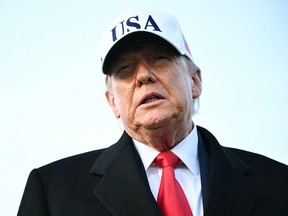
U.S. President Donald Trump has sparked debate over the future of international trade, with critics warning that his approach could lead to economic decline for many. The implications of this “post-globalist era” may result in higher costs for consumers and decreased productivity in various sectors.
In a recent commentary, Jonah Goldberg, editor-in-chief of The Dispatch, explored the consequences of Trump’s trade policies. He likened the U.S. economy to a department store where decisions are made based on personal preferences rather than sound economic principles. Instead of relying on data and expert advice, Trump’s administration appears to prioritize political motivations, which could negatively impact economic growth.
Goldberg highlighted a specific instance where Trump threatened to scrap trade agreements with eight European allies, imposing tariffs on their goods unless they complied with his demands regarding Greenland. This unpredictable approach to trade policy raises concerns about the stability of international relations and market conditions.
The article underscores that when corporations make decisions based on political calculations rather than economic efficiency, the overall productivity suffers. As companies adapt their supply chains to mitigate risks associated with fluctuating tariffs, this shift can lead to inefficiencies that ultimately harm wealth creation.
Goldberg pointed out that such political favoritism is not exclusive to Trump. He noted that many on the political left, including Senator Elizabeth Warren from Massachusetts, have also advocated for policies that prioritize social and political objectives over traditional economic metrics. Yet, while Warren’s views stem from a historical ideological framework, Trump’s strategies seem based on instinct rather than a coherent economic philosophy.
The current landscape reflects a departure from the principles traditionally upheld by American conservatives, who long argued against excessive political interference in markets. In the past, discussions around “crony capitalism” and the dangers of “picking winners and losers” were prevalent. Today, however, many conservatives appear to have accepted a system where economic decision-making is heavily influenced by a single individual.
According to a report from The Economist, the trend towards allocating capital based on geopolitical considerations will likely diminish productivity and prosperity globally. This shift signals a worrying reality for economies that thrive on efficiency and competition. As businesses reevaluate their strategies in this unpredictable environment, the potential for slower growth and increased costs for consumers looms large.
In conclusion, the evolving trade policies under Trump’s administration could usher in an era marked by increased expenses and economic uncertainty. As firms navigate a landscape shaped by political whims rather than market fundamentals, the risk of widespread economic repercussions grows. The ongoing dialogue surrounding these issues will be crucial as stakeholders consider the long-term implications for the global economy.

Meta Plans Major Layoffs as AI Costs Surge

Alberta’s Referendum Could Pave Way for U.S. Statehood

Minooka District 201 Plans Enhanced Bilingual Support for Students

Canmore Approves Multiple Development Permits for New Projects

Remembering Bradly Castillo Shearsmith: A Life of Friendship and Joy

BIS Urges Watchdogs to Integrate Synthetic Risk Transfers in Stress Tests

Teva Transforms: Shifting Focus from Generics to Branded Success

Apple Launches AirPods Max 2 with Enhanced Audio Features

Ontario Ends Funding for Seven Supervised Injection Sites

Toyoake City Proposes Daily Two-Hour Smartphone Use Limit

Pedestrian Fatally Injured in Esquimalt Collision on August 14

B.C. Review Reveals Urgent Need for Rare-Disease Drug Reforms

Dark Adventure Game “Bye Sweet Carole” Set for October Release

Konami Revives Iconic Metal Gear Solid Delta Ahead of Release

Victoria’s Pop-Up Shop Shines Light on B.C.’s Wolf Cull

Jimmy Lai’s Defense Challenges Charges Under National Security Law

Snapmaker U1 Color 3D Printer Redefines Speed and Sustainability

Apple Expands Self-Service Repair Program to Canada
-
 Science12 months ago
Toyoake City Proposes Daily Two-Hour Smartphone Use Limit
-
 Top Stories12 months ago
Pedestrian Fatally Injured in Esquimalt Collision on August 14
-
 Health12 months ago
B.C. Review Reveals Urgent Need for Rare-Disease Drug Reforms
-
 Technology12 months ago
Dark Adventure Game “Bye Sweet Carole” Set for October Release
-
 Technology12 months ago
Konami Revives Iconic Metal Gear Solid Delta Ahead of Release
-
 Lifestyle12 months ago
Victoria’s Pop-Up Shop Shines Light on B.C.’s Wolf Cull
-
 World12 months ago
Jimmy Lai’s Defense Challenges Charges Under National Security Law
-
 Technology12 months ago
Snapmaker U1 Color 3D Printer Redefines Speed and Sustainability
-
 Technology12 months ago
Apple Expands Self-Service Repair Program to Canada
-

 Technology12 months ago
AION Folding Knife: Redefining EDC Design with Premium Materials
-

 Technology12 months ago
Solve Today’s Wordle Challenge: Hints and Answer for August 19
-

 Business12 months ago
Gordon Murray Automotive Unveils S1 LM and Le Mans GTR at Monterey