
World
U.S. and Israel Launch Airstrikes on Iran Amid Rising Tensions

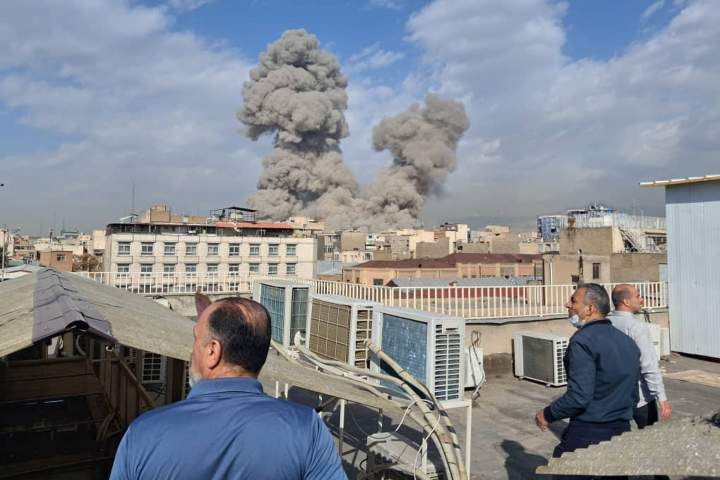
The United States and Israel conducted a series of airstrikes on targets across Iran on Saturday, escalating tensions in the region. U.S. President Donald Trump made a dramatic appeal to the Iranian populace, urging them to “take over your government,” a statement that reflects a significant shift in U.S. policy towards Iran, seeking an end to the country’s theocratic rule that has persisted for decades.
The initial strikes targeted a compound in downtown Tehran associated with Ayatollah Ali Khamenei, Iran’s Supreme Leader, although his presence during the attack remains unconfirmed. Eyewitnesses reported smoke rising from various locations in the Iranian capital, indicating the scale of the assault. In a video message, Trump justified the strikes by highlighting Iran’s long-standing animosity towards the U.S., stating, “For 47 years, the Iranian regime has chanted Death to America and waged an unending campaign of bloodshed and mass murder.”
As the situation unfolded, Iran’s paramilitary Revolutionary Guard announced it had launched a “first wave” of drone and missile attacks targeting Israel. This prompted Israel to issue nationwide warnings as its military prepared to intercept incoming fire. Concurrently, Bahrain reported a missile attack aimed at the U.S. Navy’s 5th Fleet headquarters, while residents in Kuwait and Qatar reported explosions and sirens.
Iran’s Foreign Ministry responded defiantly, asserting that the nation “will not hesitate” to retaliate. The ministry’s statement emphasized the right to defend the homeland against what it termed an enemy assault. Tensions have escalated recently, particularly as U.S. warships were deployed to the region. Trump expressed a desire to negotiate a deal limiting Iran’s nuclear ambitions, perceiving an opportunity amid increasing domestic dissent within Iran following widespread protests.
In his video, Trump declared that the U.S. had begun “major combat operations in Iran,” alleging that Iran continued developing its nuclear program and missile capabilities. He acknowledged the potential for American casualties, stating, “that often happens in war.” His comments suggested that the U.S. objectives extended well beyond nuclear concerns, referencing grievances dating back to the 1979 Iranian revolution, which transformed Iran from a close American ally into a significant adversary.
Israeli Prime Minister Benjamin Netanyahu, aligning with Trump’s narrative, described the coordinated attack as a necessary step to eliminate what he termed an “existential threat” from Iran. He stated, “Our joint operation will create the conditions for the brave Iranian people to take their fate into their own hands.” Reports indicate that Israeli forces targeted Iranian military infrastructure, government symbols, and intelligence sites.
Iran had sought to avoid military conflict but maintains its right to uranium enrichment. It has resisted discussions regarding its missile program and support for groups like Hamas and Hezbollah. Despite claims that there has been no enrichment since June, Iran has restricted access to international inspectors at the bombed locations.
In the aftermath of the strikes, Iran’s Revolutionary Guard reiterated its commitment to respond to any attack, threatening U.S. military personnel and installations throughout the region. As explosions rocked Israel, hospitals initiated emergency protocols, relocating patients to underground facilities. U.S. embassies in Qatar, United Arab Emirates, and Israel advised staff to shelter in place, reflecting the escalating situation.
Reports from Iranian media indicate widespread strikes across the country, with authorities closing major roads around Khamenei’s compound in Tehran. The situation remains fluid, with no immediate reports of casualties or damage emerging from the ongoing conflict.
The events of Saturday mark a significant escalation in hostilities between Iran and its adversaries, with potential implications for regional stability and international relations.

Meta Plans Major Layoffs as AI Costs Surge

Alberta’s Referendum Could Pave Way for U.S. Statehood

Minooka District 201 Plans Enhanced Bilingual Support for Students

Canmore Approves Multiple Development Permits for New Projects

Remembering Bradly Castillo Shearsmith: A Life of Friendship and Joy

BIS Urges Watchdogs to Integrate Synthetic Risk Transfers in Stress Tests

Teva Transforms: Shifting Focus from Generics to Branded Success

Apple Launches AirPods Max 2 with Enhanced Audio Features

Ontario Ends Funding for Seven Supervised Injection Sites

Toyoake City Proposes Daily Two-Hour Smartphone Use Limit

Pedestrian Fatally Injured in Esquimalt Collision on August 14

B.C. Review Reveals Urgent Need for Rare-Disease Drug Reforms

Dark Adventure Game “Bye Sweet Carole” Set for October Release

Konami Revives Iconic Metal Gear Solid Delta Ahead of Release

Victoria’s Pop-Up Shop Shines Light on B.C.’s Wolf Cull

Jimmy Lai’s Defense Challenges Charges Under National Security Law

Snapmaker U1 Color 3D Printer Redefines Speed and Sustainability

Apple Expands Self-Service Repair Program to Canada
-
 Science12 months ago
Toyoake City Proposes Daily Two-Hour Smartphone Use Limit
-
 Top Stories12 months ago
Pedestrian Fatally Injured in Esquimalt Collision on August 14
-
 Health12 months ago
B.C. Review Reveals Urgent Need for Rare-Disease Drug Reforms
-
 Technology12 months ago
Dark Adventure Game “Bye Sweet Carole” Set for October Release
-
 Technology12 months ago
Konami Revives Iconic Metal Gear Solid Delta Ahead of Release
-
 Lifestyle12 months ago
Victoria’s Pop-Up Shop Shines Light on B.C.’s Wolf Cull
-
 World12 months ago
Jimmy Lai’s Defense Challenges Charges Under National Security Law
-
 Technology12 months ago
Snapmaker U1 Color 3D Printer Redefines Speed and Sustainability
-
 Technology12 months ago
Apple Expands Self-Service Repair Program to Canada
-

 Technology12 months ago
AION Folding Knife: Redefining EDC Design with Premium Materials
-

 Technology12 months ago
Solve Today’s Wordle Challenge: Hints and Answer for August 19
-

 Business12 months ago
Gordon Murray Automotive Unveils S1 LM and Le Mans GTR at Monterey