
World
U.S.-Israel Coordinate Massive Attack, Kills Khamenei in Iran

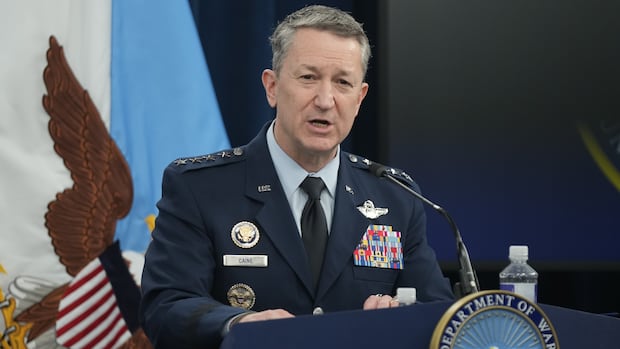
The coordinated U.S.-Israeli military strikes on Iran this past weekend resulted in the death of Ayatollah Ali Khamenei, the Supreme Leader of Iran, along with several high-ranking military officials. The attacks, described as a “massive, overwhelming attack,” were launched shortly after U.S. President Donald Trump authorized the operation on Friday, March 1, 2024.
During a news conference in Washington, Air Force Gen. Dan Caine, chairman of the Joint Chiefs of Staff, stated that over 100 aircraft were deployed in a synchronized wave starting at 9:45 AM Tehran time (1:15 AM ET). Caine described the operation as unprecedented, with more than 1,000 targets struck within the first 24 hours.
The operational timeline began when President Trump granted the go-ahead at 3:38 PM ET while aboard Air Force One, en route to Texas. The order was communicated through Secretary of War Pete Hegseth to Admiral Brad Cooper, head of U.S. Central Command, which oversees military operations in the Middle East. Central Command released unclassified satellite imagery of the strikes, showing military targets before and after the attacks.
According to sources familiar with the operation, weeks of intelligence gathering preceded the strikes, particularly focusing on Khamenei’s movements. The CIA had monitored the Supreme Leader and other senior Iranian officials closely. The attacks led to significant casualties, with the Iranian Red Crescent Society reporting at least 555 fatalities, including Khamenei, who was 86 years old.
Military Strategy and Operations
Caine noted that the operation was not solely an aerial assault but included extensive cyber operations that disrupted Iranian communications and sensor networks. He emphasized that the use of cyber technologies and the support of the U.S. Space Force were integral to achieving air superiority over Iran.
The precision of the attacks purportedly targeted military and political figures, including Iran’s Defence Minister Amir Nasirzadeh and Revolutionary Guards Commander Mohammed Pakpour. The operation was referred to as Operation Epic Fury, echoing a previous military action involving B-2 stealth bombers that had targeted Iranian nuclear facilities. In stark contrast to nighttime operations in the past, this attack was executed during daylight, providing “speed, surprise, and violence of action,” according to Caine.
While Hegseth commended Israel’s role in the operation, he did not divulge specific objectives or the anticipated duration of the military campaign. He indicated that discussing these details could compromise U.S. military effectiveness.
Reactions and Future Implications
Following the attacks, President Trump addressed the nation in a video statement, asserting that the U.S. aimed to “defend the American people by eliminating imminent threats” posed by the Iranian regime. Despite the military action, he did not seek authorization from Congress prior to the strikes, which has raised questions about the legality of the operation.
A U.S. Defence Intelligence Agency assessment released in May 2023 had concluded that Iran was approximately a decade away from developing intercontinental ballistic capabilities, should it choose to pursue that path. The recent military actions are seen as part of an effort to prevent Iran from acquiring nuclear weapons and to curtail its missile program.
Trump’s administration has expressed hopes that Khamenei’s death could lead to a shift in Iran’s political landscape. However, intelligence assessments indicated that his replacement might likely come from hard-line elements within the Islamic Revolutionary Guard Corps or similarly rigid clerical figures.
As U.S. and Israeli forces establish control in the region, the broader implications of this operation remain uncertain. The U.S. has encouraged the Iranian populace to seize this moment, particularly in light of ongoing domestic unrest that erupted in late December 2023, which was met with a severe crackdown by the Iranian government.
In conclusion, while the military actions have claimed significant lives and altered the leadership landscape in Iran, the question of how this will influence both regional stability and U.S.-Iran relations is yet to be determined.

Meta Plans Major Layoffs as AI Costs Surge

Alberta’s Referendum Could Pave Way for U.S. Statehood

Minooka District 201 Plans Enhanced Bilingual Support for Students

Canmore Approves Multiple Development Permits for New Projects

Remembering Bradly Castillo Shearsmith: A Life of Friendship and Joy

BIS Urges Watchdogs to Integrate Synthetic Risk Transfers in Stress Tests

Teva Transforms: Shifting Focus from Generics to Branded Success

Apple Launches AirPods Max 2 with Enhanced Audio Features

Ontario Ends Funding for Seven Supervised Injection Sites

Toyoake City Proposes Daily Two-Hour Smartphone Use Limit

Pedestrian Fatally Injured in Esquimalt Collision on August 14

B.C. Review Reveals Urgent Need for Rare-Disease Drug Reforms

Dark Adventure Game “Bye Sweet Carole” Set for October Release

Konami Revives Iconic Metal Gear Solid Delta Ahead of Release

Victoria’s Pop-Up Shop Shines Light on B.C.’s Wolf Cull

Jimmy Lai’s Defense Challenges Charges Under National Security Law

Snapmaker U1 Color 3D Printer Redefines Speed and Sustainability

Apple Expands Self-Service Repair Program to Canada
-
 Science12 months ago
Toyoake City Proposes Daily Two-Hour Smartphone Use Limit
-
 Top Stories12 months ago
Pedestrian Fatally Injured in Esquimalt Collision on August 14
-
 Health12 months ago
B.C. Review Reveals Urgent Need for Rare-Disease Drug Reforms
-
 Technology12 months ago
Dark Adventure Game “Bye Sweet Carole” Set for October Release
-
 Technology12 months ago
Konami Revives Iconic Metal Gear Solid Delta Ahead of Release
-
 Lifestyle12 months ago
Victoria’s Pop-Up Shop Shines Light on B.C.’s Wolf Cull
-
 World12 months ago
Jimmy Lai’s Defense Challenges Charges Under National Security Law
-
 Technology12 months ago
Snapmaker U1 Color 3D Printer Redefines Speed and Sustainability
-
 Technology12 months ago
Apple Expands Self-Service Repair Program to Canada
-

 Technology12 months ago
AION Folding Knife: Redefining EDC Design with Premium Materials
-

 Technology12 months ago
Solve Today’s Wordle Challenge: Hints and Answer for August 19
-

 Business12 months ago
Gordon Murray Automotive Unveils S1 LM and Le Mans GTR at Monterey