
World
Winter Spectacle: Elephant Seals Return to Año Nuevo State Park

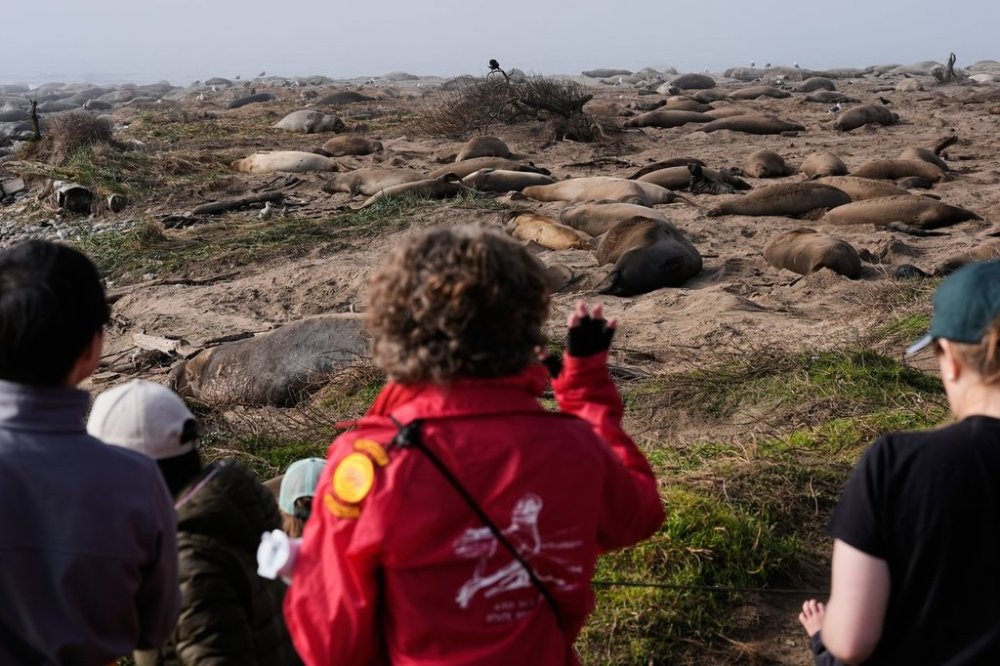
Every winter, approximately 10,000 elephant seals migrate to California’s Año Nuevo State Park to mate, give birth, and engage in fierce battles for dominance. This annual phenomenon, running from mid-December through March, captivates wildlife enthusiasts who flock to witness the largest seals on Earth in their natural habitat.
During what is referred to as “pupping season,” male elephant seals, some measuring up to 16 feet (4.9 meters) long and weighing as much as 2.5 tons, participate in dramatic confrontations to secure mating rights. Park docent Laura Stern explained how most elephant seals return to the same beach where they were born. “So most elephant seals come back to the same beach where they were born. They don’t all, but most of them do,” she noted, highlighting the significance of this location for the species.
The history of the elephant seal is a testament to resilience. In the late 1800s, they were hunted nearly to extinction for their blubber, which was processed into oil. By 1892, fewer than 100 elephant seals remained on a small island off the coast of Baja California. Recognizing the plight of the species, the Mexican government enacted legal protections in 1922, followed by similar measures in the United States. Today, the population has rebounded to an estimated 250,000 seals across the Pacific Ocean.
Despite this recovery, Stern mentioned a genetic concern due to a “bottleneck” effect: “There is a genetic bottleneck because they’re all coming from that same 30 to 60. But so far they’re doing really well, and we haven’t had any problems.” The seals’ remarkable comeback is a source of pride for conservationists and nature lovers alike.
Located about 90 minutes south of San Francisco, Año Nuevo State Park stands as one of the largest mainland breeding rookeries on the West Coast. During the peak of pupping season, the park sees a surge in visitors eager to secure spots for docent-led tours. These guided walks offer a unique opportunity to observe the long-nosed bulls in action, as well as the soundscape filled with their barks and bellows. Visitors can also witness mothers nursing their pups, which weigh around 75 pounds (34 kilograms).
“It’s awe-inspiring,” said Carrie Kahn, a visitor from Berkeley, California. “And you just wonder, how do they move from point A to point B? They look like they’d be so slow. But they’re quick and big, and they’re honking and making noises.”
Male elephant seals are noted for having the highest levels of testosterone among mammals, leading to their intense behaviors. Stern elaborated, “So they want to mate, fight, eat, press repeat. You’re not at a museum. You’re not in an aquarium. You are right here watching them live doing what they do.”
Outside of the pupping season, visitors are free to explore Año Nuevo State Park without reservations from April to November. However, during the winter months, prospective visitors must book a guided tour in advance through the park’s official website, www.reservecalifornia.com, to witness this natural spectacle.
The return of the elephant seals to Año Nuevo State Park each winter serves as a powerful reminder of the importance of wildlife conservation and the natural cycles that govern the lives of these magnificent creatures.

Meta Plans Major Layoffs as AI Costs Surge

Alberta’s Referendum Could Pave Way for U.S. Statehood

Minooka District 201 Plans Enhanced Bilingual Support for Students

Canmore Approves Multiple Development Permits for New Projects

Remembering Bradly Castillo Shearsmith: A Life of Friendship and Joy

BIS Urges Watchdogs to Integrate Synthetic Risk Transfers in Stress Tests

Teva Transforms: Shifting Focus from Generics to Branded Success

Apple Launches AirPods Max 2 with Enhanced Audio Features

Ontario Ends Funding for Seven Supervised Injection Sites

Toyoake City Proposes Daily Two-Hour Smartphone Use Limit

Pedestrian Fatally Injured in Esquimalt Collision on August 14

B.C. Review Reveals Urgent Need for Rare-Disease Drug Reforms

Dark Adventure Game “Bye Sweet Carole” Set for October Release

Konami Revives Iconic Metal Gear Solid Delta Ahead of Release

Victoria’s Pop-Up Shop Shines Light on B.C.’s Wolf Cull

Jimmy Lai’s Defense Challenges Charges Under National Security Law

Snapmaker U1 Color 3D Printer Redefines Speed and Sustainability

Apple Expands Self-Service Repair Program to Canada
-
 Science1 year ago
Toyoake City Proposes Daily Two-Hour Smartphone Use Limit
-
 Top Stories1 year ago
Pedestrian Fatally Injured in Esquimalt Collision on August 14
-
 Health1 year ago
B.C. Review Reveals Urgent Need for Rare-Disease Drug Reforms
-
 Technology12 months ago
Dark Adventure Game “Bye Sweet Carole” Set for October Release
-
 Technology1 year ago
Konami Revives Iconic Metal Gear Solid Delta Ahead of Release
-
 Lifestyle1 year ago
Victoria’s Pop-Up Shop Shines Light on B.C.’s Wolf Cull
-
 World1 year ago
Jimmy Lai’s Defense Challenges Charges Under National Security Law
-
 Technology1 year ago
Snapmaker U1 Color 3D Printer Redefines Speed and Sustainability
-
 Technology1 year ago
Apple Expands Self-Service Repair Program to Canada
-

 Technology1 year ago
AION Folding Knife: Redefining EDC Design with Premium Materials
-

 Technology1 year ago
Solve Today’s Wordle Challenge: Hints and Answer for August 19
-

 Business1 year ago
Gordon Murray Automotive Unveils S1 LM and Le Mans GTR at Monterey