
Science
Dalhousie Launches Digital Agriculture Institute to Aid Farmers

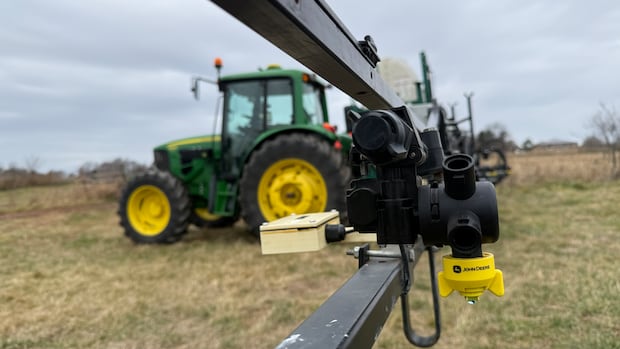
Farmers in Atlantic Canada are set to benefit from innovative digital solutions as Dalhousie University officially launched the Atlantic Institute for Digital Agriculture this fall. The initiative aims to address the unique challenges faced by regional farmers, including the impacts of climate change on their crops.
Peter Swinkels, a wild blueberry farmer from Belmont, Nova Scotia, has witnessed significant changes in agricultural practices over his four decades in the field. Once reliant on manual harvesting techniques, he now incorporates artificial intelligence into his operations. This evolution is part of a broader movement to integrate technology into farming, enhancing efficiency and sustainability.
Swinkels, who previously served as president of the Wild Blueberry Producers Association of Nova Scotia, expressed enthusiasm for the institute, particularly as the wild blueberry crop faces climate-related challenges. “The berry can benefit particularly from the application of pesticides using precision farming tools,” he stated. He emphasized the need for careful pesticide use, noting, “If you burn it or hurt it, it takes years to come back.”
The application of precision farming tools allows for targeted pesticide use. For example, cameras mounted on farm equipment utilize AI to identify weeds, ensuring that pesticides are only applied where necessary. Patrick Hennessy, a PhD student at Dalhousie, explained that the precision sprayer project involved uploading and labeling 4,000 images of weeds into the system. When a weed is detected, the sprayer automatically releases pesticide from the corresponding nozzle, all without requiring an internet connection.
In addition to the precision sprayer, the institute is developing an app designed to assist farmers in counting wild blueberry buds, which will help determine the optimal timing for fungicide application.
Supporting Small and Medium-Sized Farms
The Atlantic Institute for Digital Agriculture aims to foster technological innovation among smaller-scale farms, which often struggle to implement costly technologies that benefit larger operations. Travis Esau, the institute’s director, highlighted the need for tailored solutions that cater specifically to the needs of small- and medium-sized farms in Atlantic Canada. “You really have to have, for a lot of cases, large acres to be able to make the technology pay for itself,” Esau noted. “And so the solutions need to be adapted to be applicable for the small and medium-sized farms in Atlantic Canada.”
Currently, the university is in the early planning stages of constructing a dedicated facility for the institute at its agricultural campus in Bible Hill, Nova Scotia. Although no timeline or budget has been disclosed, fundraising efforts and potential partnerships are underway.
Emerging Drone Technologies
Drone technology is another promising avenue for wild blueberry farmers. While some countries have embraced drone-assisted pesticide application, Canada has strict regulations. According to Health Canada, only five pesticide products are currently registered for drone use, with additional applications under review. “Pesticide application by drone is a new technology, and drone-specific data is typically required to assess the risks,” Health Canada stated on December 2, 2023.
Hennessy is collecting data to evaluate the effectiveness of drone-based spraying compared to traditional ground-based methods. He acknowledged that using drones could help mitigate crop damage associated with larger farming equipment.
The urgency for innovation is underscored by the challenges faced by farmers this year. Swinkels noted that wild blueberry yields suffered due to drought, exacerbated by shifting weather patterns that have included excessive rainfall and frost in previous years. “We’re very fortunate that the wild blueberry plant is very hardy,” he said. “With a little support from technology, we might be able to work through these extreme climate changes.”
As the Atlantic Institute for Digital Agriculture gathers momentum, the potential for transforming agricultural practices in Nova Scotia and beyond remains significant, providing hope for farmers navigating the complexities of modern farming.

Meta Plans Major Layoffs as AI Costs Surge

Alberta’s Referendum Could Pave Way for U.S. Statehood

Minooka District 201 Plans Enhanced Bilingual Support for Students

Canmore Approves Multiple Development Permits for New Projects

Remembering Bradly Castillo Shearsmith: A Life of Friendship and Joy

BIS Urges Watchdogs to Integrate Synthetic Risk Transfers in Stress Tests

Teva Transforms: Shifting Focus from Generics to Branded Success

Apple Launches AirPods Max 2 with Enhanced Audio Features

Ontario Ends Funding for Seven Supervised Injection Sites

Toyoake City Proposes Daily Two-Hour Smartphone Use Limit

Pedestrian Fatally Injured in Esquimalt Collision on August 14

B.C. Review Reveals Urgent Need for Rare-Disease Drug Reforms

Dark Adventure Game “Bye Sweet Carole” Set for October Release

Konami Revives Iconic Metal Gear Solid Delta Ahead of Release

Victoria’s Pop-Up Shop Shines Light on B.C.’s Wolf Cull

Jimmy Lai’s Defense Challenges Charges Under National Security Law

Snapmaker U1 Color 3D Printer Redefines Speed and Sustainability

Apple Expands Self-Service Repair Program to Canada
-
 Science11 months ago
Toyoake City Proposes Daily Two-Hour Smartphone Use Limit
-
 Top Stories11 months ago
Pedestrian Fatally Injured in Esquimalt Collision on August 14
-
 Health11 months ago
B.C. Review Reveals Urgent Need for Rare-Disease Drug Reforms
-
 Technology11 months ago
Dark Adventure Game “Bye Sweet Carole” Set for October Release
-
 Technology11 months ago
Konami Revives Iconic Metal Gear Solid Delta Ahead of Release
-
 Lifestyle11 months ago
Victoria’s Pop-Up Shop Shines Light on B.C.’s Wolf Cull
-
 World11 months ago
Jimmy Lai’s Defense Challenges Charges Under National Security Law
-
 Technology11 months ago
Snapmaker U1 Color 3D Printer Redefines Speed and Sustainability
-
 Technology11 months ago
Apple Expands Self-Service Repair Program to Canada
-

 Technology11 months ago
AION Folding Knife: Redefining EDC Design with Premium Materials
-

 Technology11 months ago
Solve Today’s Wordle Challenge: Hints and Answer for August 19
-

 Business11 months ago
Gordon Murray Automotive Unveils S1 LM and Le Mans GTR at Monterey