
World
Saudi Airstrikes Target UAE-Backed Forces in Southern Yemen

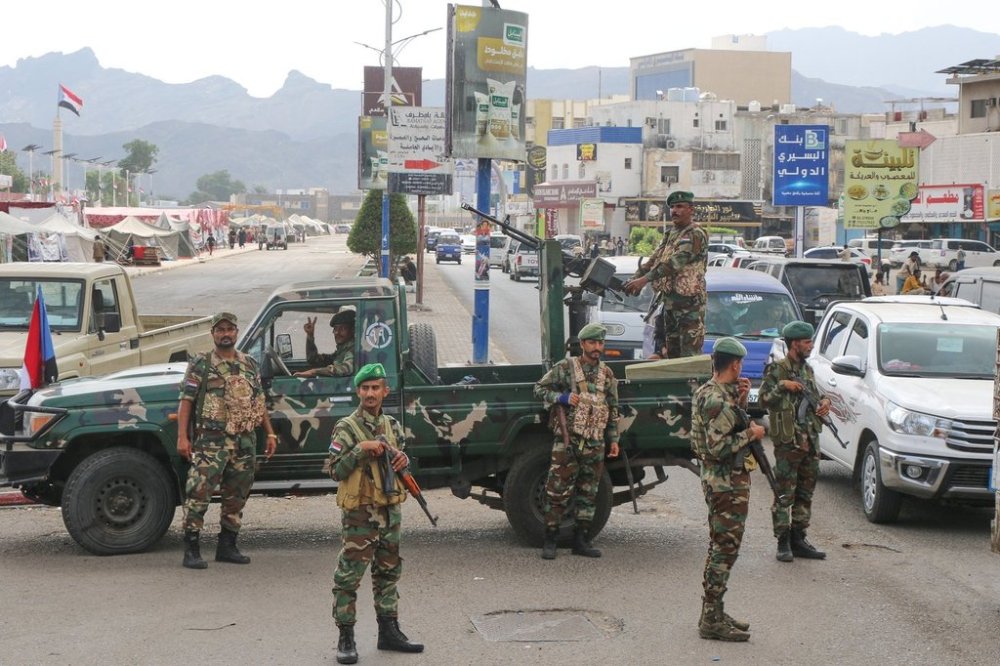
Saudi warplanes launched airstrikes on March 15, 2024, targeting forces in southern Yemen that are supported by the United Arab Emirates (UAE). This operation took place amid escalating tensions between Saudi Arabia and the UAE over control in the region, particularly concerning the Southern Transitional Council (STC). There were no immediate reports of casualties following the strikes.
Background of the Conflict
The airstrikes come as part of a broader Saudi-led effort to reclaim territory controlled by the STC in Hadramout, a governorate that borders Saudi Arabia. The STC had advanced into Hadramout and the nearby governorate of Mahra in February, seizing an oil-rich region. This move displaced forces affiliated with the Saudi-backed National Shield Forces, who are part of the coalition fighting against the Iran-backed Houthi movement in Yemen.
In an escalating situation, Ahmed bin Breik, a leader within the STC, confirmed that the Saudi-backed forces had approached their camps. However, he stated that the STC would not withdraw, which likely prompted the airstrikes. The current situation reflects a significant rift between Saudi Arabia and the UAE, both of which were previously united in their support for the Yemeni government.
Statements and Reactions
Following the strikes, Salem al-Khanbashi, the newly appointed governor of Hadramout, described the operation as “peaceful.” He emphasized that it was not a declaration of war but rather a “responsible pre-emptive measure” aimed at removing weapons and preventing chaos in the region. Al-Khanbashi stated, “This operation does not seek escalation,” during a speech broadcast on state media.
The Saudi-led coalition has demanded the withdrawal of STC forces from both Hadramout and Mahra as part of ongoing de-escalation efforts. Despite these demands, the STC has thus far refused to relinquish its weapons or vacate the camps.
In a post on X, Saudi Arabia’s ambassador to Yemen, Mohammed al-Jaber, expressed frustration over the STC’s refusal to cooperate. He noted that the kingdom had made significant efforts to engage with the STC to mitigate the rising tensions, only to encounter “continued intransigence” from the STC leader, Aidarous al-Zubaidi.
Al-Jaber highlighted that the latest incident involved the STC blocking a Saudi mediation delegation from landing in Aden, further complicating the situation. Yemen’s transport ministry, which aligns with the STC, criticized Saudi Arabia’s recent requirements for flights to and from Aden International Airport to undergo inspection in Jeddah, expressing “shock” at the decision.
The ongoing conflict in Yemen has persisted for over a decade, resulting in a fragmented political landscape. The Houthis control much of northern Yemen, while a Saudi-UAE-backed coalition supports the internationally recognized government in the south. Notably, the UAE has also provided support to the southern separatists, who have increasingly advocated for the secession of South Yemen, which existed as an independent state from 1967 until its unification with North Yemen in 1990.
As the situation continues to evolve, the international community watches closely, hoping for a resolution that can bring lasting peace to a country that has endured significant turmoil.

Meta Plans Major Layoffs as AI Costs Surge

Alberta’s Referendum Could Pave Way for U.S. Statehood

Minooka District 201 Plans Enhanced Bilingual Support for Students

Canmore Approves Multiple Development Permits for New Projects

Remembering Bradly Castillo Shearsmith: A Life of Friendship and Joy

BIS Urges Watchdogs to Integrate Synthetic Risk Transfers in Stress Tests

Teva Transforms: Shifting Focus from Generics to Branded Success

Apple Launches AirPods Max 2 with Enhanced Audio Features

Ontario Ends Funding for Seven Supervised Injection Sites

Toyoake City Proposes Daily Two-Hour Smartphone Use Limit

Pedestrian Fatally Injured in Esquimalt Collision on August 14

B.C. Review Reveals Urgent Need for Rare-Disease Drug Reforms

Dark Adventure Game “Bye Sweet Carole” Set for October Release

Konami Revives Iconic Metal Gear Solid Delta Ahead of Release

Jimmy Lai’s Defense Challenges Charges Under National Security Law

Victoria’s Pop-Up Shop Shines Light on B.C.’s Wolf Cull

Snapmaker U1 Color 3D Printer Redefines Speed and Sustainability

Apple Expands Self-Service Repair Program to Canada
-
 Science11 months ago
Toyoake City Proposes Daily Two-Hour Smartphone Use Limit
-
 Top Stories11 months ago
Pedestrian Fatally Injured in Esquimalt Collision on August 14
-
 Health11 months ago
B.C. Review Reveals Urgent Need for Rare-Disease Drug Reforms
-
 Technology11 months ago
Dark Adventure Game “Bye Sweet Carole” Set for October Release
-
 Technology11 months ago
Konami Revives Iconic Metal Gear Solid Delta Ahead of Release
-
 World11 months ago
Jimmy Lai’s Defense Challenges Charges Under National Security Law
-
 Lifestyle11 months ago
Victoria’s Pop-Up Shop Shines Light on B.C.’s Wolf Cull
-
 Technology11 months ago
Snapmaker U1 Color 3D Printer Redefines Speed and Sustainability
-
 Technology11 months ago
Apple Expands Self-Service Repair Program to Canada
-

 Technology11 months ago
AION Folding Knife: Redefining EDC Design with Premium Materials
-

 Technology11 months ago
Solve Today’s Wordle Challenge: Hints and Answer for August 19
-

 Business11 months ago
Gordon Murray Automotive Unveils S1 LM and Le Mans GTR at Monterey