
Science
NordSpace Partners with German Experts to Innovate Rocket Engines

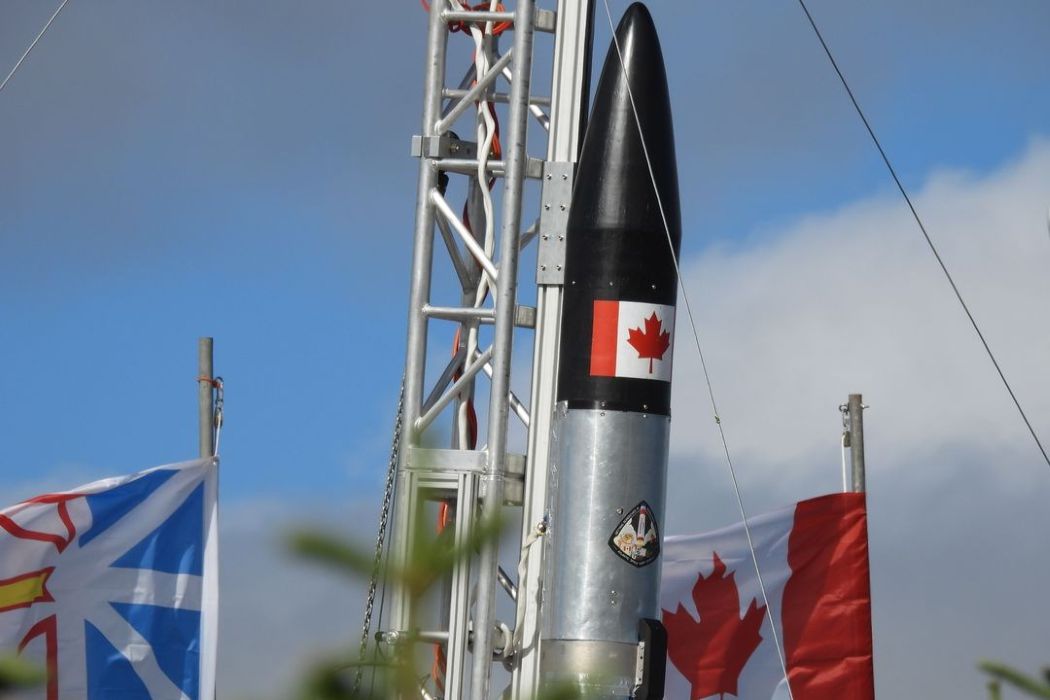
Canadian aerospace startup NordSpace is embarking on a significant collaboration with German researchers to enhance the development of medium-lift rocket engines using advanced 3D printing techniques. The partnership, announced on March 15, 2024, includes funding of up to $335,000 from the National Research Council of Canada’s Industrial Research Assistance Program (NRC IRAP) aimed at bolstering research and development efforts in additive manufacturing.
This initiative seeks to refine NordSpace’s capabilities in producing medium-lift rocket engines. Medium-lift vehicles, such as SpaceX’s Falcon 9, play a crucial role in launching satellites into low-Earth orbit (LEO). Notably, Kepler Communications, based in Toronto, successfully utilized a Falcon 9 for its data center satellites, and NordSpace plans to follow suit with its own satellite launch later this year.
Collaboration with Leading German Institutions
NordSpace’s project will involve a strategic partnership with the Fraunhofer Institute for Laser Technology, a prominent German research institution, and SWMS, a company specializing in artificial intelligence (AI)-driven manufacturing optimization software. The Fraunhofer Institute is recognized for its cutting-edge laser-based additive manufacturing capabilities, which will enhance NordSpace’s production methods for its Hadfield engines at the newly established Advanced Manufacturing for Aerospace Lab.
Through this collaboration, NordSpace aims to scale its orbital launch vehicles to accommodate a range of payload capacities. The company’s Tundra and Tundra+ light-lift vehicles, designed for payloads of 500 kg and 1,100 kg to LEO respectively, will evolve into the medium-lift Titan, which is projected to be capable of lifting 5,000 kg to LEO by the early 2030s.
Founder and CEO Rahul Goel highlighted the importance of this project, stating that it represents a “crucial step” for NordSpace to collaborate with leading technology partners in Germany. Goel emphasized that the advancements in additive manufacturing will significantly benefit Canada’s industrial base.
Domestic Space Race and Future Ambitions
The move comes at a time when Canada is experiencing a heightened focus on developing sovereign space and defense capabilities, sparking a domestic space race. NordSpace is committed to establishing the infrastructure for space launch vehicles, spaceports, and satellites entirely within Canada. The company has made several attempts to launch its first suborbital rocket from the Atlantic Spaceport Complex in Newfoundland.
Additionally, the recent emergence of Canada Rocket Company, which has secured seed funding from Canadian investors, underscores the growing interest in providing sovereign medium-lift launch capabilities.
NordSpace plans to share updates on its development project at the upcoming Canadian Space Launch Conference in Ottawa on May 5, 2024. This event will serve as a platform for the company to showcase its advancements in rocket engine technology and its collaborative efforts with German researchers.
As the aerospace sector evolves, NordSpace’s initiatives highlight the potential for innovative manufacturing techniques to shape the future of space exploration and satellite deployment.

Meta Plans Major Layoffs as AI Costs Surge

Alberta’s Referendum Could Pave Way for U.S. Statehood

Minooka District 201 Plans Enhanced Bilingual Support for Students

Canmore Approves Multiple Development Permits for New Projects

Remembering Bradly Castillo Shearsmith: A Life of Friendship and Joy

BIS Urges Watchdogs to Integrate Synthetic Risk Transfers in Stress Tests

Teva Transforms: Shifting Focus from Generics to Branded Success

Apple Launches AirPods Max 2 with Enhanced Audio Features

Ontario Ends Funding for Seven Supervised Injection Sites

Toyoake City Proposes Daily Two-Hour Smartphone Use Limit

Pedestrian Fatally Injured in Esquimalt Collision on August 14

B.C. Review Reveals Urgent Need for Rare-Disease Drug Reforms

Dark Adventure Game “Bye Sweet Carole” Set for October Release

Konami Revives Iconic Metal Gear Solid Delta Ahead of Release

Victoria’s Pop-Up Shop Shines Light on B.C.’s Wolf Cull

Jimmy Lai’s Defense Challenges Charges Under National Security Law

Snapmaker U1 Color 3D Printer Redefines Speed and Sustainability

Apple Expands Self-Service Repair Program to Canada
-
 Science11 months ago
Toyoake City Proposes Daily Two-Hour Smartphone Use Limit
-
 Top Stories11 months ago
Pedestrian Fatally Injured in Esquimalt Collision on August 14
-
 Health11 months ago
B.C. Review Reveals Urgent Need for Rare-Disease Drug Reforms
-
 Technology11 months ago
Dark Adventure Game “Bye Sweet Carole” Set for October Release
-
 Technology11 months ago
Konami Revives Iconic Metal Gear Solid Delta Ahead of Release
-
 Lifestyle11 months ago
Victoria’s Pop-Up Shop Shines Light on B.C.’s Wolf Cull
-
 World11 months ago
Jimmy Lai’s Defense Challenges Charges Under National Security Law
-
 Technology11 months ago
Snapmaker U1 Color 3D Printer Redefines Speed and Sustainability
-
 Technology11 months ago
Apple Expands Self-Service Repair Program to Canada
-

 Technology11 months ago
AION Folding Knife: Redefining EDC Design with Premium Materials
-

 Technology11 months ago
Solve Today’s Wordle Challenge: Hints and Answer for August 19
-

 Business11 months ago
Gordon Murray Automotive Unveils S1 LM and Le Mans GTR at Monterey