
World
B-2 Spirit: The Groundbreaking Stealth Bomber’s Legacy

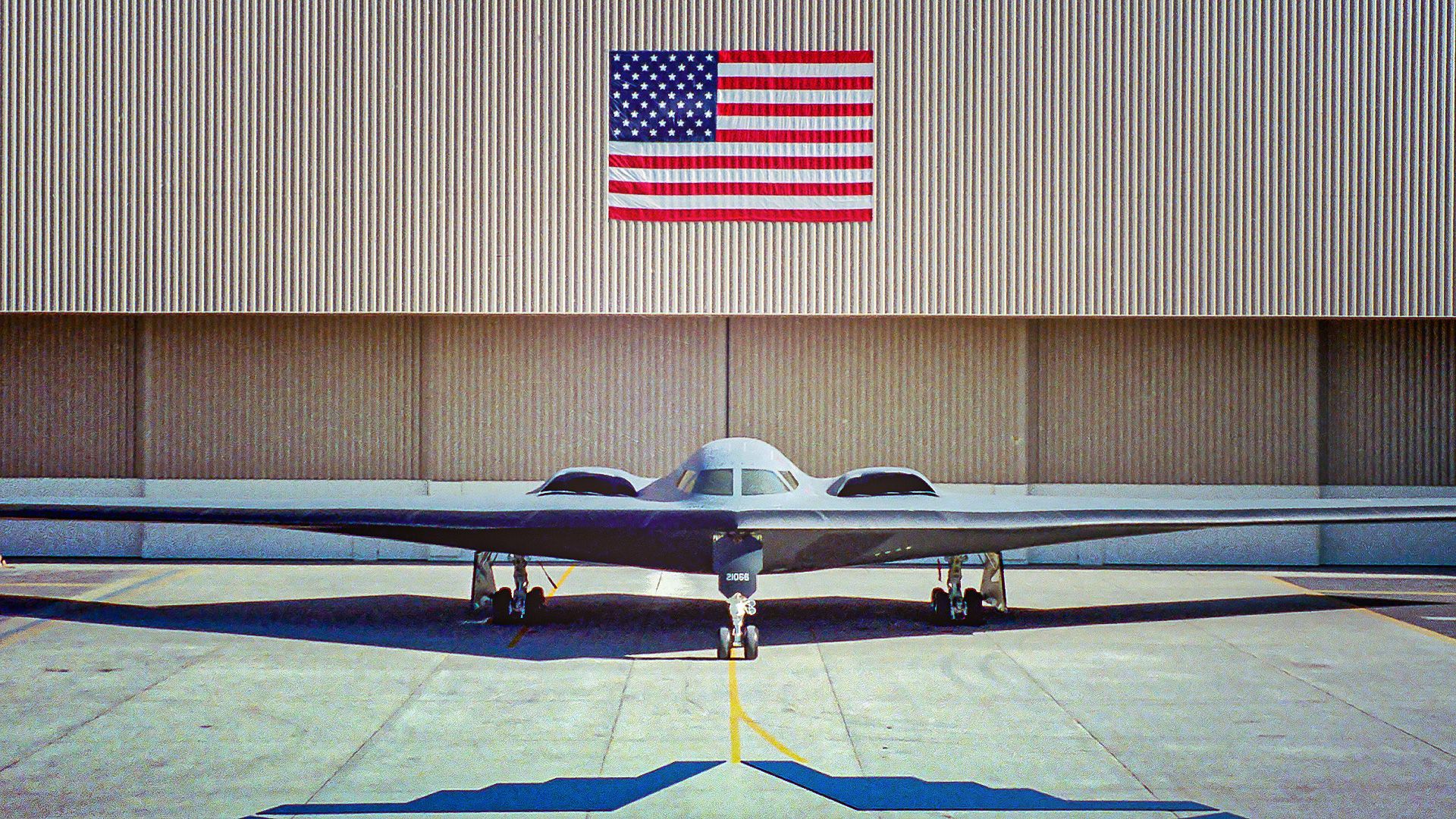
The Northrop B-2 Spirit, introduced in the late 20th century, stands as the first stealth strategic bomber of its class, marking a significant technological advancement in military aviation. Its development came at a time when the United States was seeking an edge over its Cold War adversaries, particularly the Soviet Union, which was falling behind technologically.
Historical Context of the B-2 Spirit
The B-2 Spirit emerged from a landscape dominated by the need for stealth capabilities. Prior to its inception, the United States had developed the Lockheed F-117 Nighthawk, which, while primarily an attack aircraft, utilized stealth technology that would influence the design of the B-2. The F-117’s first flight occurred in 1981, and it was officially delivered in 1982. Despite its designation as a “fighter,” the F-117 operated more like a bomber, showcasing the evolving understanding of aerial warfare.
By the time the B-2 took its first flight in 1989 and entered service in 1997, the Cold War had shifted dramatically. The Soviet Union was experiencing stagnation, unable to match the technological advancements being made by the United States. The U.S. defense strategy included the B-2 as part of a broader initiative to develop superior military hardware.
The B-2 Spirit’s development was not merely about creating an aircraft; it was also a response to the limitations faced by the Soviet military. As the USSR struggled to keep pace, the U.S. invested heavily in advanced technology, leading to the creation of not just the B-2, but also other cutting-edge programs like the F-22 Raptor. The B-2 program initially envisioned producing 132 aircraft, but ultimately only 21 were delivered, highlighting both the challenges and priorities of military spending during that era.
The Advanced Technology Behind the B-2
The B-2 Spirit boasts a unique combination of long-range capabilities, heavy payload capacity, and stealth technology, making it unparalleled in its class. Officially, it can carry up to 40,000 lbs of payload, but in practice, it can accommodate around 60,000 lbs when factoring in specific munitions like the GBU-57 bomb.
Stealth technology was critical to the B-2’s design. The aircraft’s shape minimizes its radar visibility, while its materials are engineered to absorb radar waves. This innovation was a significant leap from earlier designs like the F-117, which primarily focused on reducing radar cross-section through flat surfaces. The B-2’s design incorporates advanced features that reduce infrared signatures and enhance overall stealth capability.
Another influential predecessor was the Tacit Blue experimental aircraft, developed in the early 1980s. Tacit Blue tested advanced radar sensors and contributed to the development of all-aspect stealth technology, allowing an aircraft to evade detection from any angle. This aircraft demonstrated innovative methods to minimize heat signatures, which would later be integral to the B-2’s design.
The B-2 Spirit remains the only aircraft that combines these capabilities, setting a standard that others have yet to match. Its operational flexibility was showcased in recent missions, such as the nonstop flight from the U.S. to Iran in 2025, facilitated by the U.S. Air Force’s extensive fleet of refueling tankers.
While the B-2 continues to serve as a cornerstone of the U.S. strategic bombing capability, the landscape of military aviation is evolving. The U.S. is actively developing the next-generation B-21 Raider, intended to succeed the B-2 and B-1 bombers. The B-21 is expected to enter service by 2027, further maintaining the U.S. technological edge.
Meanwhile, global competitors are emerging. China is advancing its stealth capabilities with the development of the Xi’an Y-20 strategic bomber, posing potential challenges to U.S. dominance in stealth technology. However, China’s military aviation capabilities are still in development, and it remains uncertain how effectively they can compete with the sophistication of the B-2.
The legacy of the B-2 Spirit as the first of its kind continues to shape military strategies and technological advancements. The aircraft’s unique attributes and the innovations it introduced have set a high bar for future developments in stealth aviation, ensuring its place in history as a pioneering force in modern warfare.

Meta Plans Major Layoffs as AI Costs Surge

Alberta’s Referendum Could Pave Way for U.S. Statehood

Minooka District 201 Plans Enhanced Bilingual Support for Students

Canmore Approves Multiple Development Permits for New Projects

Remembering Bradly Castillo Shearsmith: A Life of Friendship and Joy

BIS Urges Watchdogs to Integrate Synthetic Risk Transfers in Stress Tests

Teva Transforms: Shifting Focus from Generics to Branded Success

Apple Launches AirPods Max 2 with Enhanced Audio Features

Ontario Ends Funding for Seven Supervised Injection Sites

Toyoake City Proposes Daily Two-Hour Smartphone Use Limit

Pedestrian Fatally Injured in Esquimalt Collision on August 14

B.C. Review Reveals Urgent Need for Rare-Disease Drug Reforms

Dark Adventure Game “Bye Sweet Carole” Set for October Release

Konami Revives Iconic Metal Gear Solid Delta Ahead of Release

Jimmy Lai’s Defense Challenges Charges Under National Security Law

Victoria’s Pop-Up Shop Shines Light on B.C.’s Wolf Cull

Snapmaker U1 Color 3D Printer Redefines Speed and Sustainability

Apple Expands Self-Service Repair Program to Canada
-
 Science11 months ago
Toyoake City Proposes Daily Two-Hour Smartphone Use Limit
-
 Top Stories11 months ago
Pedestrian Fatally Injured in Esquimalt Collision on August 14
-
 Health11 months ago
B.C. Review Reveals Urgent Need for Rare-Disease Drug Reforms
-
 Technology11 months ago
Dark Adventure Game “Bye Sweet Carole” Set for October Release
-
 Technology11 months ago
Konami Revives Iconic Metal Gear Solid Delta Ahead of Release
-
 World11 months ago
Jimmy Lai’s Defense Challenges Charges Under National Security Law
-
 Lifestyle11 months ago
Victoria’s Pop-Up Shop Shines Light on B.C.’s Wolf Cull
-
 Technology11 months ago
Snapmaker U1 Color 3D Printer Redefines Speed and Sustainability
-
 Technology11 months ago
Apple Expands Self-Service Repair Program to Canada
-

 Technology11 months ago
AION Folding Knife: Redefining EDC Design with Premium Materials
-

 Technology11 months ago
Solve Today’s Wordle Challenge: Hints and Answer for August 19
-

 Business11 months ago
Gordon Murray Automotive Unveils S1 LM and Le Mans GTR at Monterey