
World
Thousands Rally for Indigenous Rights on Australia Day

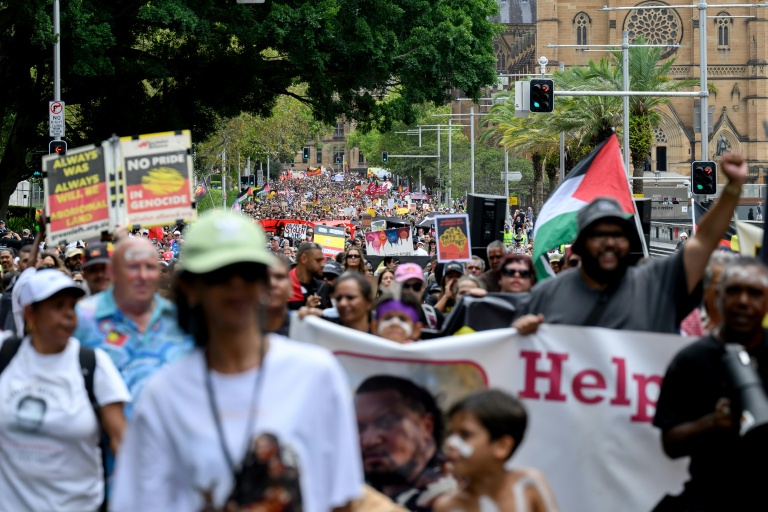
Thousands of Australians gathered in cities nationwide on January 26, 2024, to advocate for Indigenous rights and justice during Australia Day celebrations. The protests took place in major cities including Sydney, Melbourne, Canberra, and Perth, as demonstrators expressed their views on the historical significance of the day, which marks the arrival of a British fleet in Sydney Harbour in 1788.
Many participants carried banners with slogans such as “Always was, always will be Aboriginal land,” emphasizing the deep connection Indigenous peoples have with their land. Despite recent security concerns following a tragic shooting at a Jewish festival in Bondi Beach that resulted in 15 deaths, police allowed the protests to proceed.
While millions typically celebrate Australia Day with festivities such as barbecues and beach outings, this year a significant heatwave was predicted, with temperatures in Adelaide expected to reach 45°C. Shark sightings prompted beach closures in Sydney, following a series of shark attacks, including one that tragically claimed the life of a 12-year-old boy.
Activists refer to January 26 as “Invasion Day,” marking the beginning of oppression and significant loss for Indigenous communities. Currently, Aboriginal and Torres Strait Islander peoples represent about four percent of Australia’s population and face challenges including an eight-year shorter life expectancy compared to non-Indigenous Australians, higher incarceration rates, and poorer educational outcomes.
In Sydney, protester Kody Bardy, aged 44, expressed the need for a new celebratory date. He stated, “Let’s celebrate on another day, because everyone loves this country and everyone wants to celebrate. But we don’t celebrate on a mourning day.” Similarly, Reeyah Dinah Lotoanie, a 23-year-old protester, urged recognition of the historical genocide inflicted upon Indigenous peoples, stating, “Ships still came to Sydney and decided to kill so many of our people.”
In a separate demonstration, thousands participated in the “March for Australia,” which focused on anti-immigration sentiments. Police in Melbourne took measures to keep the two demonstrations apart as protesters chanted phrases such as “Send them back,” and carried banners demanding an end to immigration policies. One participant, Rick Conners, 66, voiced concerns about resource shortages, claiming, “There’s nowhere for people to live now, the hospitals are full, the roads are full.”
Several protestors in the anti-immigration march also displayed placards calling for the release of Joel Davis, a neo-Nazi figure arrested for allegedly threatening a federal lawmaker. In response to the demonstrations, New South Wales Premier Chris Minns stated, “There will be no tolerance for violence or hate speech on Sydney streets.” He highlighted the importance of maintaining a peaceful, multicultural community and assured that police would address any breaches of public safety.
As Australia navigates the complexities of national identity, the dichotomy of celebrations and protests on Australia Day reflects ongoing tensions surrounding Indigenous rights and immigration policies. The events on January 26 serve as a reminder of the diverse perspectives within Australian society and the ongoing call for recognition and reconciliation with Indigenous communities.

Meta Plans Major Layoffs as AI Costs Surge

Alberta’s Referendum Could Pave Way for U.S. Statehood

Minooka District 201 Plans Enhanced Bilingual Support for Students

Canmore Approves Multiple Development Permits for New Projects

Remembering Bradly Castillo Shearsmith: A Life of Friendship and Joy

BIS Urges Watchdogs to Integrate Synthetic Risk Transfers in Stress Tests

Teva Transforms: Shifting Focus from Generics to Branded Success

Apple Launches AirPods Max 2 with Enhanced Audio Features

Ontario Ends Funding for Seven Supervised Injection Sites

Toyoake City Proposes Daily Two-Hour Smartphone Use Limit

Pedestrian Fatally Injured in Esquimalt Collision on August 14

B.C. Review Reveals Urgent Need for Rare-Disease Drug Reforms

Dark Adventure Game “Bye Sweet Carole” Set for October Release

Konami Revives Iconic Metal Gear Solid Delta Ahead of Release

Jimmy Lai’s Defense Challenges Charges Under National Security Law

Victoria’s Pop-Up Shop Shines Light on B.C.’s Wolf Cull

Snapmaker U1 Color 3D Printer Redefines Speed and Sustainability

Apple Expands Self-Service Repair Program to Canada
-
 Science11 months ago
Toyoake City Proposes Daily Two-Hour Smartphone Use Limit
-
 Top Stories11 months ago
Pedestrian Fatally Injured in Esquimalt Collision on August 14
-
 Health11 months ago
B.C. Review Reveals Urgent Need for Rare-Disease Drug Reforms
-
 Technology11 months ago
Dark Adventure Game “Bye Sweet Carole” Set for October Release
-
 Technology11 months ago
Konami Revives Iconic Metal Gear Solid Delta Ahead of Release
-
 World11 months ago
Jimmy Lai’s Defense Challenges Charges Under National Security Law
-
 Lifestyle11 months ago
Victoria’s Pop-Up Shop Shines Light on B.C.’s Wolf Cull
-
 Technology11 months ago
Snapmaker U1 Color 3D Printer Redefines Speed and Sustainability
-
 Technology11 months ago
Apple Expands Self-Service Repair Program to Canada
-

 Technology11 months ago
AION Folding Knife: Redefining EDC Design with Premium Materials
-

 Technology11 months ago
Solve Today’s Wordle Challenge: Hints and Answer for August 19
-

 Business11 months ago
Gordon Murray Automotive Unveils S1 LM and Le Mans GTR at Monterey