
World
NDP Leader’s Tweet on Puerto Vallarta Violence Sparks Backlash

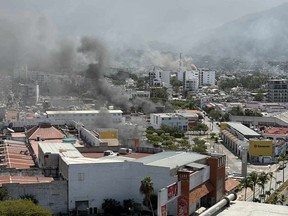
OTTAWA — NDP leadership candidate Heather McPherson faced criticism on Sunday evening for linking escalating cartel violence in Puerto Vallarta to the 2SLGBTQIA+ community. In a social media post, McPherson noted that many Canadians were in Puerto Vallarta, where violence had intensified, prompting a shelter-in-place order. She emphasized the concerns for the 2SLGBTQIA+ community while sharing a link to federal travel advisories for Mexico. By Monday morning, her tweet had garnered nearly 5,000 responses, with many users questioning her focus on LGBT Canadians over all Canadian travelers affected by the unrest.
The violence in Puerto Vallarta and the surrounding state of Jalisco escalated following the military killing of drug lord Nemesio “El Mencho” Oseguera Cervantes during a raid on Sunday morning. As chaos unfolded, nearly 5,000 Canadians found themselves in the area, with authorities advising them to remain sheltered due to reports of gang activity, including roadblocks and arson.
Puerto Vallarta is known as a significant destination for LGBT travelers, with economic contributions from this community accounting for approximately 40 percent of its tourism GDP in 2023. This equates to around $17 billion pesos, or roughly $1.3 billion Canadian, for the local economy.
Puerto Vallarta’s LGBT History
The city’s reputation as the “gay capital of Mexico” developed in the early 1960s, when American tabloids reported on visits from actress Elizabeth Taylor and her partner Richard Burton. Over the years, LGBT travelers and expatriates established a community in a neighbourhood known as the “Romantic Zone,” which is near Taylor’s former residence. The city’s status was further solidified in the early 1990s when a police raid at a local gay bar ignited a civil rights movement reminiscent of the Stonewall uprising in New York City.
Edmonton resident Murray Billet, who identifies as gay, began vacationing in Puerto Vallarta in the mid-1990s after hearing positive feedback from friends. He noted, “I had some friends that had been down, and they suggested to me, all those years ago, that it would be a wonderful little place.”
Changing Travel Trends for LGBT Canadians
According to Doug Kerr, executive director of the gay rights organization Dignity Network Canada, LGBT Canadians are increasingly choosing warm-weather destinations such as Puerto Vallarta over the United States, particularly during the presidency of Donald Trump. Kerr remarked that Puerto Vallarta is appealing to many LGBT Canadians who are opting for vacations there instead of states like Florida, which have been associated with conservative cultural politics. He estimates that “thousands and thousands” of LGBT Canadians spend part of the year in the city.
Regarding safety, there is currently no evidence that cartel violence is specifically targeting LGBT tourists or businesses in the Romantic Zone. Billet, who is currently sheltering in Puerto Vallarta, reported no targeted incidents against independent businesses. “The queer community is very much amalgamated with the rest of the city and a part of the city’s makeup,” he stated.
The situation in Puerto Vallarta serves as a reminder of the complex interactions between tourism, community identity, and the impact of violence on travel. As the city navigates the fallout from cartel activities, the future of its vibrant tourism economy hangs in the balance.

Meta Plans Major Layoffs as AI Costs Surge

Alberta’s Referendum Could Pave Way for U.S. Statehood

Minooka District 201 Plans Enhanced Bilingual Support for Students

Canmore Approves Multiple Development Permits for New Projects

Remembering Bradly Castillo Shearsmith: A Life of Friendship and Joy

BIS Urges Watchdogs to Integrate Synthetic Risk Transfers in Stress Tests

Teva Transforms: Shifting Focus from Generics to Branded Success

Apple Launches AirPods Max 2 with Enhanced Audio Features

Ontario Ends Funding for Seven Supervised Injection Sites

Toyoake City Proposes Daily Two-Hour Smartphone Use Limit

Pedestrian Fatally Injured in Esquimalt Collision on August 14

B.C. Review Reveals Urgent Need for Rare-Disease Drug Reforms

Dark Adventure Game “Bye Sweet Carole” Set for October Release

Konami Revives Iconic Metal Gear Solid Delta Ahead of Release

Jimmy Lai’s Defense Challenges Charges Under National Security Law

Victoria’s Pop-Up Shop Shines Light on B.C.’s Wolf Cull

Snapmaker U1 Color 3D Printer Redefines Speed and Sustainability

Apple Expands Self-Service Repair Program to Canada
-
 Science11 months ago
Toyoake City Proposes Daily Two-Hour Smartphone Use Limit
-
 Top Stories11 months ago
Pedestrian Fatally Injured in Esquimalt Collision on August 14
-
 Health11 months ago
B.C. Review Reveals Urgent Need for Rare-Disease Drug Reforms
-
 Technology11 months ago
Dark Adventure Game “Bye Sweet Carole” Set for October Release
-
 Technology11 months ago
Konami Revives Iconic Metal Gear Solid Delta Ahead of Release
-
 World11 months ago
Jimmy Lai’s Defense Challenges Charges Under National Security Law
-
 Lifestyle11 months ago
Victoria’s Pop-Up Shop Shines Light on B.C.’s Wolf Cull
-
 Technology11 months ago
Snapmaker U1 Color 3D Printer Redefines Speed and Sustainability
-
 Technology11 months ago
Apple Expands Self-Service Repair Program to Canada
-

 Technology11 months ago
AION Folding Knife: Redefining EDC Design with Premium Materials
-

 Technology11 months ago
Solve Today’s Wordle Challenge: Hints and Answer for August 19
-

 Business11 months ago
Gordon Murray Automotive Unveils S1 LM and Le Mans GTR at Monterey