
Science
Research Reveals Efficient Land Use for Expanding Solar Energy

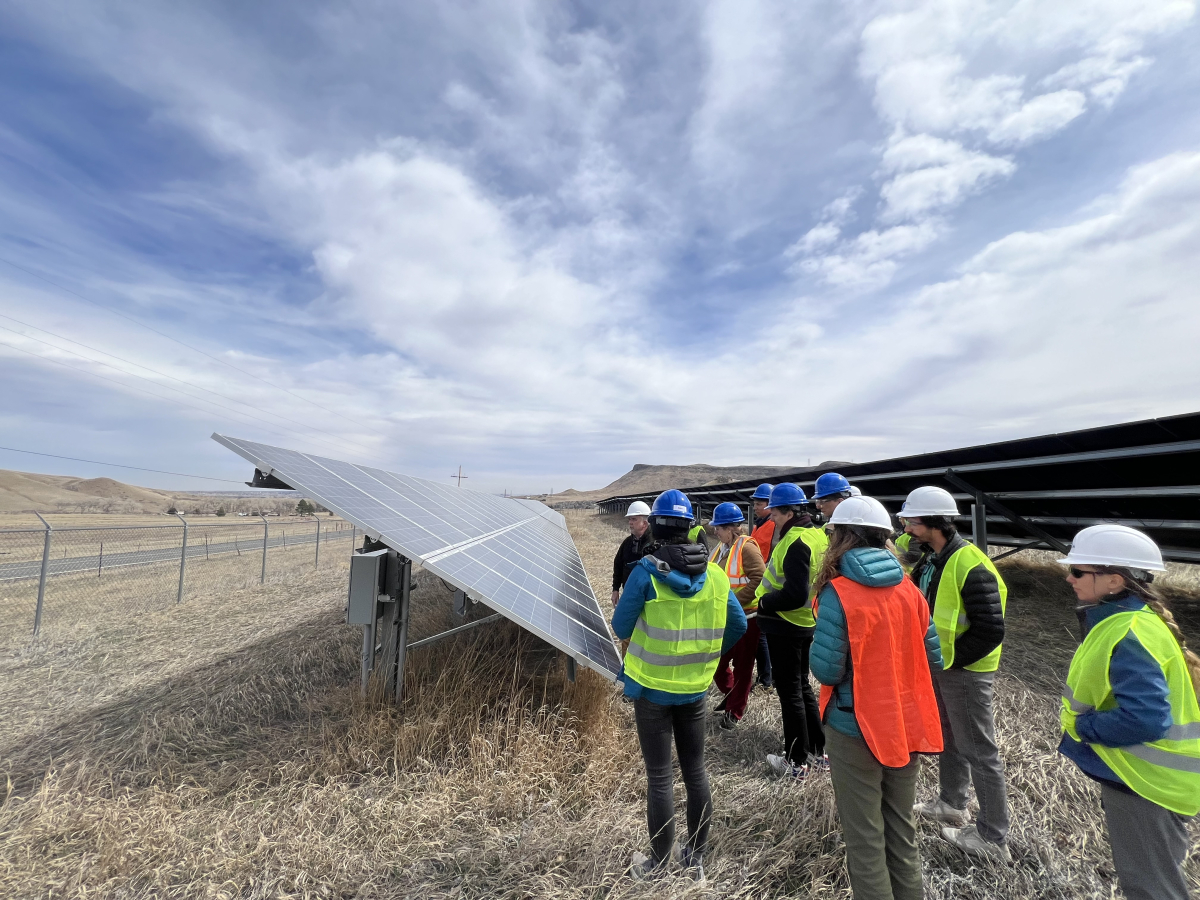
As solar energy emerges as the world’s leading renewable power source, new research from McGill University sheds light on the land requirements associated with this rapid growth. According to Sarah Marie Jordaan, Associate Professor in McGill’s Department of Civil Engineering, solar photovoltaics are expected to become the largest renewable energy source globally by 2029. However, current understanding of the implications of large-scale solar expansion on land use is limited.
Two recent studies from Jordaan’s research group aim to address this gap. They provide insights into how solar power can expand while minimizing its impact on land, a crucial yet often neglected resource. The first study, published in Communications Earth & Environment, utilized artificial intelligence to analyze the land footprint of major solar installations across the western United States.
Jordaan explained, “We applied computer vision using deep learning techniques to high-resolution aerial images to quantify the land requirements of 719 solar photovoltaic projects.” This research establishes a consistent and replicable method for measuring land usage, offering a benchmark to evaluate the implications of rapid solar growth. It highlights how factors such as regional climate and design efficiency can significantly influence land usage, with sunnier areas and compact designs needing less land per unit of electricity generated.
A second study published in Joule expands this analysis to a global context. By using satellite-based mapping of nearly 69,000 solar installations across 65 countries, the researchers compared land use and costs between rooftop solar systems and large ground-mounted solar plants. “This study delivers a much-needed, comprehensive evaluation of global solar-land relationships and their techno-economic implications,” Jordaan stated.
The global analysis reveals that rooftop solar has significant potential to conserve land. It also indicates that the cost disparity between rooftop and ground-mounted systems varies considerably by region, which influences the feasibility of rooftop solar deployment. Interestingly, the research suggests that land availability may not be as significant a constraint for many locations as commonly perceived.
“Solar projects can result in substantial environmental impacts locally, but our results found that reaching net-zero emissions with a high growth in solar requires a negligible amount of land globally,” Jordaan noted. She emphasized the importance of region-specific policy design to promote land-efficient options like rooftop solar, highlighting significant differences in costs and regional land availability.
Both studies are collaborative efforts from Jordaan’s lab, involving researchers from institutions across North America, Europe, and Asia. The research received support from the Alfred P. Sloan Foundation and the Natural Sciences and Engineering Research Council (NSERC) of Canada.
As the world increasingly turns to renewable energy sources, understanding and optimizing land use for solar power will be crucial in balancing energy needs with environmental sustainability.

Meta Plans Major Layoffs as AI Costs Surge

Alberta’s Referendum Could Pave Way for U.S. Statehood

Minooka District 201 Plans Enhanced Bilingual Support for Students

Canmore Approves Multiple Development Permits for New Projects

Remembering Bradly Castillo Shearsmith: A Life of Friendship and Joy

BIS Urges Watchdogs to Integrate Synthetic Risk Transfers in Stress Tests

Teva Transforms: Shifting Focus from Generics to Branded Success

Apple Launches AirPods Max 2 with Enhanced Audio Features

Ontario Ends Funding for Seven Supervised Injection Sites

Toyoake City Proposes Daily Two-Hour Smartphone Use Limit

Pedestrian Fatally Injured in Esquimalt Collision on August 14

B.C. Review Reveals Urgent Need for Rare-Disease Drug Reforms

Dark Adventure Game “Bye Sweet Carole” Set for October Release

Konami Revives Iconic Metal Gear Solid Delta Ahead of Release

Victoria’s Pop-Up Shop Shines Light on B.C.’s Wolf Cull

Jimmy Lai’s Defense Challenges Charges Under National Security Law

Snapmaker U1 Color 3D Printer Redefines Speed and Sustainability

Apple Expands Self-Service Repair Program to Canada
-
 Science11 months ago
Toyoake City Proposes Daily Two-Hour Smartphone Use Limit
-
 Top Stories11 months ago
Pedestrian Fatally Injured in Esquimalt Collision on August 14
-
 Health11 months ago
B.C. Review Reveals Urgent Need for Rare-Disease Drug Reforms
-
 Technology11 months ago
Dark Adventure Game “Bye Sweet Carole” Set for October Release
-
 Technology11 months ago
Konami Revives Iconic Metal Gear Solid Delta Ahead of Release
-
 Lifestyle11 months ago
Victoria’s Pop-Up Shop Shines Light on B.C.’s Wolf Cull
-
 World11 months ago
Jimmy Lai’s Defense Challenges Charges Under National Security Law
-
 Technology11 months ago
Snapmaker U1 Color 3D Printer Redefines Speed and Sustainability
-
 Technology11 months ago
Apple Expands Self-Service Repair Program to Canada
-

 Technology11 months ago
AION Folding Knife: Redefining EDC Design with Premium Materials
-

 Technology11 months ago
Solve Today’s Wordle Challenge: Hints and Answer for August 19
-

 Business11 months ago
Gordon Murray Automotive Unveils S1 LM and Le Mans GTR at Monterey