
Science
Nova Scotia Researchers Seek Abandoned Wasp Nests for Contamination Study

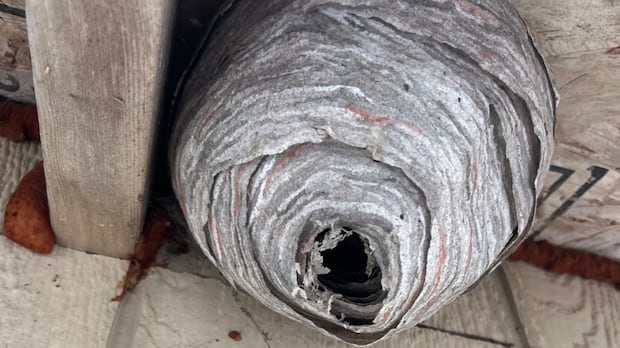
As winter recedes in Nova Scotia, researchers from Dalhousie University are calling on the public to assist in a unique environmental study. They are collecting abandoned paper wasp nests to investigate potential heavy metal contamination. This research, led by undergraduate student Carlie Ashton, aims to analyze how urbanization may affect local ecosystems through the study of wasps.
The species of particular interest to Ashton include aerial yellowjackets and bald-faced hornets. These insects construct their nests by gathering wood or plant fibers from their environments, chewing the materials, and forming a pulp they regurgitate to create their nests. Ashton hypothesizes that nests located in urban settings will show higher levels of contamination from copper and chromium, two common wood preservatives, compared to those in rural areas.
“If the wasps are in an urban area, they might be chewing on something like a deck, which is more likely to have wood preservatives,” Ashton explained. “In contrast, a wasp in a rural area may be using more natural materials like trees.”
As winter temperatures have caused the wasps to die off, the nests are now abandoned, making this an ideal time for collection. Ashton encourages anyone who discovers a nest to reach out to her. These nests may be located in barns, sheds, or trees, and are expected to be found hanging in various locations across the province. Ashton aims to gather all specimens by May 2024, coinciding with the period when new nests are typically constructed.
While the nests may appear damaged after the harsh winter, Ashton reassures that this will not hinder her research. She plans to dry the nests in a microwave and then dissolve the material for analysis. The goal is to detect the presence of heavy metals, which could provide insights into environmental health.
Assistant Professor Paul Manning, one of Ashton’s supervisors, emphasized the importance of this research. “Knowing whether contaminants are present, and in what quantities, can help researchers understand what pressures the insects are facing,” he stated. Insects worldwide are experiencing population declines due to a combination of factors, including habitat loss, pesticide exposure, and climate change.
Although the study does not focus on the direct effects of contamination on the wasps, previous research indicates that exposure to copper may reduce their lifespan and affect reproductive capabilities. This study aims to establish whether aerial yellowjackets and bald-faced hornets can act as biological indicators for heavy metal presence in Canadian ecosystems.
Ashton’s project represents a novel approach to understanding urban environmental contamination, particularly in wasp populations, and could pave the way for future research in this area.

Meta Plans Major Layoffs as AI Costs Surge

Alberta’s Referendum Could Pave Way for U.S. Statehood

Minooka District 201 Plans Enhanced Bilingual Support for Students

Canmore Approves Multiple Development Permits for New Projects

Remembering Bradly Castillo Shearsmith: A Life of Friendship and Joy

BIS Urges Watchdogs to Integrate Synthetic Risk Transfers in Stress Tests

Teva Transforms: Shifting Focus from Generics to Branded Success

Apple Launches AirPods Max 2 with Enhanced Audio Features

Ontario Ends Funding for Seven Supervised Injection Sites

Toyoake City Proposes Daily Two-Hour Smartphone Use Limit

Pedestrian Fatally Injured in Esquimalt Collision on August 14

B.C. Review Reveals Urgent Need for Rare-Disease Drug Reforms

Dark Adventure Game “Bye Sweet Carole” Set for October Release

Konami Revives Iconic Metal Gear Solid Delta Ahead of Release

Victoria’s Pop-Up Shop Shines Light on B.C.’s Wolf Cull

Jimmy Lai’s Defense Challenges Charges Under National Security Law

Snapmaker U1 Color 3D Printer Redefines Speed and Sustainability

Apple Expands Self-Service Repair Program to Canada
-
 Science11 months ago
Toyoake City Proposes Daily Two-Hour Smartphone Use Limit
-
 Top Stories11 months ago
Pedestrian Fatally Injured in Esquimalt Collision on August 14
-
 Health11 months ago
B.C. Review Reveals Urgent Need for Rare-Disease Drug Reforms
-
 Technology11 months ago
Dark Adventure Game “Bye Sweet Carole” Set for October Release
-
 Technology11 months ago
Konami Revives Iconic Metal Gear Solid Delta Ahead of Release
-
 Lifestyle11 months ago
Victoria’s Pop-Up Shop Shines Light on B.C.’s Wolf Cull
-
 World11 months ago
Jimmy Lai’s Defense Challenges Charges Under National Security Law
-
 Technology11 months ago
Snapmaker U1 Color 3D Printer Redefines Speed and Sustainability
-
 Technology11 months ago
Apple Expands Self-Service Repair Program to Canada
-

 Technology11 months ago
AION Folding Knife: Redefining EDC Design with Premium Materials
-

 Technology11 months ago
Solve Today’s Wordle Challenge: Hints and Answer for August 19
-

 Business11 months ago
Gordon Murray Automotive Unveils S1 LM and Le Mans GTR at Monterey