
Business
Milei Introduces Tax Amnesty to Encourage Banking of ‘Mattress Dollars’

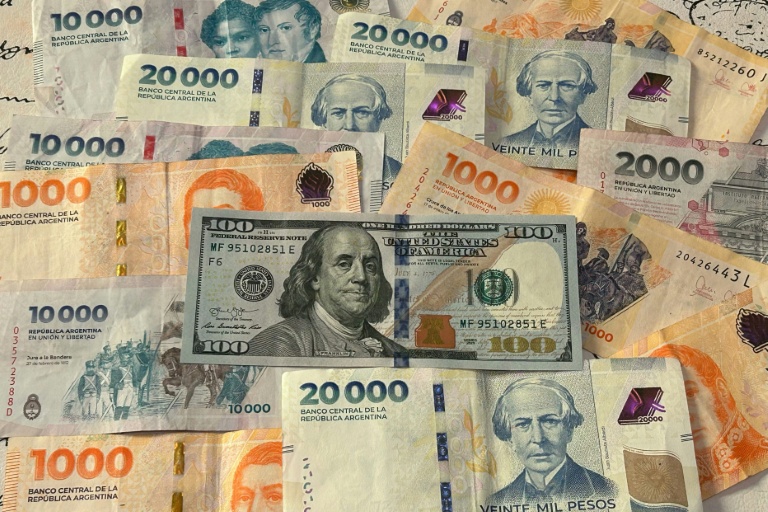
Argentine President Javier Milei has enacted a “tax innocence” law aimed at encouraging citizens to deposit their cash reserves, often referred to as “mattress dollars,” in banks. This legislation, signed on a recent Friday, allows for a degree of tax evasion forgiveness, thereby incentivizing individuals to move their hidden dollars into the formal banking system.
Over the years, rampant inflation and strict currency controls have led many Argentines to exchange their devalued pesos for US dollars, which they typically stash at home or in offshore accounts. The government estimates that around $251 billion is currently hoarded in this manner, a staggering sum that is six times greater than the Central Bank’s reserves of $41 billion as of December 30, 2023.
Milei’s administration is under pressure to bolster the country’s currency reserves, particularly as Argentina faces foreign debt payments totaling $19 billion this year, according to the Congressional Budget Office. The International Monetary Fund, to which Argentina owes tens of billions of dollars, has urged the government to improve its fiscal situation and rebuild its foreign currency reserves.
To facilitate the transition of these mattress dollars into banks, Congress approved a significant increase in the threshold for prosecutable tax evasion from approximately $1,060 to $70,000 per fiscal year. Additionally, the new law shortens the statute of limitations for financial crimes and creates a regime that exempts taxpayers from needing to report changes to their net worth.
In a bid to expedite the process, Economy Minister Luis Caputo has encouraged banks to promptly accept deposits from individuals registered under the new forgiveness regime. He further recommended that citizens consider depositing their funds in the state-owned Banco Nacion if private banks impose excessive inquiries regarding the origin of the funds. Caputo stated, “They deposit their dollars in the bank and can access them immediately, to spend as they wish or to save and earn interest, just like anywhere else in the world.”
Despite the potential economic benefits, opposition leaders have expressed concerns that this initiative could transform Argentina into a hub for money laundering activities. Jorge Taiana, a congressman from the center-left opposition, criticized the legislation on social media, asserting, “It transforms us into a haven for laundering dirty money and of laundering by drug traffickers.”
Milei’s administration has already seen some success with financial reforms, having launched a tax amnesty program shortly after taking office in December 2023. This initiative reportedly brought more than $20 billion into the banking system, although these funds were initially frozen in special accounts until the recent law took effect, granting owners full access to their money.
The government’s approach to revamping its financial framework aims not only to stabilize the economy but also to restore public trust in the banking system. As Argentines consider the implications of the new law, the broader impact on the economy and the integrity of financial practices remains to be seen.

Meta Plans Major Layoffs as AI Costs Surge

Alberta’s Referendum Could Pave Way for U.S. Statehood

Minooka District 201 Plans Enhanced Bilingual Support for Students

Canmore Approves Multiple Development Permits for New Projects

Remembering Bradly Castillo Shearsmith: A Life of Friendship and Joy

BIS Urges Watchdogs to Integrate Synthetic Risk Transfers in Stress Tests

Teva Transforms: Shifting Focus from Generics to Branded Success

Apple Launches AirPods Max 2 with Enhanced Audio Features

Ontario Ends Funding for Seven Supervised Injection Sites

Toyoake City Proposes Daily Two-Hour Smartphone Use Limit

Pedestrian Fatally Injured in Esquimalt Collision on August 14

B.C. Review Reveals Urgent Need for Rare-Disease Drug Reforms

Dark Adventure Game “Bye Sweet Carole” Set for October Release

Konami Revives Iconic Metal Gear Solid Delta Ahead of Release

Victoria’s Pop-Up Shop Shines Light on B.C.’s Wolf Cull

Jimmy Lai’s Defense Challenges Charges Under National Security Law

Snapmaker U1 Color 3D Printer Redefines Speed and Sustainability

Apple Expands Self-Service Repair Program to Canada
-
 Science12 months ago
Toyoake City Proposes Daily Two-Hour Smartphone Use Limit
-
 Top Stories12 months ago
Pedestrian Fatally Injured in Esquimalt Collision on August 14
-
 Health12 months ago
B.C. Review Reveals Urgent Need for Rare-Disease Drug Reforms
-
 Technology12 months ago
Dark Adventure Game “Bye Sweet Carole” Set for October Release
-
 Technology12 months ago
Konami Revives Iconic Metal Gear Solid Delta Ahead of Release
-
 Lifestyle12 months ago
Victoria’s Pop-Up Shop Shines Light on B.C.’s Wolf Cull
-
 World12 months ago
Jimmy Lai’s Defense Challenges Charges Under National Security Law
-
 Technology12 months ago
Snapmaker U1 Color 3D Printer Redefines Speed and Sustainability
-
 Technology12 months ago
Apple Expands Self-Service Repair Program to Canada
-

 Technology12 months ago
AION Folding Knife: Redefining EDC Design with Premium Materials
-

 Technology12 months ago
Solve Today’s Wordle Challenge: Hints and Answer for August 19
-

 Business12 months ago
Gordon Murray Automotive Unveils S1 LM and Le Mans GTR at Monterey