
Business
U.S. Sets New LNG Export Records with Over 100 Million Metric Tons

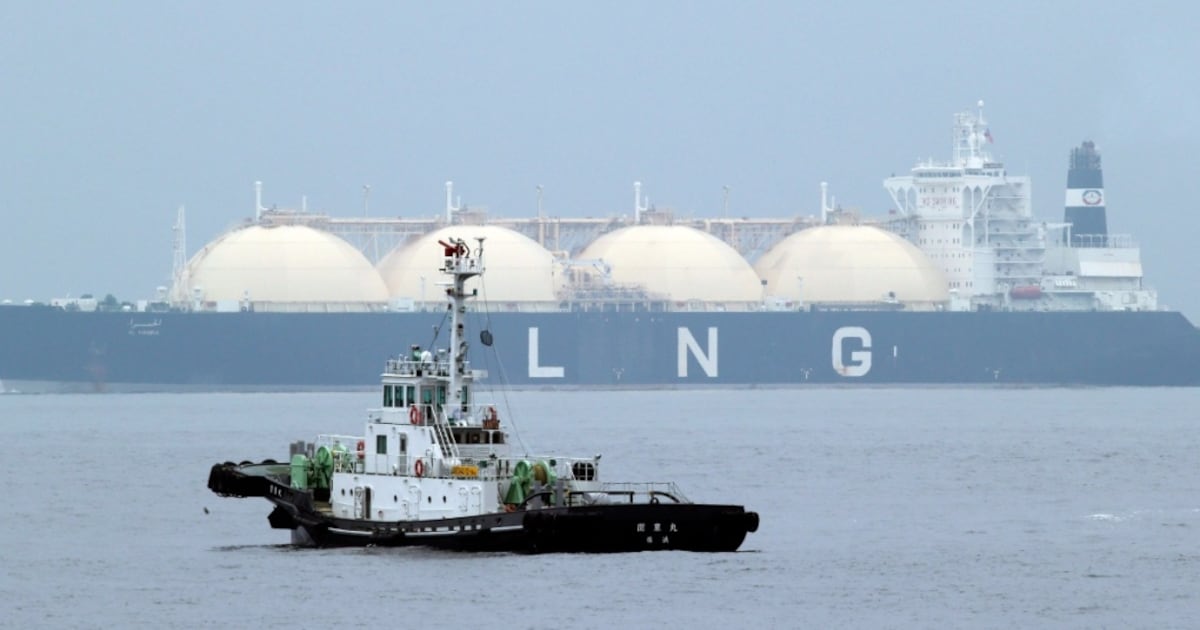
The United States achieved a significant milestone in the liquefied natural gas (LNG) sector by exporting over 100 million metric tons (mmt) of LNG in 2025, becoming the first country to reach this benchmark in a single year. Preliminary data from LSEG indicates that the U.S. exported 111 mmt of LNG, surpassing its closest competitor, Qatar, by nearly 20 mmt and increasing its exports by approximately 23 mmt compared to the previous year. This remarkable achievement positions the U.S. as the world’s largest LNG exporter, accounting for about a quarter of global LNG shipments.
Growth Driven by New Facilities and Increased Demand
The surge in exports can be attributed to the startup of new production facilities, notably the Plaquemines facility, which is the second-largest export plant in the U.S. This facility contributed 16.4 mmt to the total exports after commencing operations in December 2024. According to Alex Munton, director of global gas and LNG at Rapidan Energy Group, the 24 percent year-on-year growth reflects high utilization rates at existing terminals and the rapid ramp-up of new facilities.
December 2025 marked a historic month for U.S. LNG exports, with the country shipping 11.5 mmt in that single month, setting a new record. The year was notable for five monthly production records, showcasing the increasing capacity and efficiency of the U.S. LNG sector. Jason Feer, head of business intelligence at shipping firm Poten and Partners, highlighted the rapid progression from zero LNG exports nine years ago to over 100 mmt today, validating the U.S. approach to LNG production and export.
Europe Remains a Key Market for U.S. LNG
Europe continues to be the primary market for U.S. LNG, particularly in light of its reduced reliance on Russian gas. In December alone, the U.S. exported 9 mmt of LNG to Europe, as the continent dealt with the challenges of winter energy demands. Notably, Turkey increased its purchases of U.S. LNG, acquiring 1.45 mmt during the same period, underscoring shifting dynamics in European energy sourcing.
In contrast, exports to Asia decreased slightly, with the U.S. selling 1.23 mmt of LNG in December, down from 1.75 mmt in November. Meanwhile, Egypt continued to import significant quantities of U.S. LNG, purchasing 0.78 mmt to mitigate its natural gas shortages.
Looking ahead, the U.S. is poised for further growth in LNG production. With the Plaquemines facility aiming for full capacity in 2026, and additional modular plants from Cheniere expected to reach full operational volume, the U.S. could potentially increase its annual production by another 20 mmt in the coming year. The first production train at Golden Pass LNG, a joint venture involving QatarEnergy and Exxon Mobil, is also set to begin operations in the first quarter of 2026, signaling a robust outlook for the U.S. LNG industry.
This remarkable growth in LNG exports not only highlights the U.S.’s strategic position in the global energy market but also reflects broader shifts in international energy dynamics as countries seek reliable and diverse energy sources.

Meta Plans Major Layoffs as AI Costs Surge

Alberta’s Referendum Could Pave Way for U.S. Statehood

Minooka District 201 Plans Enhanced Bilingual Support for Students

Canmore Approves Multiple Development Permits for New Projects

Remembering Bradly Castillo Shearsmith: A Life of Friendship and Joy

BIS Urges Watchdogs to Integrate Synthetic Risk Transfers in Stress Tests

Teva Transforms: Shifting Focus from Generics to Branded Success

Apple Launches AirPods Max 2 with Enhanced Audio Features

Ontario Ends Funding for Seven Supervised Injection Sites

Toyoake City Proposes Daily Two-Hour Smartphone Use Limit

Pedestrian Fatally Injured in Esquimalt Collision on August 14

B.C. Review Reveals Urgent Need for Rare-Disease Drug Reforms

Dark Adventure Game “Bye Sweet Carole” Set for October Release

Konami Revives Iconic Metal Gear Solid Delta Ahead of Release

Victoria’s Pop-Up Shop Shines Light on B.C.’s Wolf Cull

Jimmy Lai’s Defense Challenges Charges Under National Security Law

Snapmaker U1 Color 3D Printer Redefines Speed and Sustainability

Apple Expands Self-Service Repair Program to Canada
-
 Science12 months ago
Toyoake City Proposes Daily Two-Hour Smartphone Use Limit
-
 Top Stories12 months ago
Pedestrian Fatally Injured in Esquimalt Collision on August 14
-
 Health12 months ago
B.C. Review Reveals Urgent Need for Rare-Disease Drug Reforms
-
 Technology12 months ago
Dark Adventure Game “Bye Sweet Carole” Set for October Release
-
 Technology12 months ago
Konami Revives Iconic Metal Gear Solid Delta Ahead of Release
-
 Lifestyle12 months ago
Victoria’s Pop-Up Shop Shines Light on B.C.’s Wolf Cull
-
 World12 months ago
Jimmy Lai’s Defense Challenges Charges Under National Security Law
-
 Technology12 months ago
Snapmaker U1 Color 3D Printer Redefines Speed and Sustainability
-
 Technology12 months ago
Apple Expands Self-Service Repair Program to Canada
-

 Technology12 months ago
AION Folding Knife: Redefining EDC Design with Premium Materials
-

 Technology12 months ago
Solve Today’s Wordle Challenge: Hints and Answer for August 19
-

 Business12 months ago
Gordon Murray Automotive Unveils S1 LM and Le Mans GTR at Monterey