
Education
Alberta Launches $143 Million Initiative for Classroom Support

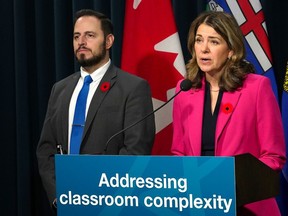
Alberta is implementing a significant initiative aimed at enhancing classroom support, allocating $143 million to address class size and complexity in schools. This program focuses on the deployment of 476 “complexity teams” to K-6 schools with the highest needs, following data that underscores the challenges teachers have faced throughout the past year.
Each complexity team will consist of one teacher and two educational assistants, a strategy designed to provide targeted support for students requiring additional assistance. Demetrios Nicolaides, Alberta’s Education Minister, emphasized the importance of early intervention, stating that addressing student needs during formative years can lead to better long-term outcomes. “We know that student needs during those formative years is more effective and also less costly to remediate later on in a student’s journey,” Nicolaides explained in a recent interview.
Targeting Complex Classrooms in Major Cities
Data released on October 19, 2023, indicates that Calgary and Edmonton have the highest concentrations of complex classrooms, with the announcement coming on the heels of a three-week teachers’ strike that concluded earlier this month. The strike ended after the United Conservative Party (UCP) enacted back-to-work legislation and imposed a contract. Premier Danielle Smith noted that the data illustrates significant pressures within the school system stemming from increasing complexity and behavioral incidents.
The province’s class size and complexity cabinet committee had previously requested school boards to submit data regarding classroom conditions. This data was gathered from 89,000 classrooms across 1,549 schools, achieving a 96 percent response rate. Notably, classrooms designated as outreach, online, colony, home school, or institutional schools were excluded from the analysis. Officials reported that less than one percent of classrooms in Alberta do not exhibit any complexity.
Funding and Implementation of Complexity Teams
While the average class size in Alberta is reported at 25 students, Nicolaides pointed out that this figure does not adequately reflect the challenges posed by complexity in classrooms. The analysis categorized classrooms as low, moderate, and high priority based on various factors, including the number of students learning English as an additional language and the presence of disabilities. Across the province, 5 percent of classrooms were deemed high priority, while 36 percent fell into the medium category, and 59 percent were classified as low priority.
Moreover, over 1,800 classes in Calgary and more than 1,500 classes in Edmonton are considered high priority. According to the data, 27 percent of classrooms experience a high occurrence of students with complex needs, with 39 percent at a moderate level.
The complexity teams will contribute to the government’s broader commitment to hire 3,000 teachers by 2028. The allocated funds will allow for the hiring of 1,428 educational staff to support students in need and assist teachers within the classroom environment. Each complexity team will receive $300,000 in funding, sourced from Budget 2025-26, with no cuts to other programs required to finance this initiative.
When questioned about the future of funding for these teams, Nicolaides indicated that the long-term strategy will be clarified in Budget 2026, scheduled for release on February 26, 2024. He reaffirmed the province’s commitment to addressing complexity over an extended period, acknowledging that challenges persist in junior high and high school settings.
Funding will be distributed to school divisions immediately, allowing local school boards to make hiring decisions for complexity teams. Selected school divisions will receive the majority of funding, with others receiving nine teams or fewer.
This initiative marks a pivotal step in Alberta’s efforts to enhance educational support, aiming to ensure that students receive the assistance they need in their early educational journeys.

Meta Plans Major Layoffs as AI Costs Surge

Alberta’s Referendum Could Pave Way for U.S. Statehood

Minooka District 201 Plans Enhanced Bilingual Support for Students

Canmore Approves Multiple Development Permits for New Projects

Remembering Bradly Castillo Shearsmith: A Life of Friendship and Joy

BIS Urges Watchdogs to Integrate Synthetic Risk Transfers in Stress Tests

Teva Transforms: Shifting Focus from Generics to Branded Success

Apple Launches AirPods Max 2 with Enhanced Audio Features

Ontario Ends Funding for Seven Supervised Injection Sites

Toyoake City Proposes Daily Two-Hour Smartphone Use Limit

Pedestrian Fatally Injured in Esquimalt Collision on August 14

B.C. Review Reveals Urgent Need for Rare-Disease Drug Reforms

Dark Adventure Game “Bye Sweet Carole” Set for October Release

Konami Revives Iconic Metal Gear Solid Delta Ahead of Release

Victoria’s Pop-Up Shop Shines Light on B.C.’s Wolf Cull

Jimmy Lai’s Defense Challenges Charges Under National Security Law

Snapmaker U1 Color 3D Printer Redefines Speed and Sustainability

Apple Expands Self-Service Repair Program to Canada
-
 Science1 year ago
Toyoake City Proposes Daily Two-Hour Smartphone Use Limit
-
 Top Stories1 year ago
Pedestrian Fatally Injured in Esquimalt Collision on August 14
-
 Health1 year ago
B.C. Review Reveals Urgent Need for Rare-Disease Drug Reforms
-
 Technology1 year ago
Dark Adventure Game “Bye Sweet Carole” Set for October Release
-
 Technology1 year ago
Konami Revives Iconic Metal Gear Solid Delta Ahead of Release
-
 Lifestyle1 year ago
Victoria’s Pop-Up Shop Shines Light on B.C.’s Wolf Cull
-
 World1 year ago
Jimmy Lai’s Defense Challenges Charges Under National Security Law
-
 Technology1 year ago
Snapmaker U1 Color 3D Printer Redefines Speed and Sustainability
-
 Technology1 year ago
Apple Expands Self-Service Repair Program to Canada
-

 Technology1 year ago
AION Folding Knife: Redefining EDC Design with Premium Materials
-

 Technology1 year ago
Solve Today’s Wordle Challenge: Hints and Answer for August 19
-

 Business1 year ago
Gordon Murray Automotive Unveils S1 LM and Le Mans GTR at Monterey