
Education
Canadian Universities Face Tuition Hikes as Funding Model Fails

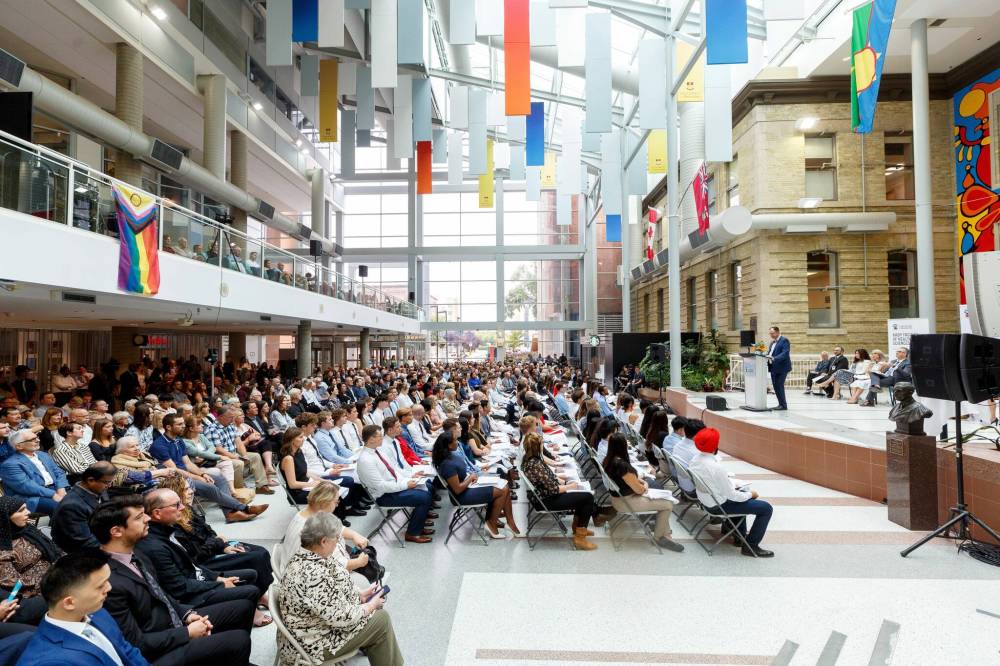
Canadian universities are on the brink of significant tuition hikes due to a failing funding model. With a steep decline in international student enrolment and limited provincial support, institutions like the University of Manitoba are grappling with a financial crisis that threatens the accessibility of higher education.
For decades, Canada’s universities have been celebrated for their world-class education at relatively low costs. Notably, Manitoba boasts some of the lowest tuition fees in the nation, with average rates approximately 22.5 percent below the national average, according to Statistics Canada. Despite this, the fiscal landscape is shifting dramatically, and the reality many institutions face today is one of increasing costs and decreasing revenues.
Funding Challenges for Canadian Universities
The cost of operating a university in 2026 bears little resemblance to that of 2013. The affordability enjoyed by students has not occurred by chance. It has been sustained by years of constrained spending and a growing dependency on international tuition. Typically, international students pay rates that are three to five times higher than domestic students, effectively subsidizing the latter’s education.
This model thrived because Canada was perceived as an attractive destination for international students. They not only came to study but also sought opportunities to live and work in a welcoming environment. The benefits to Canada included cultural exchange, enhanced research capacity, and long-term economic growth. Unfortunately, this model is now breaking down.
In 2024, the federal government implemented strict limits on international student admissions to address housing pressures, particularly in southern Ontario and British Columbia. A uniform cap was applied nationally, which has had severe repercussions for universities across Canada. As a result, many institutions are resorting to cutting programs, eliminating staff, and scaling back their operational ambitions.
Impact on Manitoba’s Educational Institutions
Manitoba is not immune to these challenges. The province’s education system is experiencing significant strain, as highlighted by the 40 percent reduction in international student enrolment reported by Advanced Education and Training Minister Renée Cable. The closure of the Manitoba Institute of Trades and Technology underscores the seriousness of the situation, as it attributed its shutdown to falling international enrolment.
This decline not only affects the institutions but also alters how Canada is perceived globally. Applications from international students have dropped, not just due to caps, but because the country no longer presents itself as the inviting destination it once was. The financial implications of this shift are profound, as universities can no longer rely on international tuition revenue to support domestic education.
Looking ahead, if Canadian universities wish to maintain the high standards expected by Canadians, they will need to raise domestic tuition rates. The adjustments required will not lead to an American-style tuition spiral but will need to be meaningful and reflective of the true costs of delivering quality education.
Such changes must be accompanied by robust financial aid systems to ensure that talented students are not excluded due to economic barriers. Balancing equity and affordability is essential, but it must be grounded in a financially sustainable model.
Provincial funding plays a critical role in this equation. For over a decade, provincial support for universities has been declining in real terms. The Higher Education Strategy Associates reported a national funding drop of three percent over the past five years, with Manitoba experiencing a four percent decrease between 2019 and 2024. At the University of Manitoba, the operating grant is not linked to enrolment, leading to a situation where more domestic students are being educated with decreasing provincial support.
As the province anticipates an increase of over 1,400 domestic students by 2028, the financial outlook appears grim. A combination of reduced international enrolment and rising domestic student numbers points toward a future of declining revenue per student.
While the current provincial government has made modest funding increases and the federal government has invested in research, these efforts fall short of compensating for past cuts or addressing the scale of the recent enrolment decline.
As political scientist Jonathan Malloy noted, “universities are not a commodity in which quality holds steady regardless of price.” Without adequate investment, the system risks descending into a downward spiral of diminishing quality and opportunity.
For years, Canadian universities have strived to keep tuition fees low for domestic students. Yet, with international student numbers falling, this strategy is becoming increasingly untenable. Adjusting domestic tuition rates now, in a measured way, is crucial for preserving accessibility and ensuring that universities can provide the quality of education that students deserve.
If proactive measures are not taken, Canada risks undermining its most vital engines of growth, innovation, and social mobility. The time for decisive action is now.

Meta Plans Major Layoffs as AI Costs Surge

Alberta’s Referendum Could Pave Way for U.S. Statehood

Minooka District 201 Plans Enhanced Bilingual Support for Students

Canmore Approves Multiple Development Permits for New Projects

Remembering Bradly Castillo Shearsmith: A Life of Friendship and Joy

BIS Urges Watchdogs to Integrate Synthetic Risk Transfers in Stress Tests

Teva Transforms: Shifting Focus from Generics to Branded Success

Apple Launches AirPods Max 2 with Enhanced Audio Features

Ontario Ends Funding for Seven Supervised Injection Sites

Toyoake City Proposes Daily Two-Hour Smartphone Use Limit

Pedestrian Fatally Injured in Esquimalt Collision on August 14

B.C. Review Reveals Urgent Need for Rare-Disease Drug Reforms

Dark Adventure Game “Bye Sweet Carole” Set for October Release

Konami Revives Iconic Metal Gear Solid Delta Ahead of Release

Victoria’s Pop-Up Shop Shines Light on B.C.’s Wolf Cull

Jimmy Lai’s Defense Challenges Charges Under National Security Law

Snapmaker U1 Color 3D Printer Redefines Speed and Sustainability

Apple Expands Self-Service Repair Program to Canada
-
 Science1 year ago
Toyoake City Proposes Daily Two-Hour Smartphone Use Limit
-
 Top Stories1 year ago
Pedestrian Fatally Injured in Esquimalt Collision on August 14
-
 Health1 year ago
B.C. Review Reveals Urgent Need for Rare-Disease Drug Reforms
-
 Technology1 year ago
Dark Adventure Game “Bye Sweet Carole” Set for October Release
-
 Technology1 year ago
Konami Revives Iconic Metal Gear Solid Delta Ahead of Release
-
 Lifestyle1 year ago
Victoria’s Pop-Up Shop Shines Light on B.C.’s Wolf Cull
-
 World1 year ago
Jimmy Lai’s Defense Challenges Charges Under National Security Law
-
 Technology1 year ago
Snapmaker U1 Color 3D Printer Redefines Speed and Sustainability
-
 Technology1 year ago
Apple Expands Self-Service Repair Program to Canada
-

 Technology1 year ago
AION Folding Knife: Redefining EDC Design with Premium Materials
-

 Technology1 year ago
Solve Today’s Wordle Challenge: Hints and Answer for August 19
-

 Business1 year ago
Gordon Murray Automotive Unveils S1 LM and Le Mans GTR at Monterey