
Education
Canadian History Course Connects Past Turmoil with Present Issues

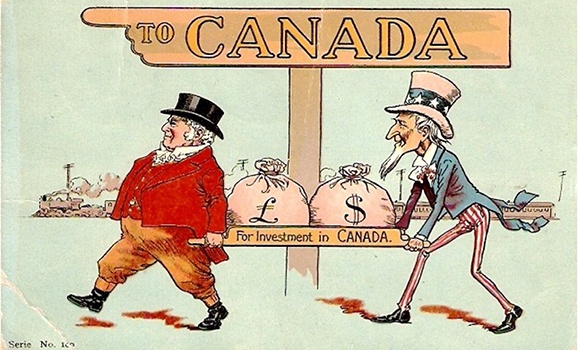
A popular history course at Dalhousie University offers students a unique perspective on Canada by examining the tumultuous period from the 1930s to the present. Titled Many Canadas: Canada, 1930 to the Present, the course challenges students to reflect on how historical events resonate with contemporary issues, especially in light of current political and cultural tensions.
Led by Dr. Kassandra Luciuk, an assistant professor of history, the course begins not with the establishment of Confederation in 1867 but rather with the chaotic decade of the 1930s. Dr. Luciuk describes this era as defined by “the politics of chaos,” a time marked by uncertainty and societal upheaval. She emphasizes that the parallels students draw between historical and present-day events shift depending on what is currently newsworthy.
The 1930s, shaped by the Great Depression, was a critical period for Canada, characterized by significant political and social challenges. Dr. Luciuk notes that Canadians faced various hardships, from the impacts of industrialization to the violent consequences of nation-building. The climate of the time fostered the emergence of new political movements across the spectrum, all advocating for reform.
Students enrolled in the course often find themselves grappling with themes that resonate deeply with today’s issues, such as political polarization and economic nationalism. Dr. Luciuk points out how past discussions inform current debates, especially regarding the influence of foreign markets on Canada’s economy. She references the work of Harold Innis, whose staples thesis illustrates the historical reliance on natural resource extraction and its implications for regional identities and tensions.
The course’s content is dynamic, adapting to current events. For instance, during the pandemic, discussions surrounding the government’s invocation of the Emergencies Act highlighted historical instances of emergency powers, prompting students to reflect on their implications today.
Dr. Luciuk also encourages students to challenge prevalent myths about Canada, such as the notion that it is inherently “nicer” than the United States. The course reveals that Canada has, at times, enacted policies that severely compromised civil liberties, such as the detainment of individuals during the Cold War era without due legal process.
Engagement with historical material elicits a range of emotions among students. Many express fascination as they discover how previous generations navigated issues similar to their own. Yet, there is also frustration over perceived regressions in social progress over time, particularly concerning the treatment of Indigenous peoples and marginalized communities.
As students examine the historical context of political movements like the Co-operative Commonwealth Federation (CCF) and its leader Tommy Douglas, they often find resonance with contemporary disillusionment toward the political system. Dr. Luciuk recounts how Douglas’s memorable “Mouseland” speech, which critiqued the electoral system’s limitations, still strikes a chord with students who feel similarly constrained by the current political landscape.
The course also prompts discussions about the historical tension between Canadian identity and American influence. Dr. Luciuk explains that while Canadians have historically reacted to American dominance, the internal debates about cultural and economic sovereignty remain relevant. The Massey Commission of 1951 warned of Canada’s dependence on American culture, a sentiment echoed in discussions of economic nationalism today.
Ultimately, Dr. Luciuk aims for her students to emerge from the course with a more nuanced understanding of Canada’s historical narrative. “It’s not about me imposing a specific conclusion but rather encouraging students to reflect on their own perspectives,” she states. She hopes to instill an awareness of the complex interplay between history and contemporary issues, providing students with tools to engage actively in their society.
This course serves as a reminder that the past continues to shape the present, offering valuable lessons for navigating the challenges of today’s political and social landscape.

Meta Plans Major Layoffs as AI Costs Surge

Alberta’s Referendum Could Pave Way for U.S. Statehood

Minooka District 201 Plans Enhanced Bilingual Support for Students

Canmore Approves Multiple Development Permits for New Projects

Remembering Bradly Castillo Shearsmith: A Life of Friendship and Joy

BIS Urges Watchdogs to Integrate Synthetic Risk Transfers in Stress Tests

Teva Transforms: Shifting Focus from Generics to Branded Success

Apple Launches AirPods Max 2 with Enhanced Audio Features

Ontario Ends Funding for Seven Supervised Injection Sites

Toyoake City Proposes Daily Two-Hour Smartphone Use Limit

Pedestrian Fatally Injured in Esquimalt Collision on August 14

B.C. Review Reveals Urgent Need for Rare-Disease Drug Reforms

Dark Adventure Game “Bye Sweet Carole” Set for October Release

Konami Revives Iconic Metal Gear Solid Delta Ahead of Release

Victoria’s Pop-Up Shop Shines Light on B.C.’s Wolf Cull

Jimmy Lai’s Defense Challenges Charges Under National Security Law

Snapmaker U1 Color 3D Printer Redefines Speed and Sustainability

Apple Expands Self-Service Repair Program to Canada
-
 Science12 months ago
Toyoake City Proposes Daily Two-Hour Smartphone Use Limit
-
 Top Stories12 months ago
Pedestrian Fatally Injured in Esquimalt Collision on August 14
-
 Health12 months ago
B.C. Review Reveals Urgent Need for Rare-Disease Drug Reforms
-
 Technology12 months ago
Dark Adventure Game “Bye Sweet Carole” Set for October Release
-
 Technology12 months ago
Konami Revives Iconic Metal Gear Solid Delta Ahead of Release
-
 Lifestyle12 months ago
Victoria’s Pop-Up Shop Shines Light on B.C.’s Wolf Cull
-
 World12 months ago
Jimmy Lai’s Defense Challenges Charges Under National Security Law
-
 Technology12 months ago
Snapmaker U1 Color 3D Printer Redefines Speed and Sustainability
-
 Technology12 months ago
Apple Expands Self-Service Repair Program to Canada
-

 Technology12 months ago
AION Folding Knife: Redefining EDC Design with Premium Materials
-

 Technology12 months ago
Solve Today’s Wordle Challenge: Hints and Answer for August 19
-

 Business12 months ago
Gordon Murray Automotive Unveils S1 LM and Le Mans GTR at Monterey