
Education
Lakehead University Launches Cultural Walk Highlighting 9,000 Years of History

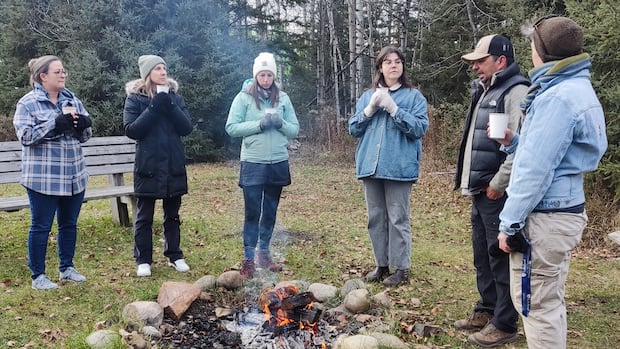
Lakehead University in Thunder Bay, Ontario, is introducing an innovative land-based learning initiative called the Etuaptmumk bimoseng, or Two-Eyed Seeing Walk. This 90-minute guided experience invites participants to engage with the rich cultural and historical significance of the land on which the university’s campus stands. The program aims to foster understanding through a blend of Indigenous and Western knowledge systems.
The guided walk, led by Joe Duncan, an Indigenous content curriculum specialist, and Rachel Portinga, the acting sustainability coordinator, is designed to bring to life the university’s land acknowledgment in a tangible way. “This walk brings Lakehead’s land acknowledgment to life in a new way,” Duncan stated. He emphasized the importance of sharing the deep cultural heritage of Indigenous peoples, which extends back over 9,000 years.
Since its inception, more than 60 participants including faculty, staff, and students have joined the walk. The journey begins at Lake Tamblyn, progresses along the McIntyre River, and concludes at the campus sweat lodge. Throughout the route, participants visit several of the 14 archaeological sites identified on the land, which feature quarry sites for Jasper taconite and areas rich in copper deposits.
Participants have the opportunity to examine a range of artifacts, including Jasper taconite arrowheads, copper nuggets, antler tools, and a copper knife. Duncan explained that the walk is instrumental in helping individuals appreciate the longstanding relationship Indigenous peoples have had with their environment. “It tells the history of the Indigenous people that occupied this area going back to 9,000 years ago,” he noted.
Exploring Two-Eyed Seeing
The concept of Two-Eyed Seeing is central to the walk, combining the strengths of both Indigenous and Western ways of knowing. Duncan elaborated on this approach, stating, “When you’re on the tour, we talk about the traditional medicines, what they carry and how Indigenous people use them, but also combine that with the Western science aspect that complements each other.”
Participants learn to identify local medicinal plants such as giizhik (cedar) while also gaining insights into scientific research that supports these plants’ detoxification and anti-inflammatory properties. The tour also addresses colonial history, referencing significant events such as the 1849 commissioners’ report that influenced the Robinson-Superior Treaty, the introduction of the Indian Act in 1873, and the impact of the residential school system.
Portinga highlighted the walk’s structure as a means to contrast millennia of thriving Indigenous presence against the disruptions caused by colonial policies. “We know all of this history, we know where we’re at now, how can we continue to actually engage in reconciliation and make this right?” she asked.
Growth and Future Plans
The walk builds upon efforts initiated six years ago within the Office of Sustainability. Over time, Duncan, Portinga, and sustainability intern Carolina Camacho have enriched the project with research and archaeological insights, enhancing the hands-on learning experience. Duncan also collaborated with retired anthropology professor Scott Hamilton, whose expertise helped refine the historical narrative.
Duncan expressed his motivation for the project, saying, “As an Indigenous person, I’m walking away, like, why don’t people know this? People need to know this.” The first walk took place in September, receiving overwhelmingly positive feedback from participants. “So far, I think there’s been over 60 participants on this tour, and the amount of feedback we’re getting has been remarkable,” he remarked.
Interest in the walk continues to grow, with 170 students already registered for future sessions expected to start in March. The team, including Camacho, plans to expand the initiative beyond its pilot phase, aiming to enhance accessibility and create both digital and printed materials for participants.
Looking ahead, the long-term vision includes developing a “train-the-trainer” program to empower more Indigenous students to lead future walks. For Duncan, the essence of the project is clear: “Not all classrooms have four walls. When we connect to the land and are listening and talking from the heart, that’s learning.”

Meta Plans Major Layoffs as AI Costs Surge

Alberta’s Referendum Could Pave Way for U.S. Statehood

Minooka District 201 Plans Enhanced Bilingual Support for Students

Canmore Approves Multiple Development Permits for New Projects

Remembering Bradly Castillo Shearsmith: A Life of Friendship and Joy

BIS Urges Watchdogs to Integrate Synthetic Risk Transfers in Stress Tests

Teva Transforms: Shifting Focus from Generics to Branded Success

Apple Launches AirPods Max 2 with Enhanced Audio Features

Ontario Ends Funding for Seven Supervised Injection Sites

Toyoake City Proposes Daily Two-Hour Smartphone Use Limit

Pedestrian Fatally Injured in Esquimalt Collision on August 14

B.C. Review Reveals Urgent Need for Rare-Disease Drug Reforms

Dark Adventure Game “Bye Sweet Carole” Set for October Release

Konami Revives Iconic Metal Gear Solid Delta Ahead of Release

Victoria’s Pop-Up Shop Shines Light on B.C.’s Wolf Cull

Jimmy Lai’s Defense Challenges Charges Under National Security Law

Snapmaker U1 Color 3D Printer Redefines Speed and Sustainability

Apple Expands Self-Service Repair Program to Canada
-
 Science1 year ago
Toyoake City Proposes Daily Two-Hour Smartphone Use Limit
-
 Top Stories1 year ago
Pedestrian Fatally Injured in Esquimalt Collision on August 14
-
 Health1 year ago
B.C. Review Reveals Urgent Need for Rare-Disease Drug Reforms
-
 Technology1 year ago
Dark Adventure Game “Bye Sweet Carole” Set for October Release
-
 Technology1 year ago
Konami Revives Iconic Metal Gear Solid Delta Ahead of Release
-
 Lifestyle1 year ago
Victoria’s Pop-Up Shop Shines Light on B.C.’s Wolf Cull
-
 World1 year ago
Jimmy Lai’s Defense Challenges Charges Under National Security Law
-
 Technology1 year ago
Snapmaker U1 Color 3D Printer Redefines Speed and Sustainability
-
 Technology1 year ago
Apple Expands Self-Service Repair Program to Canada
-

 Technology1 year ago
AION Folding Knife: Redefining EDC Design with Premium Materials
-

 Technology1 year ago
Solve Today’s Wordle Challenge: Hints and Answer for August 19
-

 Business1 year ago
Gordon Murray Automotive Unveils S1 LM and Le Mans GTR at Monterey