
Education
Moravian Expedition to Ungava Bay Set in Motion by Inuit Guidance

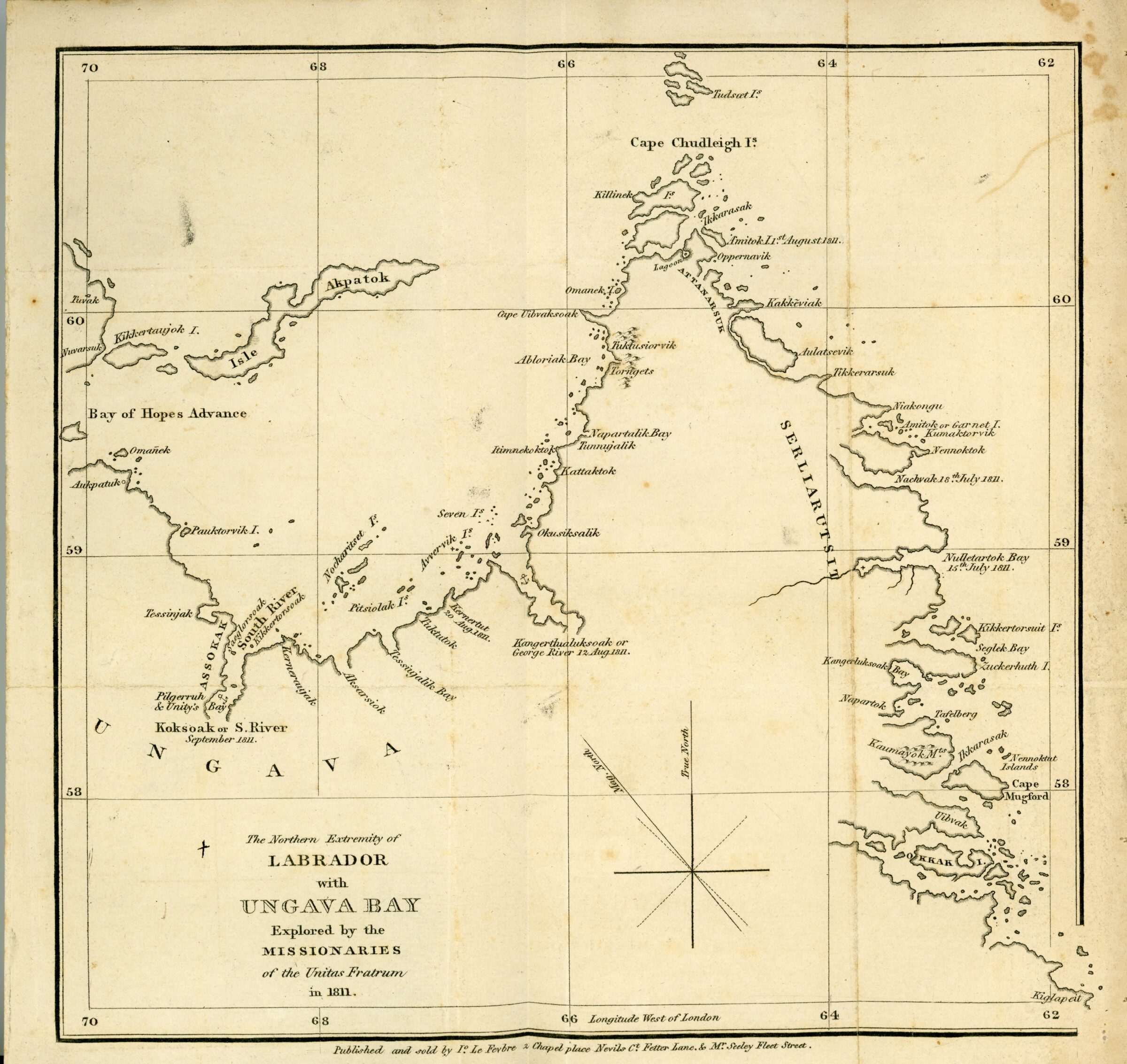
The Moravian missionary expedition to Ungava Bay commenced with the guidance of local Inuit, paving the way for a significant venture in 1811. Led by Benjamin Kohlmeister, who had already established a deep connection with the Inuit community, the mission aimed to explore the region’s potential for future missionary work. Armed with invaluable insights from Inuit traders Arnauyak and Uttakiyok, Kohlmeister recognized the necessity of Inuit collaboration for the success of the expedition.
Recruitment and Preparations
In 1910, Kohlmeister traveled to Hopedale, where he recruited Jonathan, a respected Inuk, to lead the expedition. Jonathan, along with his wife Sybilla, had been among the first Inuit baptized in Hopedale and were well-regarded within their community. Kohlmeister described Jonathan as a man of exceptional capability and wisdom, noting his “uncommon presence of mind in difficulties and dangers.”
Jonathan owned a sturdy 45-foot two-masted boat, which he had acquired from traders in Chateau Bay. He was considered one of the most skilled navigators along the coast of Labrador. As the expedition took shape, Jonathan assembled a diverse crew, including his son Jonas, his cousin Paul, and others, including a young orphan named Okkiksuk whom Jonathan had adopted.
As preparations unfolded, another missionary, George Kmoch, was added to the team. The group faced warnings about potential hostility from Inuit in Ungava, with Atsugarsuk, an angakkuq, sharing alarming reports. Many in Okkak feared for the safety of their missionaries, predicting they could perish in the perilous waters around Killinek—known today as Port Burwell.
Setting Sail and Inuit Guidance
On June 24, 1811, the expedition departed from Okkak aboard Jonathan’s boat, accompanied by a traditional umiak commanded by Thukkekina. This approach allowed the deeper-drafted vessel to remain safely offshore while still reaching the coastal Inuit camps. Their journey towards Killinek included stops at various camps, reinforcing their connections with the local communities.
Upon reaching the northern peninsula of Labrador, the group reunited with Uttakiyok, whose previous insights had greatly influenced Kohlmeister’s desire to explore Ungava. Described as a man of superior intellect and skill in traditional Inuit practices, Uttakiyok had waited for the party’s arrival along with several Ungava Inuit. Despite not being a Christian, he received high praise from the missionaries for his guidance and expertise.
“We had indeed the greatest reason to thank God, that he had sent us this man, to conduct us on our way to an unknown country, and through unfrequented seas,” noted Kohlmeister.
The expedition illustrates the collaborative efforts between Moravian missionaries and the Inuit, showcasing a significant moment in the history of cross-cultural interaction in the region. As Kohlmeister and Kmoch’s journey unfolds, it promises to reveal more about the dynamics of their mission and the Inuit communities they encountered. In the next part of this series, further details will emerge about their experiences and challenges in navigating the complexities of their mission.
This article is part of an occasional column that highlights historically significant events. The author, Kenn Harper, is a historian with over 50 years of experience in the Arctic, and has written extensively on the region’s history and culture.

Meta Plans Major Layoffs as AI Costs Surge

Alberta’s Referendum Could Pave Way for U.S. Statehood

Minooka District 201 Plans Enhanced Bilingual Support for Students

Canmore Approves Multiple Development Permits for New Projects

Remembering Bradly Castillo Shearsmith: A Life of Friendship and Joy

BIS Urges Watchdogs to Integrate Synthetic Risk Transfers in Stress Tests

Teva Transforms: Shifting Focus from Generics to Branded Success

Apple Launches AirPods Max 2 with Enhanced Audio Features

Ontario Ends Funding for Seven Supervised Injection Sites

Toyoake City Proposes Daily Two-Hour Smartphone Use Limit

Pedestrian Fatally Injured in Esquimalt Collision on August 14

B.C. Review Reveals Urgent Need for Rare-Disease Drug Reforms

Dark Adventure Game “Bye Sweet Carole” Set for October Release

Konami Revives Iconic Metal Gear Solid Delta Ahead of Release

Victoria’s Pop-Up Shop Shines Light on B.C.’s Wolf Cull

Jimmy Lai’s Defense Challenges Charges Under National Security Law

Snapmaker U1 Color 3D Printer Redefines Speed and Sustainability

Apple Expands Self-Service Repair Program to Canada
-
 Science12 months ago
Toyoake City Proposes Daily Two-Hour Smartphone Use Limit
-
 Top Stories12 months ago
Pedestrian Fatally Injured in Esquimalt Collision on August 14
-
 Health12 months ago
B.C. Review Reveals Urgent Need for Rare-Disease Drug Reforms
-
 Technology12 months ago
Dark Adventure Game “Bye Sweet Carole” Set for October Release
-
 Technology12 months ago
Konami Revives Iconic Metal Gear Solid Delta Ahead of Release
-
 Lifestyle12 months ago
Victoria’s Pop-Up Shop Shines Light on B.C.’s Wolf Cull
-
 World12 months ago
Jimmy Lai’s Defense Challenges Charges Under National Security Law
-
 Technology12 months ago
Snapmaker U1 Color 3D Printer Redefines Speed and Sustainability
-
 Technology12 months ago
Apple Expands Self-Service Repair Program to Canada
-

 Technology12 months ago
AION Folding Knife: Redefining EDC Design with Premium Materials
-

 Technology12 months ago
Solve Today’s Wordle Challenge: Hints and Answer for August 19
-

 Business12 months ago
Gordon Murray Automotive Unveils S1 LM and Le Mans GTR at Monterey