
Health
St. Joe’s Establishes Centre to Research Medicinal Psychedelics

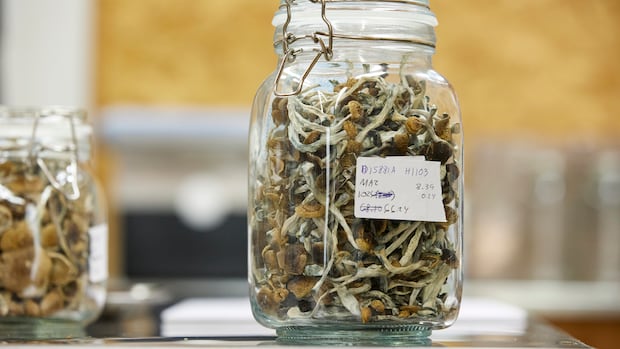
A new research centre has been launched by St. Joseph’s Healthcare Hamilton to investigate the potential medical applications of psychedelics. This initiative aims to establish guidelines for the use of these substances in therapeutic settings, addressing the growing interest in their efficacy. According to Dr. Anthony Adili, chief innovation officer at St. Joe’s, “Psychedelics have shown great promise in some early studies,” but he emphasizes the necessity for robust scientific evidence to guide clinicians, patients, and policymakers.
The newly established Centre for Health Innovation and Research in Psychedelics will facilitate collaboration among researchers from across Canada and beyond. This centre will provide clinical space for administering psychedelic therapies, allowing researchers to monitor patient outcomes closely. While the centre’s activities may eventually extend internationally, the current focus is primarily on St. Joe’s campus located on West 5th Street in Hamilton.
Dr. Adili, who also serves as vice chair of McMaster University‘s department of surgery, expressed long-term commitment to the centre’s mission, indicating it is likely to receive “long-standing funding” over the next several decades. The research will delve into various substances, including psilocybin, LSD, MDMA, DMT, and ketamine, many of which are being explored for conditions such as treatment-resistant depression, migraines, and anxiety. Currently, St. Joe’s is conducting two trials: one focusing on psilocybin for cannabis addiction and another examining its efficacy for chronic pain relief.
Dr. Adili noted that the perception of psychedelics as legitimate therapeutic options has improved considerably over the last ten years. However, he cautioned that health professionals must distinguish between “fact and fiction” in this rapidly evolving field and develop “actionable guidelines” for safe use.
The interest in psychedelics is evident across Canada, prompting a closer examination of their long-term risks and benefits. Dr. Ishrat Husain, a psychiatrist at the Centre for Addiction and Mental Health in Toronto, has been researching psychedelics since 2022, notably receiving Canada’s first federal grant to study psilocybin for treatment-resistant depression. Despite his enthusiasm for the research, Dr. Husain remains cautious, stating, “I don’t think we have any reliable evidence to say that psilocybin therapy should be part of the treatment protocols at present.” He highlighted that a recent set of international guidelines on depression excluded psychedelics due to insufficient robust evidence.
While the research is in its early stages, Dr. Husain acknowledged the potential of psychedelics, calling it “really exciting” that St. Joe’s is dedicating efforts to this area. He believes that involving multiple institutions will enhance the generalizability of the findings, ultimately increasing access to emerging treatments for patients participating in clinical trials. His team is currently engaged in a significant study with preliminary results expected by the first half of 2026.
“Hopefully,” he concluded, “that will be the first step towards determining whether this treatment is something that is moving towards clinical development and clinical use.” This ongoing research aims to solidify psychedelics’ place in modern medicine, guided by scientific evidence and comprehensive clinical protocols.

Meta Plans Major Layoffs as AI Costs Surge

Alberta’s Referendum Could Pave Way for U.S. Statehood

Minooka District 201 Plans Enhanced Bilingual Support for Students

Canmore Approves Multiple Development Permits for New Projects

Remembering Bradly Castillo Shearsmith: A Life of Friendship and Joy

BIS Urges Watchdogs to Integrate Synthetic Risk Transfers in Stress Tests

Teva Transforms: Shifting Focus from Generics to Branded Success

Apple Launches AirPods Max 2 with Enhanced Audio Features

Ontario Ends Funding for Seven Supervised Injection Sites

Toyoake City Proposes Daily Two-Hour Smartphone Use Limit

Pedestrian Fatally Injured in Esquimalt Collision on August 14

B.C. Review Reveals Urgent Need for Rare-Disease Drug Reforms

Dark Adventure Game “Bye Sweet Carole” Set for October Release

Konami Revives Iconic Metal Gear Solid Delta Ahead of Release

Victoria’s Pop-Up Shop Shines Light on B.C.’s Wolf Cull

Jimmy Lai’s Defense Challenges Charges Under National Security Law

Snapmaker U1 Color 3D Printer Redefines Speed and Sustainability

Apple Expands Self-Service Repair Program to Canada
-
 Science1 year ago
Toyoake City Proposes Daily Two-Hour Smartphone Use Limit
-
 Top Stories1 year ago
Pedestrian Fatally Injured in Esquimalt Collision on August 14
-
 Health1 year ago
B.C. Review Reveals Urgent Need for Rare-Disease Drug Reforms
-
 Technology1 year ago
Dark Adventure Game “Bye Sweet Carole” Set for October Release
-
 Technology1 year ago
Konami Revives Iconic Metal Gear Solid Delta Ahead of Release
-
 Lifestyle1 year ago
Victoria’s Pop-Up Shop Shines Light on B.C.’s Wolf Cull
-
 World1 year ago
Jimmy Lai’s Defense Challenges Charges Under National Security Law
-
 Technology1 year ago
Snapmaker U1 Color 3D Printer Redefines Speed and Sustainability
-
 Technology1 year ago
Apple Expands Self-Service Repair Program to Canada
-

 Technology1 year ago
AION Folding Knife: Redefining EDC Design with Premium Materials
-

 Technology1 year ago
Solve Today’s Wordle Challenge: Hints and Answer for August 19
-

 Business1 year ago
Gordon Murray Automotive Unveils S1 LM and Le Mans GTR at Monterey