
Science
Electricity Shortages Threaten Economic Growth in G20 Nations

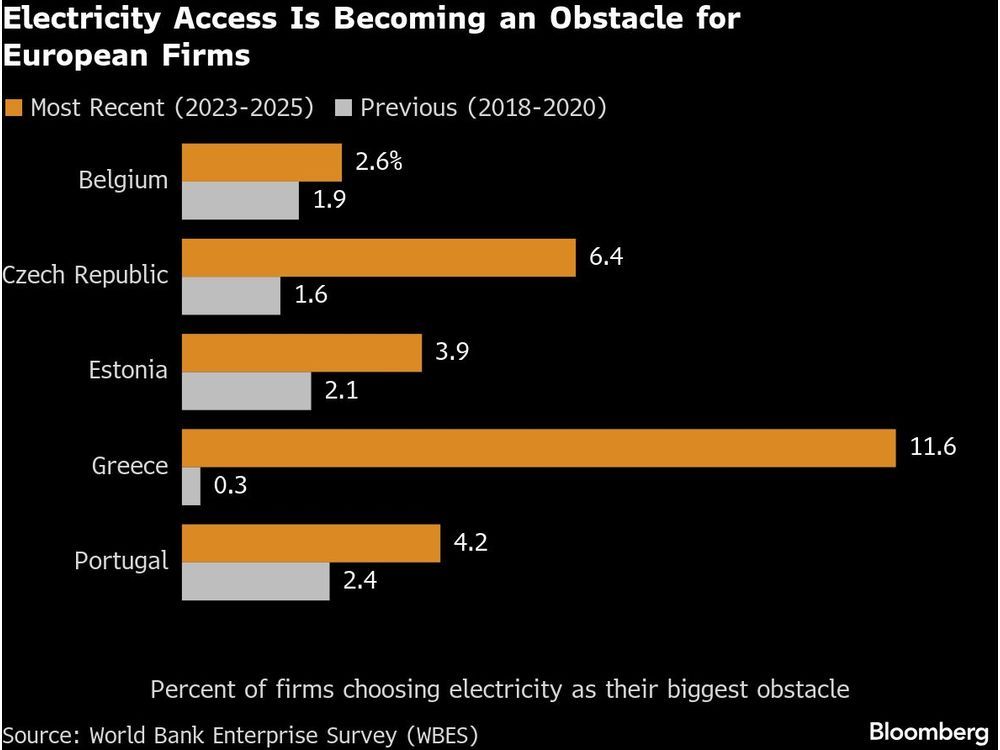
The global economy is facing a significant challenge as electricity shortages begin to hinder growth across developed nations. A crucial case is unfolding in the Netherlands, where the semiconductor equipment manufacturer ASML Holding NV is striving to build a new campus in the Eindhoven region. This facility could potentially create up to 20,000 jobs, but its future hinges on the availability of an electricity connection.
Currently, ASML is among approximately 12,000 businesses in the Netherlands awaiting a link to the electric grid. According to Netbeheer Nederland, the association of Dutch grid operators, the congestion issues affecting the grid may persist for as long as ten years, despite annual investments of €8 billion (approximately $9.3 billion) by grid operators. This situation reflects a broader trend that threatens economic stability and growth in many high-income countries.
Electricity consumption in the Netherlands has surged beyond initial projections, with usage levels exceeding what was expected for the year 2030. “The physical grid cannot keep pace with societal ambitions and developments — unless we fundamentally change how we design and use it,” stated Debby Dröge from Netbeheer Nederland.
Increasing demands for electricity have been attributed to the rapid adoption of technologies such as artificial intelligence and electric vehicles. An analysis by Bloomberg Economics indicates that nearly all Group of 20 (G20) countries are experiencing rising grid stress, characterized by supply not meeting demand, price volatility, and climate-related damages.
The economic implications of these electricity shortages are severe. Maeva Cousin, chief trade and climate economist at Bloomberg Economics, noted that reduced investment in infrastructure leads to diminished economic growth over time. Historically, reliable electricity has been a crucial factor in fostering economic development. The positive effects of increased electrification are evident across various geographies, from India to Africa.
In contrast, developed nations have not faced similar challenges until now, as deindustrialization kept electricity demand stable or declining. The current surge in demand for electricity is causing even the wealthiest nations to confront significant infrastructural hurdles.
In the Netherlands, a study suggests that without improvements to the grid, the country could incur annual losses ranging from €8 billion to €30 billion in economic activity. In Germany, local business associations have raised alarms over the industrial economy being jeopardized by insufficient electricity supply. Meanwhile, in the UK, grid operators have paid around £1.4 billion (approximately $1.9 billion) this year to operate higher-cost gas plants, while underutilizing cheaper sources like wind energy.
The implications extend to major technology companies as well. Earlier in 2024, Google canceled plans to establish a data center near Berlin due to power supply concerns. Similarly, Microsoft has shifted data center investments away from Ireland and the UK towards the Nordics, citing power shortages as a critical barrier. Even in Silicon Valley, data centers have faced delays due to inadequate local utility provision.
Bloomberg Economics has created an index to assess electricity system stress across G20 countries, examining factors such as adequacy, demand, costs, grid losses, and climate impacts. The analysis reveals a troubling trend: while many countries experienced rapid electricity demand growth in the early 2000s, the situation has become increasingly strained in recent years.
The forecast indicates that electricity demand in Europe and the US, which has remained stable or declining over the past two decades, is expected to rise by more than 40% in the next two decades. For businesses, the ramifications are clear. A significant majority of executives in Deloitte’s 2025 AI Infrastructure Survey identified grid capacity as a critical constraint.
The potential long-term impact of electricity shortages is alarming. Bloomberg’s analysis suggests that a one-standard-deviation increase in the Electricity System Stress Index could reduce the investment share of GDP by approximately 0.33%. Given that investment accounts for about 20% of GDP in wealthy countries, this could translate to a decrease in capital outlays by 1.5% to 2%.
As nations grapple with these challenges, the message is clear: failure to meet rising electricity demand could jeopardize future investments and economic prospects for decades. As Cousin aptly noted, “Countries that fail to meet rising electricity demand risk missing out on defining investments that will shape economic prospects for decades.”

Meta Plans Major Layoffs as AI Costs Surge

Alberta’s Referendum Could Pave Way for U.S. Statehood

Minooka District 201 Plans Enhanced Bilingual Support for Students

Canmore Approves Multiple Development Permits for New Projects

Remembering Bradly Castillo Shearsmith: A Life of Friendship and Joy

BIS Urges Watchdogs to Integrate Synthetic Risk Transfers in Stress Tests

Teva Transforms: Shifting Focus from Generics to Branded Success

Apple Launches AirPods Max 2 with Enhanced Audio Features

Ontario Ends Funding for Seven Supervised Injection Sites

Toyoake City Proposes Daily Two-Hour Smartphone Use Limit

Pedestrian Fatally Injured in Esquimalt Collision on August 14

B.C. Review Reveals Urgent Need for Rare-Disease Drug Reforms

Dark Adventure Game “Bye Sweet Carole” Set for October Release

Konami Revives Iconic Metal Gear Solid Delta Ahead of Release

Victoria’s Pop-Up Shop Shines Light on B.C.’s Wolf Cull

Jimmy Lai’s Defense Challenges Charges Under National Security Law

Snapmaker U1 Color 3D Printer Redefines Speed and Sustainability

Apple Expands Self-Service Repair Program to Canada
-
 Science12 months ago
Toyoake City Proposes Daily Two-Hour Smartphone Use Limit
-
 Top Stories12 months ago
Pedestrian Fatally Injured in Esquimalt Collision on August 14
-
 Health12 months ago
B.C. Review Reveals Urgent Need for Rare-Disease Drug Reforms
-
 Technology12 months ago
Dark Adventure Game “Bye Sweet Carole” Set for October Release
-
 Technology12 months ago
Konami Revives Iconic Metal Gear Solid Delta Ahead of Release
-
 Lifestyle12 months ago
Victoria’s Pop-Up Shop Shines Light on B.C.’s Wolf Cull
-
 World12 months ago
Jimmy Lai’s Defense Challenges Charges Under National Security Law
-
 Technology12 months ago
Snapmaker U1 Color 3D Printer Redefines Speed and Sustainability
-
 Technology12 months ago
Apple Expands Self-Service Repair Program to Canada
-

 Technology12 months ago
AION Folding Knife: Redefining EDC Design with Premium Materials
-

 Technology12 months ago
Solve Today’s Wordle Challenge: Hints and Answer for August 19
-

 Business12 months ago
Gordon Murray Automotive Unveils S1 LM and Le Mans GTR at Monterey