
Science
Global Advances in Nuclear Fusion Spark Hope for Clean Energy

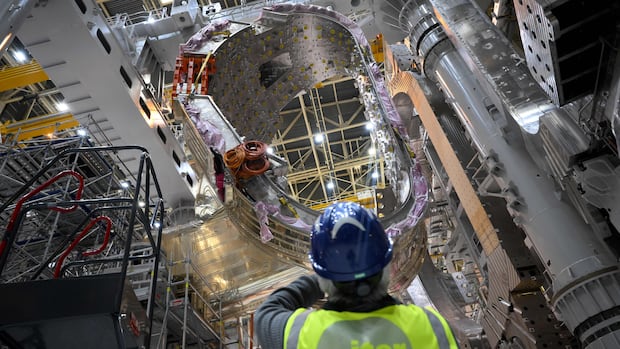
Nuclear fusion is gaining momentum worldwide, with significant advancements announced by both Canada’s General Fusion and China’s EAST reactor. As global energy demand continues to rise, driven by artificial intelligence and electrification, these developments hint at the potential for fusion power to become a viable and sustainable energy source.
Understanding Nuclear Fusion
Nuclear fusion, a process that has been under investigation for decades, offers the promise of producing clean and virtually limitless energy. The fundamental mechanism involves the merging of hydrogen nuclei to form helium, a reaction that occurs naturally in the sun. This process releases a substantial amount of energy without the radioactive waste associated with traditional nuclear fission, which relies on the splitting of uranium atoms.
Hydrogen, the crucial element in fusion, is abundant on Earth, primarily found in water. Despite its potential, commercial nuclear fusion reactors remain elusive. Recent milestones, however, suggest that this technology is edging closer to reality.
Recent Milestones and Future Prospects
Recent achievements have reignited interest in fusion energy. In early March 2024, the Chinese Academy of Sciences announced that the EAST reactor achieved a critical milestone by maintaining stable plasma at densities previously thought unattainable. This advancement could pave the way for smaller and more cost-effective commercial fusion reactors.
In Canada, General Fusion has made headlines with its announcement of a “world record” in neutron production, which is essential for measuring fusion activity. While this achievement relates specifically to General Fusion’s unique technology, experts note that other government-funded fusion reactors have produced significantly higher fusion outputs using different methods.
Robert Fedosejev, a professor at the University of Alberta with over 50 years of experience in laser fusion research, acknowledged the importance of these developments but emphasized that they represent incremental progress in a long-term effort.
Alongside these advancements, Canada is establishing a new Centre for Fusion Energy in Ontario, supported by a combined investment of approximately CAD $91.5 million from federal and provincial governments, as well as private sources. The centre aims to design, construct, and operate a demonstration reactor, although a timeline for completion has yet to be disclosed.
Andrew Holland, CEO of the Fusion Industry Association (FIA), highlighted the growing investment in fusion technology. Over the past five years, the number of fusion startups has more than doubled, with over USD $10 billion in private funding flowing into the sector. This surge in investment reflects a global commitment to addressing climate change and energy security, particularly as demand for carbon-free energy sources increases.
Despite these advancements, the path to commercial fusion power remains challenging. The energy input required to initiate fusion reactions is significantly high, and achieving a net energy gain, where output exceeds input, is crucial. In 2021, scientists at the National Ignition Facility in the United States achieved a historic moment by generating slightly more energy than was consumed during a fusion reaction. This breakthrough has heightened optimism about the feasibility of fusion power.
While ITER, the International Thermonuclear Experimental Reactor currently under construction in France, aims to take fusion a step further by producing 500 megawatts of power from 50 megawatts of input, it is not expected to be operational until the late 2030s. The estimated cost for ITER stands at approximately EUR 13 billion (USD 21 billion).
The challenges are not solely technical; they also include economic viability. As traditional energy sources become cheaper, fusion must prove its competitiveness in the energy market. Startups are exploring innovative technologies, such as high-temperature superconducting magnets, to create smaller and more affordable reactors.
As the fusion industry continues to evolve, establishing supply chains and regulatory frameworks will be essential for supporting the future of fusion energy. Holland emphasized the importance of public awareness and community involvement in the development of fusion projects.
The potential of fusion energy remains vast, with the promise of generating clean power without greenhouse gas emissions or long-lived radioactive waste. If these technological hurdles can be overcome, the vision of a sustainable and abundant energy future could become a reality.

Meta Plans Major Layoffs as AI Costs Surge

Alberta’s Referendum Could Pave Way for U.S. Statehood

Minooka District 201 Plans Enhanced Bilingual Support for Students

Canmore Approves Multiple Development Permits for New Projects

Remembering Bradly Castillo Shearsmith: A Life of Friendship and Joy

BIS Urges Watchdogs to Integrate Synthetic Risk Transfers in Stress Tests

Teva Transforms: Shifting Focus from Generics to Branded Success

Apple Launches AirPods Max 2 with Enhanced Audio Features

Ontario Ends Funding for Seven Supervised Injection Sites

Toyoake City Proposes Daily Two-Hour Smartphone Use Limit

Pedestrian Fatally Injured in Esquimalt Collision on August 14

B.C. Review Reveals Urgent Need for Rare-Disease Drug Reforms

Dark Adventure Game “Bye Sweet Carole” Set for October Release

Konami Revives Iconic Metal Gear Solid Delta Ahead of Release

Victoria’s Pop-Up Shop Shines Light on B.C.’s Wolf Cull

Jimmy Lai’s Defense Challenges Charges Under National Security Law

Snapmaker U1 Color 3D Printer Redefines Speed and Sustainability

Apple Expands Self-Service Repair Program to Canada
-
 Science11 months ago
Toyoake City Proposes Daily Two-Hour Smartphone Use Limit
-
 Top Stories11 months ago
Pedestrian Fatally Injured in Esquimalt Collision on August 14
-
 Health11 months ago
B.C. Review Reveals Urgent Need for Rare-Disease Drug Reforms
-
 Technology11 months ago
Dark Adventure Game “Bye Sweet Carole” Set for October Release
-
 Technology11 months ago
Konami Revives Iconic Metal Gear Solid Delta Ahead of Release
-
 Lifestyle11 months ago
Victoria’s Pop-Up Shop Shines Light on B.C.’s Wolf Cull
-
 World11 months ago
Jimmy Lai’s Defense Challenges Charges Under National Security Law
-
 Technology11 months ago
Snapmaker U1 Color 3D Printer Redefines Speed and Sustainability
-
 Technology11 months ago
Apple Expands Self-Service Repair Program to Canada
-

 Technology11 months ago
AION Folding Knife: Redefining EDC Design with Premium Materials
-

 Technology11 months ago
Solve Today’s Wordle Challenge: Hints and Answer for August 19
-

 Business11 months ago
Gordon Murray Automotive Unveils S1 LM and Le Mans GTR at Monterey