
Science
Industry Demands Practical Robots Beyond Dance Moves at CES

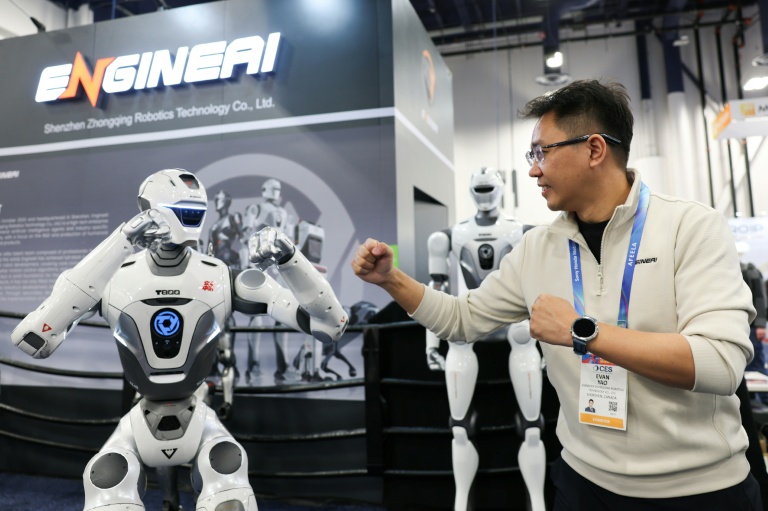
Humanoid robots showcased an array of entertaining skills at the Consumer Electronics Show (CES), including dancing, somersaulting, and even playing blackjack. However, industry experts are urging for a shift in focus toward practical applications, emphasizing the need for these robots to become genuinely useful rather than merely impressive. As the annual event continues to spotlight advancements in technology, insiders stress that creating robots that can operate autonomously is still a significant challenge that requires years of development and extensive training.
To become truly functional, humanoid robots need advanced artificial intelligence capable of interpreting visual and auditory information and transforming it into actionable responses. This capability extends beyond the current abilities of large language models, such as those powering tools like ChatGPT. Henny Admoni, an associate professor at the Robotics Institute at Carnegie Mellon University, highlighted the necessity of physical embodiment for robots to learn effectively. “If you want (robots) to learn embodied things, you have to put them inside a body,” she stated.
Christian Rokseth, founder of Humanoid Guide, echoed this sentiment, comparing the training of robots to a child confined to a room. The potential for innovation is evident, but Rokseth expressed frustration at the lack of progress in creating robots that can perform productive tasks. “They’ve shown robots dancing and doing kung fu; now show us that they can be productive,” he urged.
In a similar vein, Evan Yao, founder of EngineAI, is collaborating with major tech companies like Amazon and Meta to enhance the capabilities of their robots. “We are trying to simulate humans, but the robots will never become human,” Yao remarked, emphasizing the emotional depth that distinguishes humans from machines.
As the robotics sector continues to evolve, the Consumer Technology Association forecasts that the global robotics market will reach an estimated $179 billion by 2030. Much of this growth is predicted to occur in factories and warehouses, environments where robots can function efficiently, regardless of whether they are humanoid in design.
The push for humanoid robots in industrial settings is gaining momentum. Hyundai took the opportunity at CES to unveil a humanoid robot named Atlas, developed in partnership with Boston Dynamics. This robot is slated for testing in factory environments, showcasing the industry’s intent to integrate robotics into mainstream operations.
Despite the advancements, experts caution against overestimating the capabilities of current humanoid robots. According to Admoni, many companies are making bold claims about autonomous robots, but much of this technology still relies on teleoperation, where a human operator controls the robot’s movements. “These systems tend to be teleoperated; you have a person in a suit or using controllers, and every movement of that person is then translated into the robot,” she explained.
To address the training challenges, emerging startups are experimenting with innovative methods, including equipping individuals with cameras and haptic gloves to demonstrate everyday tasks. “To make robots general machines, they need to be let out in the real world,” Rokseth added, advocating for broader application beyond controlled environments like assembly lines.
The ongoing developments in robotics reflect a vibrant industry poised for growth, yet the journey toward creating practical, autonomous humanoid robots remains complex and requires substantial investment in research and development. As the CES unfolds, the call for more meaningful applications of robotics resonates strongly among industry leaders and innovators alike.

Meta Plans Major Layoffs as AI Costs Surge

Alberta’s Referendum Could Pave Way for U.S. Statehood

Minooka District 201 Plans Enhanced Bilingual Support for Students

Canmore Approves Multiple Development Permits for New Projects

Remembering Bradly Castillo Shearsmith: A Life of Friendship and Joy

BIS Urges Watchdogs to Integrate Synthetic Risk Transfers in Stress Tests

Teva Transforms: Shifting Focus from Generics to Branded Success

Apple Launches AirPods Max 2 with Enhanced Audio Features

Ontario Ends Funding for Seven Supervised Injection Sites

Toyoake City Proposes Daily Two-Hour Smartphone Use Limit

Pedestrian Fatally Injured in Esquimalt Collision on August 14

B.C. Review Reveals Urgent Need for Rare-Disease Drug Reforms

Dark Adventure Game “Bye Sweet Carole” Set for October Release

Konami Revives Iconic Metal Gear Solid Delta Ahead of Release

Victoria’s Pop-Up Shop Shines Light on B.C.’s Wolf Cull

Jimmy Lai’s Defense Challenges Charges Under National Security Law

Snapmaker U1 Color 3D Printer Redefines Speed and Sustainability

Apple Expands Self-Service Repair Program to Canada
-
 Science11 months ago
Toyoake City Proposes Daily Two-Hour Smartphone Use Limit
-
 Top Stories11 months ago
Pedestrian Fatally Injured in Esquimalt Collision on August 14
-
 Health11 months ago
B.C. Review Reveals Urgent Need for Rare-Disease Drug Reforms
-
 Technology11 months ago
Dark Adventure Game “Bye Sweet Carole” Set for October Release
-
 Technology11 months ago
Konami Revives Iconic Metal Gear Solid Delta Ahead of Release
-
 Lifestyle11 months ago
Victoria’s Pop-Up Shop Shines Light on B.C.’s Wolf Cull
-
 World11 months ago
Jimmy Lai’s Defense Challenges Charges Under National Security Law
-
 Technology11 months ago
Snapmaker U1 Color 3D Printer Redefines Speed and Sustainability
-
 Technology11 months ago
Apple Expands Self-Service Repair Program to Canada
-

 Technology11 months ago
AION Folding Knife: Redefining EDC Design with Premium Materials
-

 Technology11 months ago
Solve Today’s Wordle Challenge: Hints and Answer for August 19
-

 Business11 months ago
Gordon Murray Automotive Unveils S1 LM and Le Mans GTR at Monterey