
Science
McGill Researchers Develop Innovative Patch to Enhance IVF Success

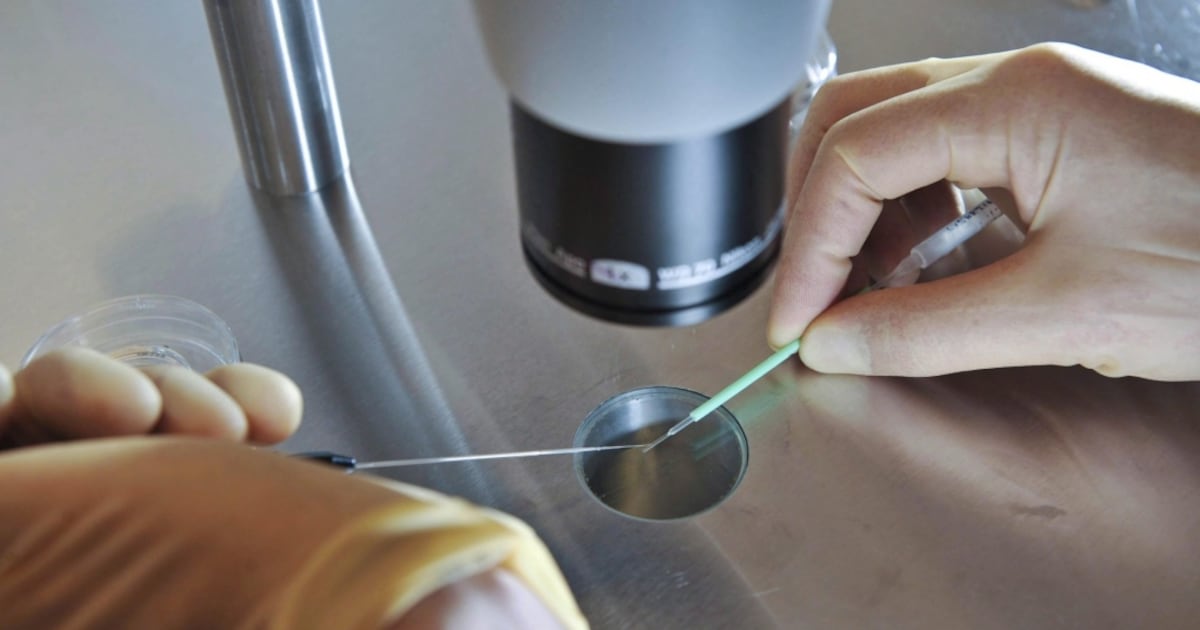
A team of researchers at McGill University has made a significant discovery that could increase the success rates of in vitro fertilization (IVF) while eliminating the need for painful daily hormone injections. The innovative approach involves a light-activated microneedle patch designed to automatically deliver medication, potentially transforming the IVF process for women seeking to conceive.
Current IVF procedures have a success rate of approximately 30 percent, a figure largely influenced by the reliance on daily hormone injections prior to egg retrieval. According to Marta Cerruti, professor of materials engineering at McGill and lead author of the study, the challenge lies in the difficulty many women face in consistently administering these injections. “One of the problems with in vitro fertilization is that it often doesn’t work […] because it’s difficult to remember to inject yourself every day at the same time,” Cerruti explained. Mistimed injections can compromise treatment effectiveness, making the need for a reliable alternative critical.
The proposed microneedle patch can be programmed to release medication at specific times, allowing women to wear the device for a week while ensuring consistent hormone delivery. The patch is composed of hydrogel microneedles filled with nanoparticles that, when stimulated by infrared light, release leuprolide, an essential hormone for IVF.
Revolutionizing Hormone Delivery
While light-triggered microneedle technology is not entirely new, this research is pioneering in its focus on releasing a substance that is biocompatible. Cerruti noted, “In order to release a drug with light, we have to break the bonds in the matrix containing the drug. The only light we can use to break these bonds is ultraviolet light.” Given that ultraviolet (UV) light can be carcinogenic, the researchers sought a safer alternative.
The team incorporated specialized nanoparticles into the patch that convert infrared light into UV light, allowing for the drug to be released without the nanoparticles entering the body. “With this idea of microneedle technology, we put them in a matrix with microneedles that prevent the nanoparticles from passing into the body. Only the drug is released by the particles with infrared light,” Cerruti added.
Next Steps for Clinical Application
Currently, the research has been conducted on rats, and the team must conduct further testing on larger animals before proceeding to human clinical trials. This means it could take several years before Health Canada evaluates the device for potential approval. Despite the lengthy timeline, the researchers believe this technology holds promise for treating other health conditions, such as diabetes and multiple sclerosis.
The study detailing these findings was published in the scientific journal Small and included contributions from several co-authors: Vivienne Tam, Rusvir Trana, Alfonso Nieto-Arguello, Ore-Oluwa Olasubulumi, Samuel Babity, Artiom Skripka, Fiorenzo Vetrone, and Davide Brambilla.
The coverage of this health-related development is supported by a partnership with the Canadian Medical Association. The Canadian Press is solely responsible for the content of this report, which was first published in French on January 8, 2026.

Meta Plans Major Layoffs as AI Costs Surge

Alberta’s Referendum Could Pave Way for U.S. Statehood

Minooka District 201 Plans Enhanced Bilingual Support for Students

Canmore Approves Multiple Development Permits for New Projects

Remembering Bradly Castillo Shearsmith: A Life of Friendship and Joy

BIS Urges Watchdogs to Integrate Synthetic Risk Transfers in Stress Tests

Teva Transforms: Shifting Focus from Generics to Branded Success

Apple Launches AirPods Max 2 with Enhanced Audio Features

Ontario Ends Funding for Seven Supervised Injection Sites

Toyoake City Proposes Daily Two-Hour Smartphone Use Limit

Pedestrian Fatally Injured in Esquimalt Collision on August 14

B.C. Review Reveals Urgent Need for Rare-Disease Drug Reforms

Dark Adventure Game “Bye Sweet Carole” Set for October Release

Konami Revives Iconic Metal Gear Solid Delta Ahead of Release

Victoria’s Pop-Up Shop Shines Light on B.C.’s Wolf Cull

Jimmy Lai’s Defense Challenges Charges Under National Security Law

Snapmaker U1 Color 3D Printer Redefines Speed and Sustainability

Apple Expands Self-Service Repair Program to Canada
-
 Science11 months ago
Toyoake City Proposes Daily Two-Hour Smartphone Use Limit
-
 Top Stories11 months ago
Pedestrian Fatally Injured in Esquimalt Collision on August 14
-
 Health11 months ago
B.C. Review Reveals Urgent Need for Rare-Disease Drug Reforms
-
 Technology11 months ago
Dark Adventure Game “Bye Sweet Carole” Set for October Release
-
 Technology11 months ago
Konami Revives Iconic Metal Gear Solid Delta Ahead of Release
-
 Lifestyle11 months ago
Victoria’s Pop-Up Shop Shines Light on B.C.’s Wolf Cull
-
 World11 months ago
Jimmy Lai’s Defense Challenges Charges Under National Security Law
-
 Technology11 months ago
Snapmaker U1 Color 3D Printer Redefines Speed and Sustainability
-
 Technology11 months ago
Apple Expands Self-Service Repair Program to Canada
-

 Technology11 months ago
AION Folding Knife: Redefining EDC Design with Premium Materials
-

 Technology11 months ago
Solve Today’s Wordle Challenge: Hints and Answer for August 19
-

 Business11 months ago
Gordon Murray Automotive Unveils S1 LM and Le Mans GTR at Monterey