
Science
MUHC Researcher Develops 3D-Printed Lung Tissue to Transform Care

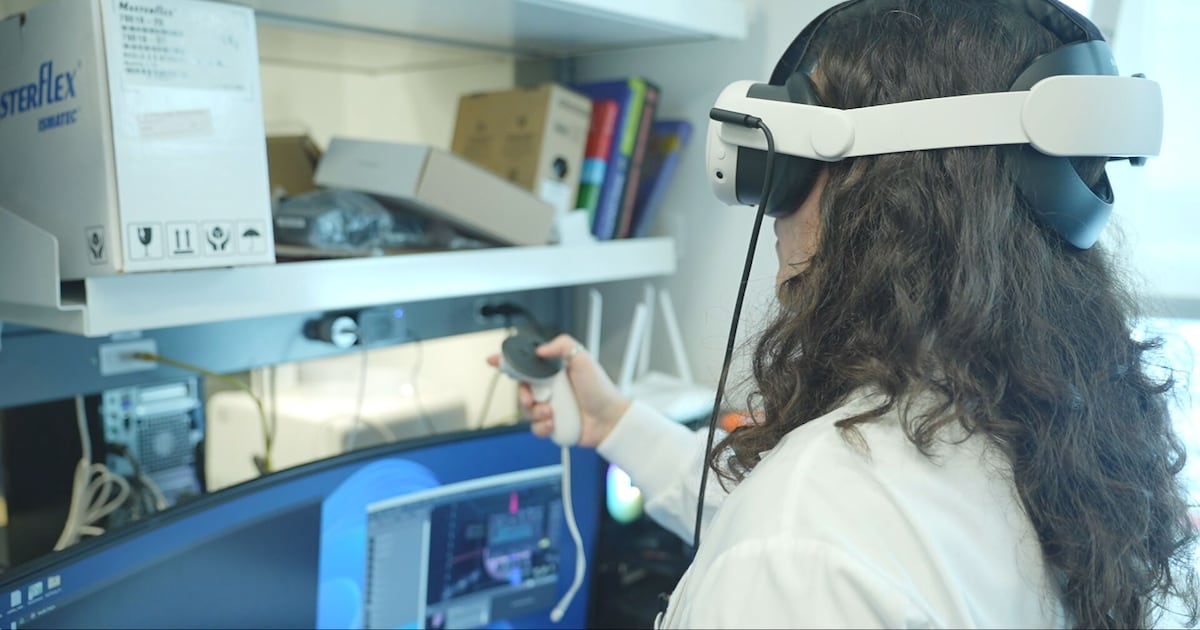
In a groundbreaking effort at the McGill University Research Institute (RI-MUHC) in Montreal, Dr. Darcy Wagner and her team are pioneering the development of 3D-printed lung tissue. This innovative approach could significantly change respiratory care, potentially reducing the need for lung transplants. Using advanced technology, they aim to create 3D-printed patches that can connect healthy lung tissue, effectively bypassing damaged areas.
The project leverages virtual reality technology and specialized 3D printers to formulate inks tailored specifically for lung tissue. Wagner, who holds the position of Canada Excellence Research Chair in Lung Regenerative Medicine, emphasizes the importance of tissue specificity. “We are making lung-specific inks. I would not recommend using the inks that we have for heart or for skin,” she stated. This meticulous approach aims to enhance outcomes by closely mimicking the natural composition of lung tissue.
Wagner’s inspiration for the project came during her time in Munich, Germany. A seemingly simple experience—creating a pretzel—sparked her realization that it was possible to produce complex structures with 3D printing technology. “This was the ‘aha’ moment that I really believed that it was possible,” she recounted.
The challenge of replicating the intricate details of lung anatomy is substantial. The lungs contain features so small that current printing technologies struggle to replicate them accurately. “In the area where we have gas exchange, we have features that are one micrometre [one-millionth of a metre], so extremely tiny, and we’re not able to print those yet,” Wagner explained. Her hope is to achieve as much accuracy as possible, allowing the body’s natural cells to take over the healing process.
Despite being in the early stages, the research has already yielded promising results. “We actually saw that when we transplanted, we had these cues that these vessels from the eventual recipient could actually grow into the grafts that we transplanted,” Wagner noted. This finding suggests potential for improving integration between the graft and the recipient’s tissue.
A Need for Innovation in Lung Transplants
Annually, approximately 7,000 lung transplants are performed globally, with only one facility in Quebec—the Centre hospitalier de l’Université de Montréal (CHUM)—equipped to conduct this complex procedure. Current statistics from Transplant Quebec indicate that 14 individuals are on the waiting list in the province. Wagner points out the limitations: “We really can’t transplant as many of those lungs as we can, for example, kidneys or hearts.”
The growing incidence of respiratory issues, exacerbated by climate change and an aging population, has intensified the demand for effective treatments. With a marked shortage of suitable organ donors, patients face a grim reality. “If you are really lucky enough to get one of those rare lungs that are eligible for transplantation, you have the worst outcome of any solid organ transplants right now,” Wagner lamented.
Supporting Groundbreaking Research
Wagner, an American researcher who previously worked in Sweden, was recruited by the MUHC as part of its initiative to foster innovation in health care. Marie-Hélène Laramee, President and CEO of the MUHC Foundation, underscores the importance of bringing in talented individuals like Wagner. “Recruiting people like Darcy to come and work at the MUHC is really important to ensure that our community has access to the latest and greatest in health care,” she stated.
The MUHC Foundation is dedicated to supporting research that promises to transform science and health care. Laramee acknowledged the role of emerging technologies, including artificial intelligence, in propelling research forward. “One of the biggest pillars in our mission is supporting innovation,” she emphasized.
While Dr. Wagner’s research is still a long way from human trials, the potential impact of her work could be life-saving for many individuals suffering from severe respiratory conditions. As the team at RI-MUHC continues to explore the possibilities of 3D-printed lung tissue, the hope for a future with improved respiratory care remains bright.

Meta Plans Major Layoffs as AI Costs Surge

Alberta’s Referendum Could Pave Way for U.S. Statehood

Minooka District 201 Plans Enhanced Bilingual Support for Students

Canmore Approves Multiple Development Permits for New Projects

Remembering Bradly Castillo Shearsmith: A Life of Friendship and Joy

BIS Urges Watchdogs to Integrate Synthetic Risk Transfers in Stress Tests

Teva Transforms: Shifting Focus from Generics to Branded Success

Apple Launches AirPods Max 2 with Enhanced Audio Features

Ontario Ends Funding for Seven Supervised Injection Sites

Toyoake City Proposes Daily Two-Hour Smartphone Use Limit

Pedestrian Fatally Injured in Esquimalt Collision on August 14

B.C. Review Reveals Urgent Need for Rare-Disease Drug Reforms

Dark Adventure Game “Bye Sweet Carole” Set for October Release

Konami Revives Iconic Metal Gear Solid Delta Ahead of Release

Victoria’s Pop-Up Shop Shines Light on B.C.’s Wolf Cull

Jimmy Lai’s Defense Challenges Charges Under National Security Law

Snapmaker U1 Color 3D Printer Redefines Speed and Sustainability

Apple Expands Self-Service Repair Program to Canada
-
 Science11 months ago
Toyoake City Proposes Daily Two-Hour Smartphone Use Limit
-
 Top Stories11 months ago
Pedestrian Fatally Injured in Esquimalt Collision on August 14
-
 Health11 months ago
B.C. Review Reveals Urgent Need for Rare-Disease Drug Reforms
-
 Technology11 months ago
Dark Adventure Game “Bye Sweet Carole” Set for October Release
-
 Technology11 months ago
Konami Revives Iconic Metal Gear Solid Delta Ahead of Release
-
 Lifestyle11 months ago
Victoria’s Pop-Up Shop Shines Light on B.C.’s Wolf Cull
-
 World11 months ago
Jimmy Lai’s Defense Challenges Charges Under National Security Law
-
 Technology11 months ago
Snapmaker U1 Color 3D Printer Redefines Speed and Sustainability
-
 Technology11 months ago
Apple Expands Self-Service Repair Program to Canada
-

 Technology11 months ago
AION Folding Knife: Redefining EDC Design with Premium Materials
-

 Technology11 months ago
Solve Today’s Wordle Challenge: Hints and Answer for August 19
-

 Business11 months ago
Gordon Murray Automotive Unveils S1 LM and Le Mans GTR at Monterey