
Science
Researchers Decode Cow Sounds to Improve Farming Insights

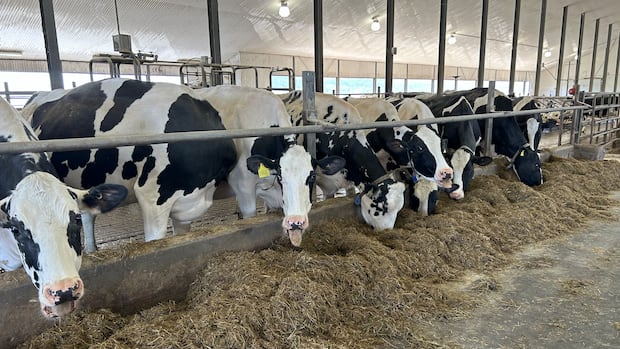
Researchers at Dalhousie University are exploring the intriguing question of whether cow vocalizations contain distinct meanings. Led by Dr. Ghader Manafiazar, the team at the university’s agricultural campus in Truro, Nova Scotia, is recording and analyzing cow sounds to determine if variations in their moos can be interpreted similarly to human language.
Dr. Manafiazar, a professor in the Faculty of Agriculture, aims to find out if cows express different emotions or states through their vocalizations. He poses a thought-provoking question: “When they say ‘moo,’ is it different from saying ‘moooooo?'” This inquiry is part of a broader effort to understand animal communication.
The research team has recorded over 8,400 hours of audio, focusing particularly on the period surrounding calving. By examining the vocal patterns of cows just before and after giving birth, the researchers hope to identify signs of stress or other emotional states.
Hassan Miraei, a student involved in the project, has been feeding this audio data into an artificial intelligence algorithm. This AI is designed to log the sounds and correlate them with various factors, such as the time of day and the cows’ behavior at the moment of the vocalization. For example, if a cow emits a specific type of moo before giving birth, this data is input into the AI model for further analysis.
Dr. Manafiazar explains, “If there is some time that we see a high rise in their pitch, this could be associated with something particular.” This could include environmental factors like sunsets, although the exact triggers remain unknown. The aim is for the algorithm to analyze vocal patterns and provide insights into whether a cow may be hungry, tired, in pain, or simply enjoying its surroundings.
The concept is comparable to parents learning to interpret their baby’s cries. As Dr. Manafiazar points out, the challenge lies in decoding the vocal expressions of a large herd, akin to having “10,000 babies at a time.”
The research team envisions advancing from a supervised algorithm, which currently relies on human notes to verify AI suggestions, to an unsupervised model. This future iteration would allow a recording device in the barn to send audio directly to the AI, which would then interpret the cows’ vocalizations in real-time.
While the research is still in its early stages, both Dr. Manafiazar and Miraei are optimistic about its potential. They believe that this innovative approach could significantly enhance farmers’ understanding of their livestock, enabling them to anticipate changes in cows’ moods, health, and behavior.
As this project unfolds, it holds the promise of fostering a deeper connection between farmers and their animals, ultimately contributing to more effective farming practices.

Meta Plans Major Layoffs as AI Costs Surge

Alberta’s Referendum Could Pave Way for U.S. Statehood

Minooka District 201 Plans Enhanced Bilingual Support for Students

Canmore Approves Multiple Development Permits for New Projects

Remembering Bradly Castillo Shearsmith: A Life of Friendship and Joy

BIS Urges Watchdogs to Integrate Synthetic Risk Transfers in Stress Tests

Teva Transforms: Shifting Focus from Generics to Branded Success

Apple Launches AirPods Max 2 with Enhanced Audio Features

Ontario Ends Funding for Seven Supervised Injection Sites

Toyoake City Proposes Daily Two-Hour Smartphone Use Limit

Pedestrian Fatally Injured in Esquimalt Collision on August 14

B.C. Review Reveals Urgent Need for Rare-Disease Drug Reforms

Dark Adventure Game “Bye Sweet Carole” Set for October Release

Konami Revives Iconic Metal Gear Solid Delta Ahead of Release

Victoria’s Pop-Up Shop Shines Light on B.C.’s Wolf Cull

Jimmy Lai’s Defense Challenges Charges Under National Security Law

Snapmaker U1 Color 3D Printer Redefines Speed and Sustainability

Apple Expands Self-Service Repair Program to Canada
-
 Science1 year ago
Toyoake City Proposes Daily Two-Hour Smartphone Use Limit
-
 Top Stories1 year ago
Pedestrian Fatally Injured in Esquimalt Collision on August 14
-
 Health1 year ago
B.C. Review Reveals Urgent Need for Rare-Disease Drug Reforms
-
 Technology1 year ago
Dark Adventure Game “Bye Sweet Carole” Set for October Release
-
 Technology1 year ago
Konami Revives Iconic Metal Gear Solid Delta Ahead of Release
-
 Lifestyle1 year ago
Victoria’s Pop-Up Shop Shines Light on B.C.’s Wolf Cull
-
 World1 year ago
Jimmy Lai’s Defense Challenges Charges Under National Security Law
-
 Technology1 year ago
Snapmaker U1 Color 3D Printer Redefines Speed and Sustainability
-
 Technology1 year ago
Apple Expands Self-Service Repair Program to Canada
-

 Technology1 year ago
AION Folding Knife: Redefining EDC Design with Premium Materials
-

 Technology1 year ago
Solve Today’s Wordle Challenge: Hints and Answer for August 19
-

 Business1 year ago
Gordon Murray Automotive Unveils S1 LM and Le Mans GTR at Monterey