
Science
Researchers Unveil Method to Conceal Heart Rate from Radar Surveillance

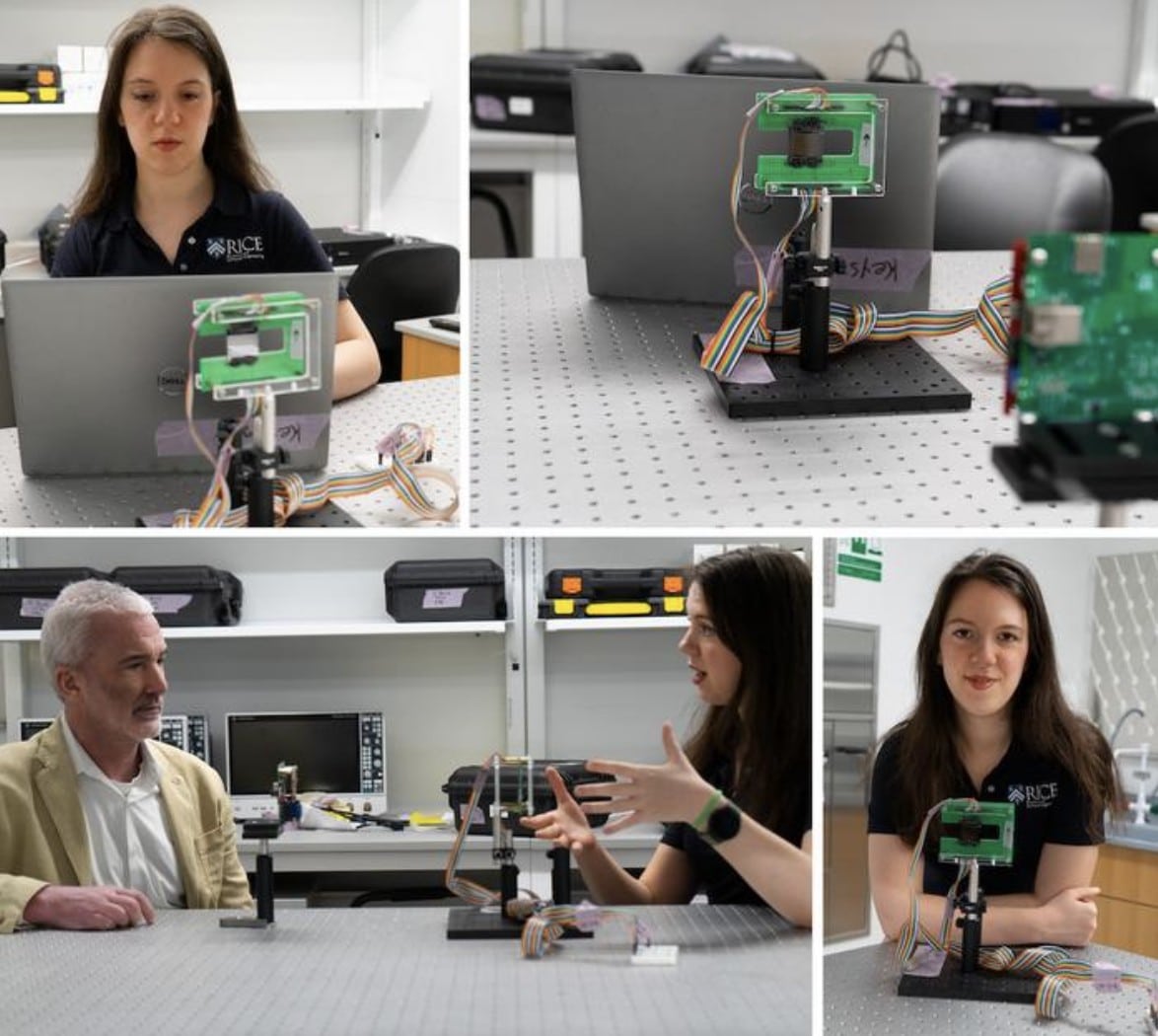
Researchers at Rice University in Houston, Texas, have developed a groundbreaking technique that can effectively hide or even fabricate human heart rate signals from radar-based surveillance systems. This advancement raises significant concerns about the implications of biometric monitoring technologies and the privacy challenges individuals may face in the near future.
The study explores how millimeter-wave radar sensors, already integrated into numerous consumer and industrial devices, could be employed to remotely track a person’s heart rate without their knowledge. These sensors can detect subtle bodily motions, including breathing patterns, from a distance. The research team warns that the ability to monitor heart rates could be misused to infer critical states such as stress, fatigue, or alertness, potentially compromising personal privacy.
In a recent publication, researchers illustrated their findings using a narrative featuring two characters: “Trudy,” a malicious intruder equipped with radar, and “Alice,” an unsuspecting target. This scenario demonstrated how millimeter-wave sensing can be utilized to detect a person’s presence and, by monitoring heart-rate signals, infer various aspects of an individual’s physical or emotional state.
According to Dora Zivanovic, a graduate student in the lab of Edward Knightly, the Sheafor-Lindsay Professor of Electrical and Computer Engineering at Rice, the tools employed by Trudy are not merely fictional. Off-the-shelf millimeter-wave radars can already capture detailed physiological signals and have previously been shown to enable eavesdropping and movement tracking.
“We used this scenario to stage a technologically possible use case for a radar-based heart rate monitoring system,” Zivanovic stated. The study aimed to highlight both the privacy risks posed by pervasive sensing and the feasibility of technical countermeasures.
Introducing MetaHeart: A Defense Against Surveillance
To address these privacy concerns, the research team developed a defense mechanism known as MetaHeart. Unlike conventional methods that simply block radar signals, MetaHeart actively deceives them. This innovative system utilizes a programmable metasurface—an engineered material capable of precisely manipulating electromagnetic waves—to reflect back a fabricated heartbeat pattern.
As a result, the radar perceives a biometric signal that does not exist. “We fool the radar on the level of the electromagnetic signal itself,” Zivanovic explained. “You can program the device with any heartbeat pattern you like.”
In laboratory tests employing a 77-gigahertz radar system, MetaHeart successfully spoofed heartbeat inferences with an accuracy exceeding 98 percent. The researchers also demonstrated that the device could create the illusion of human presence even when no individual was present, a capability that could disrupt radar-based occupancy monitoring systems.
Edward Knightly, the study’s senior author, emphasized the urgent need to address privacy concerns in an era dominated by advanced sensing technologies. “Sensing technologies are becoming higher resolution and more pervasive, and concerns around what that means for privacy should be taken seriously,” Knightly noted. “It is important to explore potential vulnerabilities and think about how we might address them.”
Privacy Risks in an Evolving Landscape
While the MetaHeart system is currently a research prototype, the findings underscore a broader issue: as biometric sensing technologies advance beyond wearables and cameras into invisible radar-based systems, traditional notions of consent and awareness can become blurred. Unlike cameras or fingerprint readers, millimeter-wave radars can operate silently and at a distance, making it challenging for individuals to know when they are being monitored.
The research received support from various government and industry funders, including the Army Research Office, Intel, Cisco, and the National Science Foundation, as well as through facilities operated for the Department of Energy.
As these technologies continue to evolve, it is crucial for society to engage in discussions about the implications for privacy and security, ensuring that personal rights are safeguarded in the face of advancing surveillance capabilities.

Meta Plans Major Layoffs as AI Costs Surge

Alberta’s Referendum Could Pave Way for U.S. Statehood

Minooka District 201 Plans Enhanced Bilingual Support for Students

Canmore Approves Multiple Development Permits for New Projects

Remembering Bradly Castillo Shearsmith: A Life of Friendship and Joy

BIS Urges Watchdogs to Integrate Synthetic Risk Transfers in Stress Tests

Teva Transforms: Shifting Focus from Generics to Branded Success

Apple Launches AirPods Max 2 with Enhanced Audio Features

Ontario Ends Funding for Seven Supervised Injection Sites

Toyoake City Proposes Daily Two-Hour Smartphone Use Limit

Pedestrian Fatally Injured in Esquimalt Collision on August 14

B.C. Review Reveals Urgent Need for Rare-Disease Drug Reforms

Dark Adventure Game “Bye Sweet Carole” Set for October Release

Konami Revives Iconic Metal Gear Solid Delta Ahead of Release

Victoria’s Pop-Up Shop Shines Light on B.C.’s Wolf Cull

Jimmy Lai’s Defense Challenges Charges Under National Security Law

Snapmaker U1 Color 3D Printer Redefines Speed and Sustainability

Apple Expands Self-Service Repair Program to Canada
-
 Science11 months ago
Toyoake City Proposes Daily Two-Hour Smartphone Use Limit
-
 Top Stories11 months ago
Pedestrian Fatally Injured in Esquimalt Collision on August 14
-
 Health11 months ago
B.C. Review Reveals Urgent Need for Rare-Disease Drug Reforms
-
 Technology11 months ago
Dark Adventure Game “Bye Sweet Carole” Set for October Release
-
 Technology11 months ago
Konami Revives Iconic Metal Gear Solid Delta Ahead of Release
-
 Lifestyle11 months ago
Victoria’s Pop-Up Shop Shines Light on B.C.’s Wolf Cull
-
 World11 months ago
Jimmy Lai’s Defense Challenges Charges Under National Security Law
-
 Technology11 months ago
Snapmaker U1 Color 3D Printer Redefines Speed and Sustainability
-
 Technology11 months ago
Apple Expands Self-Service Repair Program to Canada
-

 Technology11 months ago
AION Folding Knife: Redefining EDC Design with Premium Materials
-

 Technology11 months ago
Solve Today’s Wordle Challenge: Hints and Answer for August 19
-

 Business11 months ago
Gordon Murray Automotive Unveils S1 LM and Le Mans GTR at Monterey