
Science
Scientist Veerabhadran Ramanathan Wins Crafoord Prize for Climate Research

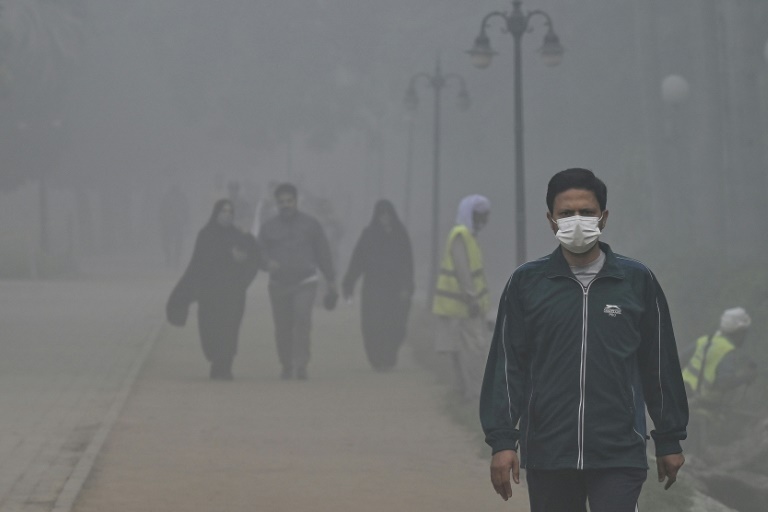
A significant advancement in climate science has been recognized with the awarding of the Crafoord Prize in Geosciences to scientist Veerabhadran Ramanathan. The prize, valued at eight million Swedish kronor, is presented by the Royal Swedish Academy of Sciences for his pivotal contributions to understanding how aerosol particles and other climate pollutants affect the Earth’s atmospheric energy balance.
Ramanathan’s research underscores that climate change is not solely the result of carbon dioxide emissions. Instead, various substances, particularly aerosol particles, also play a substantial role in influencing the climate. His work has been instrumental in highlighting the complex interconnections between atmospheric composition, climate, and air quality.
Ramanathan’s Groundbreaking Research
Since the 1980s, Veerabhadran Ramanathan, a distinguished researcher at the University of California San Diego, has contributed significantly to climate science. His involvement with NASA allowed for the pioneering use of satellites to measure the Earth’s energy budget. This research examined the balance of solar radiation that reaches Earth and the heat that is subsequently emitted back into space. Findings revealed that human activities are increasing the proportion of greenhouse gases that trap heat in the atmosphere, thereby contributing to global warming.
Ramanathan’s investigations have also explored the effects of chlorofluorocarbons (CFCs), commonly known as freons, on both the ozone layer and the climate. Additionally, he has focused on the impact of various aerosols in the atmosphere. In a notable experiment conducted in the Indian Ocean, researchers discovered elevated levels of pollutants, even in remote areas. Some aerosols, such as soot particles, absorb radiation, further contributing to atmospheric heating.
Impact and Recognition
The implications of Ramanathan’s research extend beyond academia. His findings have played a crucial role in informing international agreements aimed at addressing climate change. His influence reaches a wide audience, from political leaders to global figures, reflecting the importance of science in policymaking.
As Ilona Riipinen, a professor of atmospheric sciences at Stockholm University and a member of the Crafoord Prize Committee for Geosciences, noted, “He has expanded our view of how humankind is affecting the atmosphere’s composition, the climate and air quality, and how these three interact.”
Winning the Crafoord Prize not only recognizes Ramanathan’s contributions but also emphasizes the need for robust scientific observation and principles to combat climate challenges. The partnership between the Royal Swedish Academy of Sciences and the Crafoord Foundation in Lund, Sweden, has established a prestigious platform for honoring achievements in diverse scientific disciplines, including mathematics, astronomy, and geosciences.
Through this recognition, Ramanathan hopes to enhance public understanding of climate science and foster trust in scientific findings. The Crafoord Prize serves as a crucial forum for discussing the science of climate change and its broader implications for humanity.

Meta Plans Major Layoffs as AI Costs Surge

Alberta’s Referendum Could Pave Way for U.S. Statehood

Minooka District 201 Plans Enhanced Bilingual Support for Students

Canmore Approves Multiple Development Permits for New Projects

Remembering Bradly Castillo Shearsmith: A Life of Friendship and Joy

BIS Urges Watchdogs to Integrate Synthetic Risk Transfers in Stress Tests

Teva Transforms: Shifting Focus from Generics to Branded Success

Apple Launches AirPods Max 2 with Enhanced Audio Features

Ontario Ends Funding for Seven Supervised Injection Sites

Toyoake City Proposes Daily Two-Hour Smartphone Use Limit

Pedestrian Fatally Injured in Esquimalt Collision on August 14

B.C. Review Reveals Urgent Need for Rare-Disease Drug Reforms

Dark Adventure Game “Bye Sweet Carole” Set for October Release

Konami Revives Iconic Metal Gear Solid Delta Ahead of Release

Victoria’s Pop-Up Shop Shines Light on B.C.’s Wolf Cull

Jimmy Lai’s Defense Challenges Charges Under National Security Law

Snapmaker U1 Color 3D Printer Redefines Speed and Sustainability

Apple Expands Self-Service Repair Program to Canada
-
 Science11 months ago
Toyoake City Proposes Daily Two-Hour Smartphone Use Limit
-
 Top Stories11 months ago
Pedestrian Fatally Injured in Esquimalt Collision on August 14
-
 Health11 months ago
B.C. Review Reveals Urgent Need for Rare-Disease Drug Reforms
-
 Technology11 months ago
Dark Adventure Game “Bye Sweet Carole” Set for October Release
-
 Technology11 months ago
Konami Revives Iconic Metal Gear Solid Delta Ahead of Release
-
 Lifestyle11 months ago
Victoria’s Pop-Up Shop Shines Light on B.C.’s Wolf Cull
-
 World11 months ago
Jimmy Lai’s Defense Challenges Charges Under National Security Law
-
 Technology11 months ago
Snapmaker U1 Color 3D Printer Redefines Speed and Sustainability
-
 Technology11 months ago
Apple Expands Self-Service Repair Program to Canada
-

 Technology11 months ago
AION Folding Knife: Redefining EDC Design with Premium Materials
-

 Technology11 months ago
Solve Today’s Wordle Challenge: Hints and Answer for August 19
-

 Business11 months ago
Gordon Murray Automotive Unveils S1 LM and Le Mans GTR at Monterey