
Technology
Clarios Expands Sodium-Ion Battery Production Partnerships

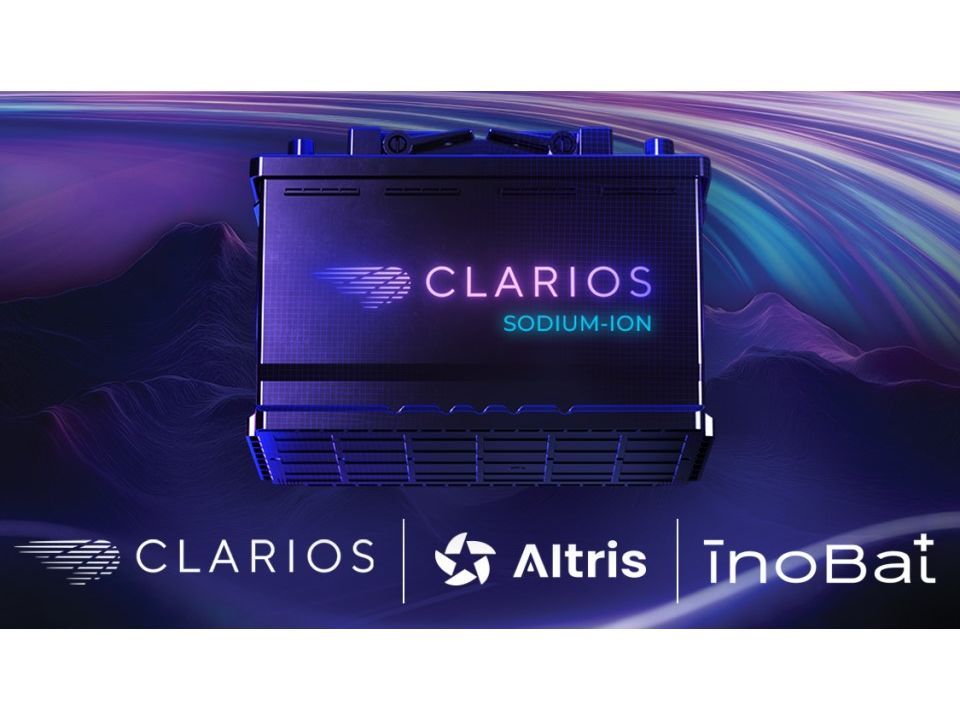
Clarios, a global leader in advanced low-voltage battery solutions, has announced significant advancements in its sodium-ion battery strategy. This includes an expanded partnership with the Swedish battery innovator Altris and a collaboration with the Slovak company InoBat, aimed at launching serial production of sodium-ion batteries before the end of the decade. The announcement was made during the Consumer Electronics Show (CES) 2026 in Las Vegas, highlighting Clarios’ commitment to sustainable mobility.
The company’s strategy includes a strong financial commitment, with a portion of its ambitious $6 billion investment plan allocated specifically for next-generation technologies, including sodium-ion batteries. Clarios has deepened its investment in Altris through a Joint Development Agreement (JDA) designed to accelerate product development and establish a resilient supply chain for sodium-ion technology in Europe.
Collaborative Efforts to Advance Technology
Under the JDA, Clarios and Altris aim to align their technical and commercial efforts, facilitating the transition to industrial-scale production. This collaboration is complemented by InoBat’s involvement in assembling the first sodium-ion test cells intended for automotive applications. These prototype batteries will utilize Altris’ advanced technology and will be assembled at InoBat’s facility in Slovakia. Performance validation and testing will occur in Clarios’ R&D laboratories located in Hannover, ensuring that the batteries meet the requirements of original equipment manufacturers (OEMs).
The prototype batteries are designed to operate effectively in extreme conditions, demonstrating a cold-start capability down to –25°C (–13°F) and featuring low internal resistance and high power density. These characteristics are crucial for reliable performance in modern vehicles, especially in colder climates.
Sustainable Production Plans for the Future
Clarios has set a goal to launch serial production of low-voltage sodium-ion batteries at a dedicated facility in either Europe or the United States by the end of the decade. This initiative not only aligns with OEM sustainability goals but also minimizes reliance on non-European raw materials. By planning localized production and maintaining options for U.S. capacity, Clarios aims to create a robust supply chain that addresses global sourcing risks and contributes to long-term sustainability.
The strategic significance of this initiative lies in its focus on building a resilient supply chain anchored in Western markets. Sodium-ion technology is poised to offer a sustainable alternative to traditional battery chemistries, utilizing abundant and rare earth-free raw materials while promoting circularity. By localizing production in Europe, Clarios ensures a secure supply chain that meets the evolving demands of the automotive industry.
Federico Morales-Zimmermann, Vice President and General Manager for Global OEM Customers and Technology at Clarios, emphasized the importance of this development: “Launching serial production of sodium-ion batteries is a key step in our mission to deliver innovative, chemistry-agnostic energy solutions for the automotive industry.” He noted that the collaboration with Altris and InoBat accelerates the development of this new technology, ultimately benefiting customers.
The commitment to partnership is echoed by Christer Bergquist, CEO of Altris, who stated, “Our deepened partnership with Clarios marks an important milestone for sodium-ion technology. By combining expertise, we’re accelerating product development and preparing for industrial-scale production – delivering a sustainable solution that meets the growing global demand for battery innovation.”
The groundwork for these advancements is being laid at InoBat’s R&D and manufacturing facility in Slovakia, which was commissioned in 2024. This facility features R&D labs, quality testing, and a pilot line capable of producing up to 50,000 cells annually. It is currently involved in customer qualification programs and serves as a vital component of future serial production efforts.
About Clarios: Clarios is recognized as the global leader in advanced, low-voltage battery technologies for mobility. With around 18,000 employees operating in over 100 countries, Clarios provides reliable battery solutions for a diverse range of vehicles. The company is committed to sustainability, ensuring that 100% of its products sold are recyclable and recycling 8,000 batteries an hour within its network.
About Altris: Altris, a Swedish developer of sodium-ion batteries, focuses on its proprietary Prussian White cathode material. Originating from the Ångström Laboratory at Uppsala University, Altris aims to become the leading supplier of sodium-ion battery cathodes in Europe.
About InoBat: InoBat is a European leader in advanced battery solutions, combining innovative research and vertically integrated manufacturing to enhance energy security and stability in Europe. The company is dedicated to developing next-generation battery technologies that contribute to sustainable e-mobility.
For further information, please contact:
Christian Riedel, Clarios, +49 173 9975 410, [email protected]
Altris, [email protected]
InoBat, [email protected]

Meta Plans Major Layoffs as AI Costs Surge

Alberta’s Referendum Could Pave Way for U.S. Statehood

Minooka District 201 Plans Enhanced Bilingual Support for Students

Canmore Approves Multiple Development Permits for New Projects

Remembering Bradly Castillo Shearsmith: A Life of Friendship and Joy

BIS Urges Watchdogs to Integrate Synthetic Risk Transfers in Stress Tests

Teva Transforms: Shifting Focus from Generics to Branded Success

Apple Launches AirPods Max 2 with Enhanced Audio Features

Ontario Ends Funding for Seven Supervised Injection Sites

Toyoake City Proposes Daily Two-Hour Smartphone Use Limit

Pedestrian Fatally Injured in Esquimalt Collision on August 14

B.C. Review Reveals Urgent Need for Rare-Disease Drug Reforms

Dark Adventure Game “Bye Sweet Carole” Set for October Release

Konami Revives Iconic Metal Gear Solid Delta Ahead of Release

Victoria’s Pop-Up Shop Shines Light on B.C.’s Wolf Cull

Jimmy Lai’s Defense Challenges Charges Under National Security Law

Snapmaker U1 Color 3D Printer Redefines Speed and Sustainability

Apple Expands Self-Service Repair Program to Canada
-
 Science1 year ago
Toyoake City Proposes Daily Two-Hour Smartphone Use Limit
-
 Top Stories1 year ago
Pedestrian Fatally Injured in Esquimalt Collision on August 14
-
 Health1 year ago
B.C. Review Reveals Urgent Need for Rare-Disease Drug Reforms
-
 Technology1 year ago
Dark Adventure Game “Bye Sweet Carole” Set for October Release
-
 Technology1 year ago
Konami Revives Iconic Metal Gear Solid Delta Ahead of Release
-
 Lifestyle1 year ago
Victoria’s Pop-Up Shop Shines Light on B.C.’s Wolf Cull
-
 World1 year ago
Jimmy Lai’s Defense Challenges Charges Under National Security Law
-
 Technology1 year ago
Snapmaker U1 Color 3D Printer Redefines Speed and Sustainability
-
 Technology1 year ago
Apple Expands Self-Service Repair Program to Canada
-

 Technology1 year ago
AION Folding Knife: Redefining EDC Design with Premium Materials
-

 Technology1 year ago
Solve Today’s Wordle Challenge: Hints and Answer for August 19
-

 Business1 year ago
Gordon Murray Automotive Unveils S1 LM and Le Mans GTR at Monterey