
Top Stories
AI Transforms Laboratory Practices: Insights from New Research

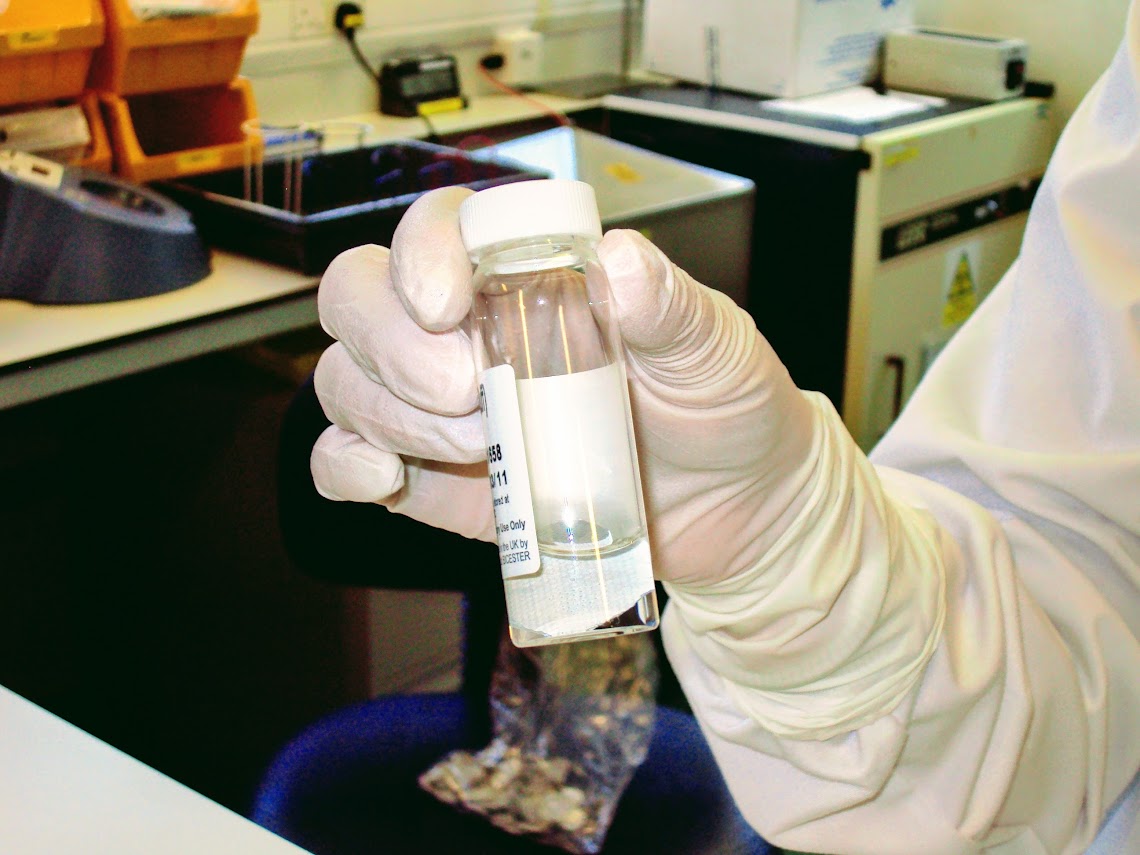
Research involving 150 laboratory professionals from the United States and Europe reveals that many laboratories currently operate in what is termed a ‘passive state.’ In this environment, electronic laboratory notebooks (ELNs) function mainly as digital filing cabinets, failing to significantly influence research outcomes. Andrew Wyatt, Chief Growth Officer at Sapio Sciences, discusses how the transition to more advanced lab practices occurs through the implementation of the AI Lab Notebook (AILN), which integrates intelligent technology to enhance data connection and decision-making.
The prevailing assumption in discussions around AI in life sciences is that laboratories can seamlessly shift from traditional tools to intelligent platforms. However, Wyatt emphasizes that this adoption is more complex, driven by smaller changes and the daily challenges faced by scientists at the bench. When existing ELNs do not facilitate interpretation or planning, scientists adapt their processes. Over time, these adaptations create a maturity model featuring three distinct stages: passive, shadow, and active.
In the passive stage, the ELN primarily serves as a digital filing cabinet. Although experiments are documented, and compliance is ensured, the software does not actively assist in the next steps. Wyatt notes, “Interpretation, planning, and reuse of results occur elsewhere, often through manual spreadsheets or heavy reliance on specialist informatics teams.” This lack of engagement creates a significant barrier to scientific discovery; 65 percent of scientists report repeating experiments due to difficulties in retrieving or reusing results from their current tools. “These labs do not lack talent,” Wyatt explains. “They are constrained by tools designed to capture past activity rather than actively support scientific reasoning.”
The next evolution arises with shadow labs, where scientists seek to overcome these limitations by employing public generative AI tools alongside their ELNs. While these tools enhance local productivity, they can compromise governance and data integrity. “Seventy-seven percent of scientists report using public AI tools for lab work, and nearly half do so through personal accounts outside organizational visibility,” Wyatt reveals. Shadow labs represent an adaptive response to unmet needs, but they are inherently unstable as they often move sensitive scientific reasoning into unvalidated environments.
Active labs take a more innovative approach by embedding intelligence directly into the notebook environment through the AILN. This transition establishes the notebook as a governed co-scientist rather than merely a supplement. “In an active lab, the AI lab notebook helps interpret results, expose patterns, and connect related experiments in context,” Wyatt states. This integration allows for a more cohesive workflow where designs translate into actionable tasks, and data flows seamlessly between instruments, analysis, and the experimental record.
While active labs do not indicate complete automation, they signify a closer relationship between data, analysis, and action, maintaining human oversight. A crucial aspect of the AILN is that it offers agency rather than merely generating text independently. Scientists can request the notebook to analyze results, compare experiments, or prepare next steps, enabling the system to act on these commands within approved processes. Wyatt points out, “Active labs succeed not by automating decisions, but by reducing friction between observation and understanding.”
Trust remains a central concern in the adoption of AI technologies. Research indicates that 81 percent of scientists will only rely on AI suggestions if they can review the underlying science and evidence. Wyatt cautions that the maturity model is not a diagnostic tool but a practical roadmap for navigating how AI is already entering laboratories. He advises organizations in a passive state to focus on improving data findability, reuse, and interpretation. Enhancing access to existing records can reduce delays and prepare the groundwork for more advanced capabilities.
For labs operating within a shadow state, Wyatt suggests that realism, rather than restriction, is necessary. The transition to the active stage requires strengthening the foundations that link data generation, analysis, and execution into a continuous lab-in-the-loop workflow. As AI models become increasingly capable, laboratories that effectively treat the notebook as a system of reasoning rather than a passive archive are more likely to succeed.
Dr. Tim Sandle, serving as the Editor-at-Large for science news at Digital Journal, contributes expertise in science, technology, environmental issues, business, and health journalism. His background as a practicing microbiologist complements his interests in history, politics, and current affairs.

Meta Plans Major Layoffs as AI Costs Surge

Alberta’s Referendum Could Pave Way for U.S. Statehood

Minooka District 201 Plans Enhanced Bilingual Support for Students

Canmore Approves Multiple Development Permits for New Projects

Remembering Bradly Castillo Shearsmith: A Life of Friendship and Joy

BIS Urges Watchdogs to Integrate Synthetic Risk Transfers in Stress Tests

Teva Transforms: Shifting Focus from Generics to Branded Success

Apple Launches AirPods Max 2 with Enhanced Audio Features

Ontario Ends Funding for Seven Supervised Injection Sites

Toyoake City Proposes Daily Two-Hour Smartphone Use Limit

Pedestrian Fatally Injured in Esquimalt Collision on August 14

B.C. Review Reveals Urgent Need for Rare-Disease Drug Reforms

Dark Adventure Game “Bye Sweet Carole” Set for October Release

Konami Revives Iconic Metal Gear Solid Delta Ahead of Release

Victoria’s Pop-Up Shop Shines Light on B.C.’s Wolf Cull

Jimmy Lai’s Defense Challenges Charges Under National Security Law

Snapmaker U1 Color 3D Printer Redefines Speed and Sustainability

Apple Expands Self-Service Repair Program to Canada
-
 Science1 year ago
Toyoake City Proposes Daily Two-Hour Smartphone Use Limit
-
 Top Stories1 year ago
Pedestrian Fatally Injured in Esquimalt Collision on August 14
-
 Health1 year ago
B.C. Review Reveals Urgent Need for Rare-Disease Drug Reforms
-
 Technology12 months ago
Dark Adventure Game “Bye Sweet Carole” Set for October Release
-
 Technology1 year ago
Konami Revives Iconic Metal Gear Solid Delta Ahead of Release
-
 Lifestyle1 year ago
Victoria’s Pop-Up Shop Shines Light on B.C.’s Wolf Cull
-
 World1 year ago
Jimmy Lai’s Defense Challenges Charges Under National Security Law
-
 Technology1 year ago
Snapmaker U1 Color 3D Printer Redefines Speed and Sustainability
-
 Technology1 year ago
Apple Expands Self-Service Repair Program to Canada
-

 Technology1 year ago
AION Folding Knife: Redefining EDC Design with Premium Materials
-

 Technology1 year ago
Solve Today’s Wordle Challenge: Hints and Answer for August 19
-

 Business1 year ago
Gordon Murray Automotive Unveils S1 LM and Le Mans GTR at Monterey