
Top Stories
Illinois Bill Seeks to Close Gender Gap in CPR Training

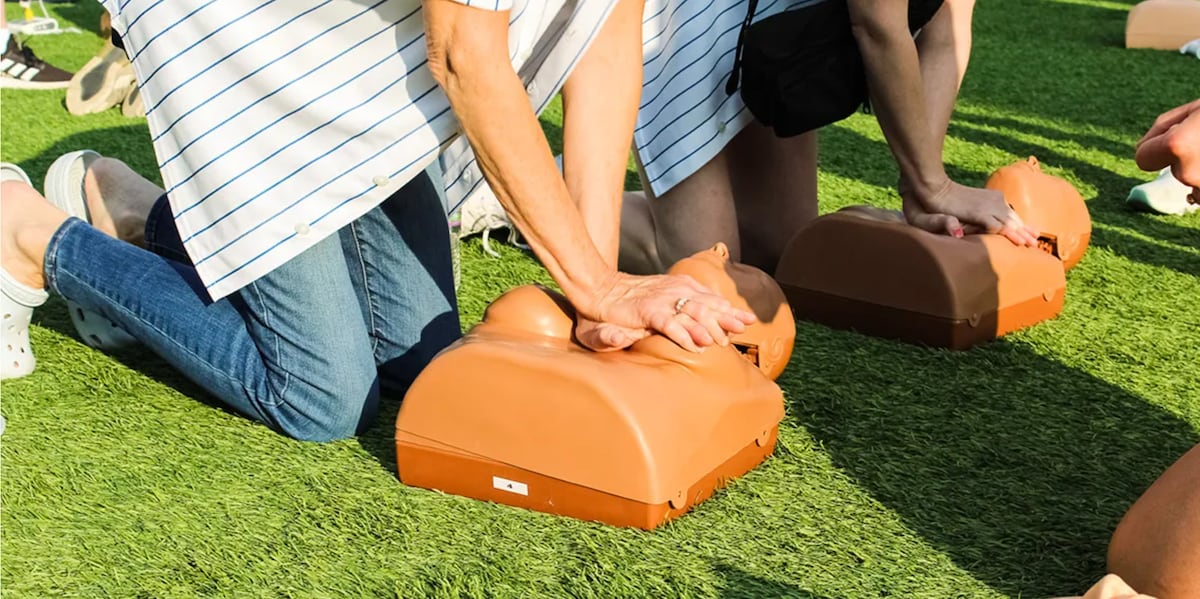
Legislation in Illinois aims to address significant gender disparities in bystander CPR training. The proposed House Bill 4788, sponsored by Rep. Maura Hirschauer, seeks to normalize CPR practices for women by requiring the use of female manikins in secondary school training programs. Research has indicated that women are 27% less likely than men to receive bystander CPR, a discrepancy largely attributed to hesitancy among potential rescuers due to fears of inappropriate touching and related accusations.
The initiative originated from Ashlynn Goldstein, a senior at Naperville High School, who identified the lack of representation in CPR training materials during her capstone project. “I had been CPR certified a lot of times — never in my life had I ever encountered a female manikin,” Goldstein noted. Her project explored the reasons behind the existing disparities in CPR performance and the inadequacies in current training statutes. Goldstein collaborated with her teacher to draft the bill and presented it to legislators, leading to its introduction in the Illinois General Assembly.
Details of the Proposed Legislation
House Bill 4788 is currently assigned to the Education Policy Committee. If passed, it mandates that secondary schools provide CPR training using at least one female manikin for every two male manikins, starting in the 2028-29 academic year. Hirschauer emphasized the importance of early education in combating gender stereotypes associated with CPR. “It felt like a really good way to capture a lot of people, and then a really good way to break down the stigma of CPR on a female if we’re starting young,” she explained.
The bill has gained additional support with the co-sponsorship of State Rep. Katie Stuart. Goldstein sees it as an opportunity to train the next generation of adults, who will inevitably enter the workforce and encounter situations requiring CPR. Currently, 40 states and the District of Columbia mandate CPR training in schools, but none specify the inclusion of female manikins.
Recent research published in the American Heart Association Journal highlights the benefits of using female manikins in training. A study involving 112 participants found that while 28.4% initially felt uncomfortable using female manikins, 81.6% reported increased confidence after practice. This suggests that incorporating female anatomy into training can help dispel misconceptions and encourage more individuals to perform CPR on women.
Challenges and Considerations
Despite the potential benefits of the bill, it faces challenges. The Illinois Principals Association has expressed concerns about the financial implications for schools, particularly in light of past experiences with similar legislation. Lauren’s Law, enacted in 2008, mandated CPR training in high schools but did not allocate funding for compliance, leaving wealthier districts better equipped to meet the requirements.
To address these financial hurdles, Illinois Heart Rescue, an organization dedicated to improving cardiac arrest outcomes, has already begun incorporating female manikins into its training programs. Executive Director Courtney Schwerin O’Reilly stated, “We made the decision as a program to use breasted manikins in all of our classes. It was mildly controversial, but it was important to me that we had that representation.”
Goldstein has taken the cost concerns into account in her bill. Instead of mandating the purchase of new female manikins, which can cost around $800, the legislation allows schools to utilize chest covers for existing manikins, priced between $14 and $18.
Industry response is beginning to shift as well. WorldPoint, a major distributor of CPR training equipment, has developed innovative manikins that can transition between male, female, and child forms, available in various skin tones. Executive Vice President Shelly Amato emphasized, “It shouldn’t be an add-on… It should be standard.”
The hope is that if the Illinois legislature passes this bill, it could serve as a model for other states. Goldstein envisions its impact reaching beyond state lines, inspiring broader changes in CPR training practices nationwide. “My hope is, honestly, for other states to take inspiration from that,” she remarked.
As discussions continue, the focus remains on ensuring equitable access to lifesaving training and fostering confidence among all individuals, regardless of gender, to act in emergency situations.

Meta Plans Major Layoffs as AI Costs Surge

Alberta’s Referendum Could Pave Way for U.S. Statehood

Minooka District 201 Plans Enhanced Bilingual Support for Students

Canmore Approves Multiple Development Permits for New Projects

Remembering Bradly Castillo Shearsmith: A Life of Friendship and Joy

BIS Urges Watchdogs to Integrate Synthetic Risk Transfers in Stress Tests

Teva Transforms: Shifting Focus from Generics to Branded Success

Apple Launches AirPods Max 2 with Enhanced Audio Features

Ontario Ends Funding for Seven Supervised Injection Sites

Toyoake City Proposes Daily Two-Hour Smartphone Use Limit

Pedestrian Fatally Injured in Esquimalt Collision on August 14

B.C. Review Reveals Urgent Need for Rare-Disease Drug Reforms

Dark Adventure Game “Bye Sweet Carole” Set for October Release

Konami Revives Iconic Metal Gear Solid Delta Ahead of Release

Victoria’s Pop-Up Shop Shines Light on B.C.’s Wolf Cull

Jimmy Lai’s Defense Challenges Charges Under National Security Law

Snapmaker U1 Color 3D Printer Redefines Speed and Sustainability

Apple Expands Self-Service Repair Program to Canada
-
 Science12 months ago
Toyoake City Proposes Daily Two-Hour Smartphone Use Limit
-
 Top Stories12 months ago
Pedestrian Fatally Injured in Esquimalt Collision on August 14
-
 Health12 months ago
B.C. Review Reveals Urgent Need for Rare-Disease Drug Reforms
-
 Technology12 months ago
Dark Adventure Game “Bye Sweet Carole” Set for October Release
-
 Technology12 months ago
Konami Revives Iconic Metal Gear Solid Delta Ahead of Release
-
 Lifestyle12 months ago
Victoria’s Pop-Up Shop Shines Light on B.C.’s Wolf Cull
-
 World12 months ago
Jimmy Lai’s Defense Challenges Charges Under National Security Law
-
 Technology12 months ago
Snapmaker U1 Color 3D Printer Redefines Speed and Sustainability
-
 Technology12 months ago
Apple Expands Self-Service Repair Program to Canada
-

 Technology12 months ago
AION Folding Knife: Redefining EDC Design with Premium Materials
-

 Technology12 months ago
Solve Today’s Wordle Challenge: Hints and Answer for August 19
-

 Business12 months ago
Gordon Murray Automotive Unveils S1 LM and Le Mans GTR at Monterey