
Top Stories
Atlantic Salmon Returns Plummet Amid Rising Temperatures

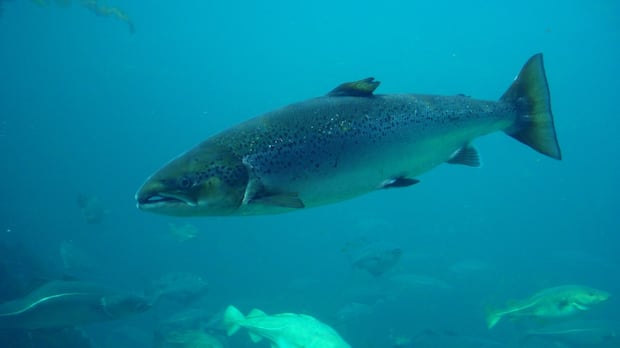
High water temperatures and critically low water levels are severely affecting the Atlantic salmon population in Newfoundland and Labrador. According to a report from Fisheries and Oceans Canada (DFO), over 60 percent of the province’s salmon rivers are currently in the critical zone. This alarming situation threatens the future of the salmon species, with potential long-term consequences for their populations.
On Friday, salmon stock assessment biologist Nick Kelly spoke to reporters, explaining the implications of these environmental conditions. “Once water levels drop, temperature can go up much faster. So then, you can have high temperature events,” he stated. He warned that if these low water levels and high temperatures persist, the number of young salmon impacted in the coming years could significantly decrease, leading to even fewer salmon returning in about five to six years.
The 2025 salmon stock assessment from DFO indicates a continued downward trend in salmon returns, with historic lows first recorded in 2023. Kelly noted that 62 percent of assessed rivers in Newfoundland are categorized as critical, with one of three rivers evaluated in southern Labrador also falling into this category. The other two rivers in southern Labrador are in the stable zone, while the single river monitored in northern Labrador is experiencing positive returns and is classified as healthy.
One major factor contributing to the low water levels is limited snowmelt during the fall, which has led to drought conditions in July and August. These conditions resulted in mortality events across seven freshwater rivers, including Middle Brook, Placentia Bay, and Point Leamington. Although fatalities in most rivers were low, a significant mortality event occurred in the Conne River. Historically, this river saw returns of up to 10,000 salmon each year during the 1980s, but this year, only about 585 fish returned, with at least 100 dying.
Kelly highlighted that within a short span in July, multiple mortality events were reported, coinciding with river temperatures reaching the high 20s Celsius, nearing or exceeding lethal limits for salmon. Similar die-offs were also observed at several salmon farms in Newfoundland this fall.
The challenges faced by salmon populations extend beyond freshwater environments. Kelly indicated that as fewer smolts make their way to sea each year, this trend could lead to even smaller returns in the future.
Looking ahead, Fisheries and Oceans Canada plans to monitor the impacts on salmon closely. The management plan for the 2026 season will factor in the current assessment alongside stakeholder input and socioeconomic considerations. This comprehensive approach aims to address the ongoing decline of salmon populations and ensure their long-term sustainability.
As the situation continues to evolve, the concern for the Atlantic salmon remains paramount, highlighting the urgent need for effective conservation strategies amid changing environmental conditions.

Meta Plans Major Layoffs as AI Costs Surge

Alberta’s Referendum Could Pave Way for U.S. Statehood

Minooka District 201 Plans Enhanced Bilingual Support for Students

Canmore Approves Multiple Development Permits for New Projects

Remembering Bradly Castillo Shearsmith: A Life of Friendship and Joy

BIS Urges Watchdogs to Integrate Synthetic Risk Transfers in Stress Tests

Teva Transforms: Shifting Focus from Generics to Branded Success

Apple Launches AirPods Max 2 with Enhanced Audio Features

Ontario Ends Funding for Seven Supervised Injection Sites

Toyoake City Proposes Daily Two-Hour Smartphone Use Limit

Pedestrian Fatally Injured in Esquimalt Collision on August 14

B.C. Review Reveals Urgent Need for Rare-Disease Drug Reforms

Dark Adventure Game “Bye Sweet Carole” Set for October Release

Konami Revives Iconic Metal Gear Solid Delta Ahead of Release

Victoria’s Pop-Up Shop Shines Light on B.C.’s Wolf Cull

Jimmy Lai’s Defense Challenges Charges Under National Security Law

Snapmaker U1 Color 3D Printer Redefines Speed and Sustainability

Apple Expands Self-Service Repair Program to Canada
-
 Science11 months ago
Toyoake City Proposes Daily Two-Hour Smartphone Use Limit
-
 Top Stories11 months ago
Pedestrian Fatally Injured in Esquimalt Collision on August 14
-
 Health11 months ago
B.C. Review Reveals Urgent Need for Rare-Disease Drug Reforms
-
 Technology11 months ago
Dark Adventure Game “Bye Sweet Carole” Set for October Release
-
 Technology11 months ago
Konami Revives Iconic Metal Gear Solid Delta Ahead of Release
-
 Lifestyle11 months ago
Victoria’s Pop-Up Shop Shines Light on B.C.’s Wolf Cull
-
 World11 months ago
Jimmy Lai’s Defense Challenges Charges Under National Security Law
-
 Technology11 months ago
Snapmaker U1 Color 3D Printer Redefines Speed and Sustainability
-
 Technology11 months ago
Apple Expands Self-Service Repair Program to Canada
-

 Technology11 months ago
AION Folding Knife: Redefining EDC Design with Premium Materials
-

 Technology11 months ago
Solve Today’s Wordle Challenge: Hints and Answer for August 19
-

 Business11 months ago
Gordon Murray Automotive Unveils S1 LM and Le Mans GTR at Monterey