
World
Alberta Minister Confirms Pipeline Plans Amid Indigenous Opposition

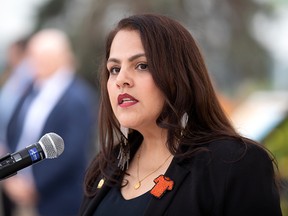
Alberta Indigenous Affairs Minister Rajan Sawhney has reaffirmed her government’s commitment to proposing a new West Coast pipeline to Ottawa by mid-2026, despite significant opposition from some Indigenous groups. Sawhney indicated that the actual engagement process with First Nations along the proposed route will commence after the application is submitted to the federal government’s Major Projects Office in May.
“Actual true consultation with Indigenous communities is not going to begin until we put our application in,” Sawhney stated, emphasizing the government’s structured approach to outreach and dialogue.
The Alberta government recently entered into a memorandum of understanding with Ottawa regarding the new pipeline, aiming to have the project recognized as a federally backed major initiative. This proposal would necessitate an exemption from the federal oil tanker ban in Canadian waters off the northwest coast, a move that has already sparked opposition from groups like Coastal First Nations, which represents several Indigenous bands in British Columbia opposed to the project.
Sawhney acknowledged that vocal dissent does not represent the views of all Indigenous communities affected by the pipeline’s construction. “In every community I’ve visited, they say ‘no one speaks for us except for us,’” she remarked. She has made three visits to British Columbia in 2025 and is planning a fourth trip next month.
The minister also noted a divide in opinion among Indigenous groups regarding the pipeline, stating, “It’s 50/50 right now, between support and what I’m going to call concern.” She acknowledged that two nations have outright rejected the proposal, while others have raised inquiries about safety and environmental implications.
Sawhney expressed confidence that addressing concerns about technology and oil transportation would alleviate skepticism. “We have to talk about technology and innovation,” she explained, referring to advancements in tanker safety and spill response. She mentioned that several First Nations have suggested replicating the Western Canada Marine Spill Response Corporation, which monitors the expanded Trans Mountain pipeline, on the North Coast.
The endorsement from the Major Projects Office would initiate a two-year timeline toward final approval for the project. Prime Minister Mark Carney has emphasized that fast-tracked projects must align with Canadian and Indigenous economic interests. Alberta Premier Danielle Smith has asserted that the pipeline could generate billions of dollars in royalties and taxes for federal and provincial governments by tapping into growing markets in the Indo-Pacific region.
Although no private proponents have emerged to build the pipeline, Alberta has allocated $14 million to support early regulatory and technical work. Polling data on Indigenous support for oil and gas development is limited, but a 2022 study indicated that a slight majority of Indigenous people across Canada are in favor of such initiatives. According to the 2021 Census, the oil and gas sector offers nearly three times the wages of other industries for Indigenous workers.
Heather Exner-Pirot, Director of Natural Resources, Energy and Environment at the Macdonald-Laurier Institute, noted that pipelines generally have a smaller ecological footprint compared to larger resource projects, which can simplify the constitutional duty to consult with affected Indigenous groups. “Impacts from pipelines tend to be more minor and temporary, when comparing, for example, to a mine,” she stated, while acknowledging the complexity of engaging multiple territories along the pipeline route.
Exner-Pirot clarified that Canadian law does not require unanimous Indigenous consent for pipeline projects, a point reinforced by recent legal challenges in northern British Columbia. Sawhney is currently opting for direct conversations over surveys or plebiscites, citing “consultation fatigue” among First Nations. “The best thing we can do, at the moment, is get out there in person,” she stated.
While acknowledging tensions surrounding reconciliation efforts in British Columbia, Sawhney maintained a focus on economic reconciliation within Alberta. She confirmed that Alberta will not participate in the appeal of the Cowichan Tribes decision, which affirmed Aboriginal title over private property near Vancouver.
As the Alberta government moves forward with its plans, the coming months will be pivotal in determining the future of the proposed pipeline and its reception among Indigenous communities along the route.

Meta Plans Major Layoffs as AI Costs Surge

Alberta’s Referendum Could Pave Way for U.S. Statehood

Minooka District 201 Plans Enhanced Bilingual Support for Students

Canmore Approves Multiple Development Permits for New Projects

Remembering Bradly Castillo Shearsmith: A Life of Friendship and Joy

BIS Urges Watchdogs to Integrate Synthetic Risk Transfers in Stress Tests

Teva Transforms: Shifting Focus from Generics to Branded Success

Apple Launches AirPods Max 2 with Enhanced Audio Features

Ontario Ends Funding for Seven Supervised Injection Sites

Toyoake City Proposes Daily Two-Hour Smartphone Use Limit

Pedestrian Fatally Injured in Esquimalt Collision on August 14

B.C. Review Reveals Urgent Need for Rare-Disease Drug Reforms

Dark Adventure Game “Bye Sweet Carole” Set for October Release

Konami Revives Iconic Metal Gear Solid Delta Ahead of Release

Victoria’s Pop-Up Shop Shines Light on B.C.’s Wolf Cull

Jimmy Lai’s Defense Challenges Charges Under National Security Law

Snapmaker U1 Color 3D Printer Redefines Speed and Sustainability

Apple Expands Self-Service Repair Program to Canada
-
 Science12 months ago
Toyoake City Proposes Daily Two-Hour Smartphone Use Limit
-
 Top Stories12 months ago
Pedestrian Fatally Injured in Esquimalt Collision on August 14
-
 Health12 months ago
B.C. Review Reveals Urgent Need for Rare-Disease Drug Reforms
-
 Technology12 months ago
Dark Adventure Game “Bye Sweet Carole” Set for October Release
-
 Technology12 months ago
Konami Revives Iconic Metal Gear Solid Delta Ahead of Release
-
 Lifestyle12 months ago
Victoria’s Pop-Up Shop Shines Light on B.C.’s Wolf Cull
-
 World12 months ago
Jimmy Lai’s Defense Challenges Charges Under National Security Law
-
 Technology12 months ago
Snapmaker U1 Color 3D Printer Redefines Speed and Sustainability
-
 Technology12 months ago
Apple Expands Self-Service Repair Program to Canada
-

 Technology12 months ago
AION Folding Knife: Redefining EDC Design with Premium Materials
-

 Technology12 months ago
Solve Today’s Wordle Challenge: Hints and Answer for August 19
-

 Business12 months ago
Gordon Murray Automotive Unveils S1 LM and Le Mans GTR at Monterey