
World
American Airlines to Lead in Flight Numbers by 2026, Analysts Say

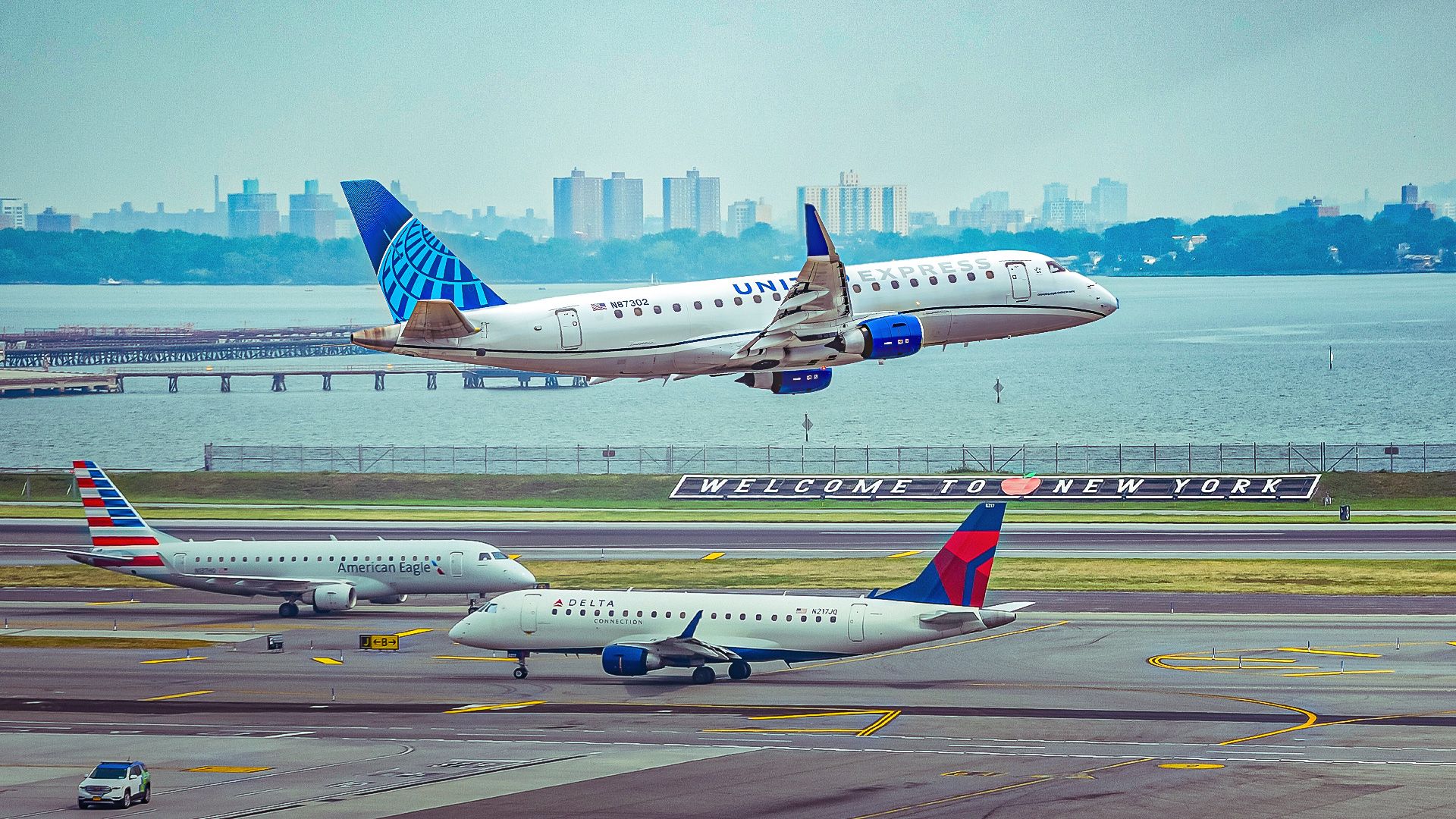
As the airline industry prepares for 2026, projections indicate that American Airlines will operate the most flights among the three largest US carriers. Analysts forecast over 2.2 million departures for American, representing nearly 40% of the total departures among American Airlines, Delta Air Lines, and United Airlines. This competitive analysis underscores how legacy carriers navigate the complexities of scheduling, fleet management, and market demand.
Both Delta and United are expected to operate around 1.7 million flights each in 2026. This article explores the strategic choices that shape their schedules and the competitive dynamics of the US airline market.
Understanding the Airline Landscape
American Airlines, Delta Air Lines, and United Airlines play pivotal roles in the US airline industry. These legacy carriers connect small and mid-sized cities to global destinations through extensive hub systems. While low-cost carriers often thrive on point-to-point routes, these three airlines focus on comprehensive schedules, a wide array of destinations, and multiple departure times. Their strategies are further bolstered by loyalty programs and premium seating options designed to attract high-value travelers.
Each airline adopts a distinct approach to network expansion. American Airlines emphasizes domestic frequency, relying on its hub system to provide extensive connectivity. Meanwhile, Delta Air Lines prioritizes operational reliability and premium offerings, while United Airlines aims to enhance its international footprint through strategic hub growth.
The ability of these carriers to adapt to global disruptions further solidifies their market positions. They can shift capacity among hubs, redeploy aircraft, and leverage alliances to maintain service continuity, even when faced with challenges.
Flight Counts and Capacity Analysis
In terms of overall flight counts, American Airlines is projected to lead with more than 2.2 million departures and approximately 270 million seats available. Despite having the highest number of departures, it ranks third in available seat miles (ASMs), with around 296 billion ASMs. This suggests a focus on shorter routes, resulting in a smaller gauge compared to its competitors.
In contrast, United Airlines plans to operate around 1.7 million flights but leads in ASMs, indicating a strategy focused on longer-haul travel. The airline offers the fewest seats, totaling about 219 million, reflecting its emphasis on higher-capacity flights rather than frequency.
Delta Air Lines occupies a middle ground with its 1.7 million flights and 237 million seats, generating around 289 billion ASMs. The airline’s high seat count per flight indicates less reliance on smaller aircraft and a focus on higher-yield routes.
Examining Individual Carrier Strategies
American Airlines will continue to leverage Dallas/Fort Worth International Airport (DFW) as its primary hub. The airline expects high-frequency routes, such as from DFW to Austin and San Antonio, to exceed 4,000 flights in each direction. These routes facilitate both business and leisure travel, funneling passengers into connecting flights while offering ample day-trip options.
Delta Air Lines, on the other hand, heavily relies on Hartsfield-Jackson Atlanta International Airport (ATL) as the core of its network. High-frequency trunk routes connect Atlanta to various destinations, optimizing its hub for vacation demand. For example, Delta offers over 4,500 flights between Atlanta and New York’s LaGuardia Airport (LGA), underscoring its strategy of maximizing operational reliability and premium offerings.
United Airlines focuses on connecting major hubs, with a schedule filled with frequent routes between airports like Chicago-O’Hare International Airport (ORD) and Denver International Airport (DEN). This approach allows United to maintain a steady flow of business travelers while also serving long-haul domestic routes.
Ultimately, each carrier’s strategy reflects its unique competitive positioning in the market. American Airlines aims to dominate domestic traffic, while Delta and United prioritize higher-yield international routes.
As the industry evolves, the competition among these legacy carriers will continue to shape the landscape of air travel in the United States. The distinct strategies employed by American, Delta, and United highlight their roles as vital players in a dynamic market, where adaptability and operational excellence are key to success.

Meta Plans Major Layoffs as AI Costs Surge

Alberta’s Referendum Could Pave Way for U.S. Statehood

Minooka District 201 Plans Enhanced Bilingual Support for Students

Canmore Approves Multiple Development Permits for New Projects

Remembering Bradly Castillo Shearsmith: A Life of Friendship and Joy

BIS Urges Watchdogs to Integrate Synthetic Risk Transfers in Stress Tests

Teva Transforms: Shifting Focus from Generics to Branded Success

Apple Launches AirPods Max 2 with Enhanced Audio Features

Ontario Ends Funding for Seven Supervised Injection Sites

Toyoake City Proposes Daily Two-Hour Smartphone Use Limit

Pedestrian Fatally Injured in Esquimalt Collision on August 14

B.C. Review Reveals Urgent Need for Rare-Disease Drug Reforms

Dark Adventure Game “Bye Sweet Carole” Set for October Release

Konami Revives Iconic Metal Gear Solid Delta Ahead of Release

Victoria’s Pop-Up Shop Shines Light on B.C.’s Wolf Cull

Jimmy Lai’s Defense Challenges Charges Under National Security Law

Snapmaker U1 Color 3D Printer Redefines Speed and Sustainability

Apple Expands Self-Service Repair Program to Canada
-
 Science12 months ago
Toyoake City Proposes Daily Two-Hour Smartphone Use Limit
-
 Top Stories12 months ago
Pedestrian Fatally Injured in Esquimalt Collision on August 14
-
 Health12 months ago
B.C. Review Reveals Urgent Need for Rare-Disease Drug Reforms
-
 Technology12 months ago
Dark Adventure Game “Bye Sweet Carole” Set for October Release
-
 Technology12 months ago
Konami Revives Iconic Metal Gear Solid Delta Ahead of Release
-
 Lifestyle12 months ago
Victoria’s Pop-Up Shop Shines Light on B.C.’s Wolf Cull
-
 World12 months ago
Jimmy Lai’s Defense Challenges Charges Under National Security Law
-
 Technology12 months ago
Snapmaker U1 Color 3D Printer Redefines Speed and Sustainability
-
 Technology12 months ago
Apple Expands Self-Service Repair Program to Canada
-

 Technology12 months ago
AION Folding Knife: Redefining EDC Design with Premium Materials
-

 Technology12 months ago
Solve Today’s Wordle Challenge: Hints and Answer for August 19
-

 Business12 months ago
Gordon Murray Automotive Unveils S1 LM and Le Mans GTR at Monterey