
World
Boeing Delivers First T-7A Red Hawk to USAF for Advanced Training

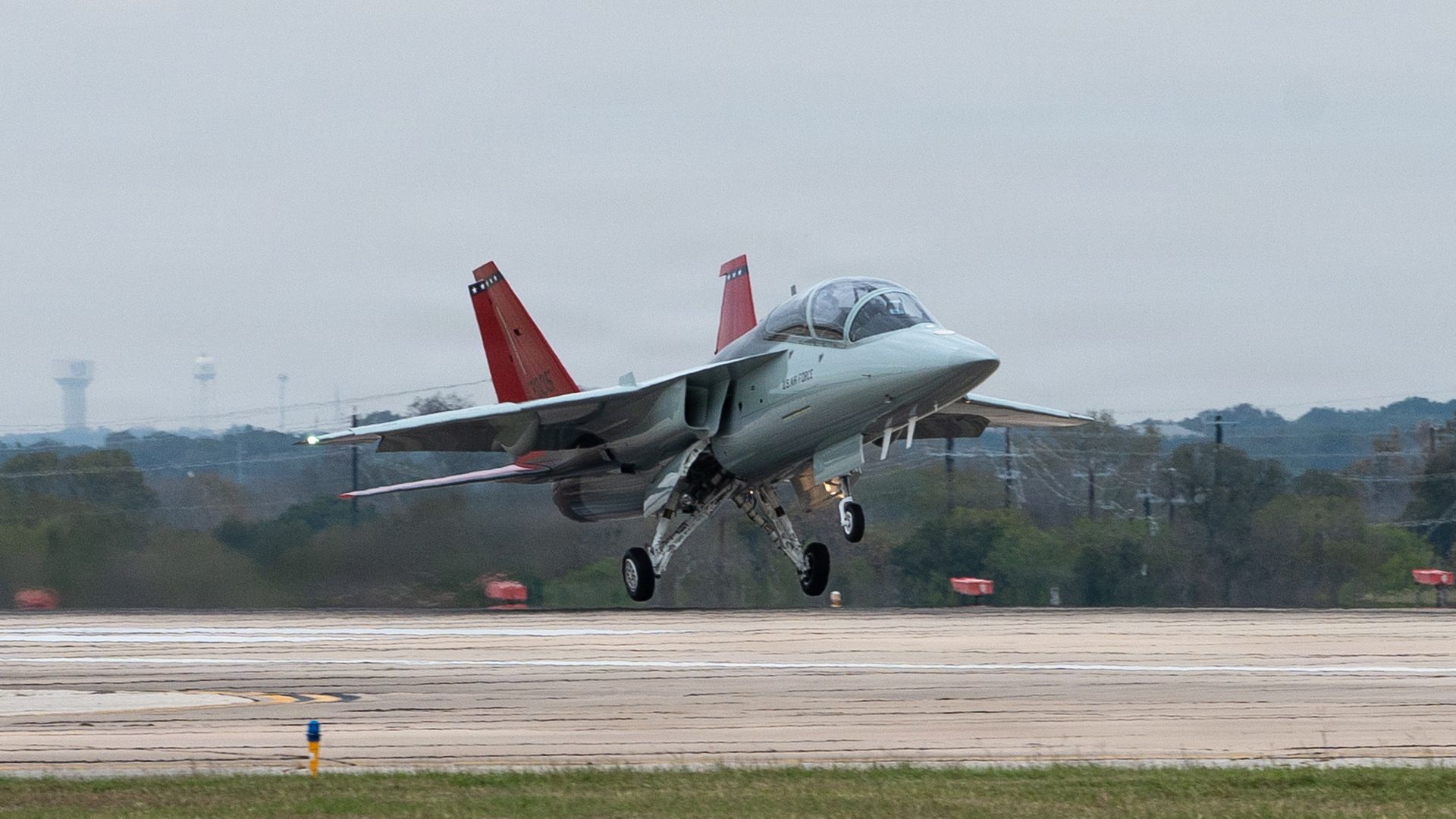
The United States Air Force (USAF) has received its first T-7A Red Hawk, marking a significant advancement in pilot training for modern combat aircraft. The aircraft arrived at Joint Base San Antonio-Randolph on December 5, 2025, and will be integrated into the 12th Flying Training Wing‘s 99th Flying Training Squadron. This delivery represents the beginning of a new era in the Air Force’s approach to training pilots for fifth- and sixth-generation aircraft.
The T-7A Red Hawk is intended to replace the aging T-38C Talon, which has been in service since the early 1960s. As the Air Force transitions to this modern aircraft, it aims to enhance the training experience by utilizing advanced technologies, including high-fidelity simulators and live-virtual constructive training methods. This system is designed to prepare pilots for the complexities of modern aerial combat, focusing on critical skills such as sensor management and rapid decision-making.
Integrating Modern Training Systems
The Air Education and Training Command (AETC) has ambitious plans for the T-7A, targeting initial operational capability by August 2027 with 14 jets assigned to the 99th FTS. The aircraft will be part of a comprehensive training ecosystem that includes ground-based instruction and innovative simulation techniques. This approach allows students to practice complex missions without expending fuel, blending live flights with virtual scenarios to enhance their readiness.
During the aircraft’s arrival, Boeing test pilot Steve Schmidt flew the T-7A alongside leadership from the 99th FTS. A formal ceremony to commemorate the aircraft’s entry into service is expected to take place in the near future. Air Force leaders have emphasized that the T-7A serves as concrete evidence of the program’s momentum and a necessary modernization of training capabilities.
The T-7A features open-architecture avionics and fly-by-wire controls, which will allow instructors to adapt the aircraft’s performance to suit individual student needs. This flexibility is anticipated to optimize training efficiency and potentially reduce the number of flight hours required for proficiency.
Addressing Challenges and Future Prospects
The T-7A program has faced various challenges during its development, including technical issues and supply chain disruptions. Independent reports have highlighted concerns related to stability at high angles of attack and ejection seat performance, which have delayed key milestones. Despite these setbacks, the Air Force’s planning indicates that the program is on track to deliver hundreds of aircraft and numerous simulators to eventually replace the T-38 fleet.
As modern fighters and bombers demand advanced skills from pilots, the successful integration of the T-7A could significantly enhance training throughput and operational readiness across various air bases. The transition to a new training platform is critical, as each year of delay in operational capability prolongs reliance on outdated aircraft, hindering the development of the necessary skills for contemporary aerial combat.
With the T-7A Red Hawk now in the hands of the USAF, the future of pilot training looks increasingly promising. The aircraft’s innovative design and training methodologies are set to reshape the way pilots are prepared for the challenges of modern warfare, ensuring that the Air Force remains at the forefront of aerial combat capabilities.

Meta Plans Major Layoffs as AI Costs Surge

Alberta’s Referendum Could Pave Way for U.S. Statehood

Minooka District 201 Plans Enhanced Bilingual Support for Students

Canmore Approves Multiple Development Permits for New Projects

Remembering Bradly Castillo Shearsmith: A Life of Friendship and Joy

BIS Urges Watchdogs to Integrate Synthetic Risk Transfers in Stress Tests

Teva Transforms: Shifting Focus from Generics to Branded Success

Apple Launches AirPods Max 2 with Enhanced Audio Features

Ontario Ends Funding for Seven Supervised Injection Sites

Toyoake City Proposes Daily Two-Hour Smartphone Use Limit

Pedestrian Fatally Injured in Esquimalt Collision on August 14

B.C. Review Reveals Urgent Need for Rare-Disease Drug Reforms

Dark Adventure Game “Bye Sweet Carole” Set for October Release

Konami Revives Iconic Metal Gear Solid Delta Ahead of Release

Victoria’s Pop-Up Shop Shines Light on B.C.’s Wolf Cull

Jimmy Lai’s Defense Challenges Charges Under National Security Law

Snapmaker U1 Color 3D Printer Redefines Speed and Sustainability

Apple Expands Self-Service Repair Program to Canada
-
 Science12 months ago
Toyoake City Proposes Daily Two-Hour Smartphone Use Limit
-
 Top Stories12 months ago
Pedestrian Fatally Injured in Esquimalt Collision on August 14
-
 Health12 months ago
B.C. Review Reveals Urgent Need for Rare-Disease Drug Reforms
-
 Technology12 months ago
Dark Adventure Game “Bye Sweet Carole” Set for October Release
-
 Technology12 months ago
Konami Revives Iconic Metal Gear Solid Delta Ahead of Release
-
 Lifestyle12 months ago
Victoria’s Pop-Up Shop Shines Light on B.C.’s Wolf Cull
-
 World12 months ago
Jimmy Lai’s Defense Challenges Charges Under National Security Law
-
 Technology12 months ago
Snapmaker U1 Color 3D Printer Redefines Speed and Sustainability
-
 Technology12 months ago
Apple Expands Self-Service Repair Program to Canada
-

 Technology12 months ago
AION Folding Knife: Redefining EDC Design with Premium Materials
-

 Technology12 months ago
Solve Today’s Wordle Challenge: Hints and Answer for August 19
-

 Business12 months ago
Gordon Murray Automotive Unveils S1 LM and Le Mans GTR at Monterey