
World
Boeing Faces Sanctions as Trump Approves $11 Billion Arms Deal

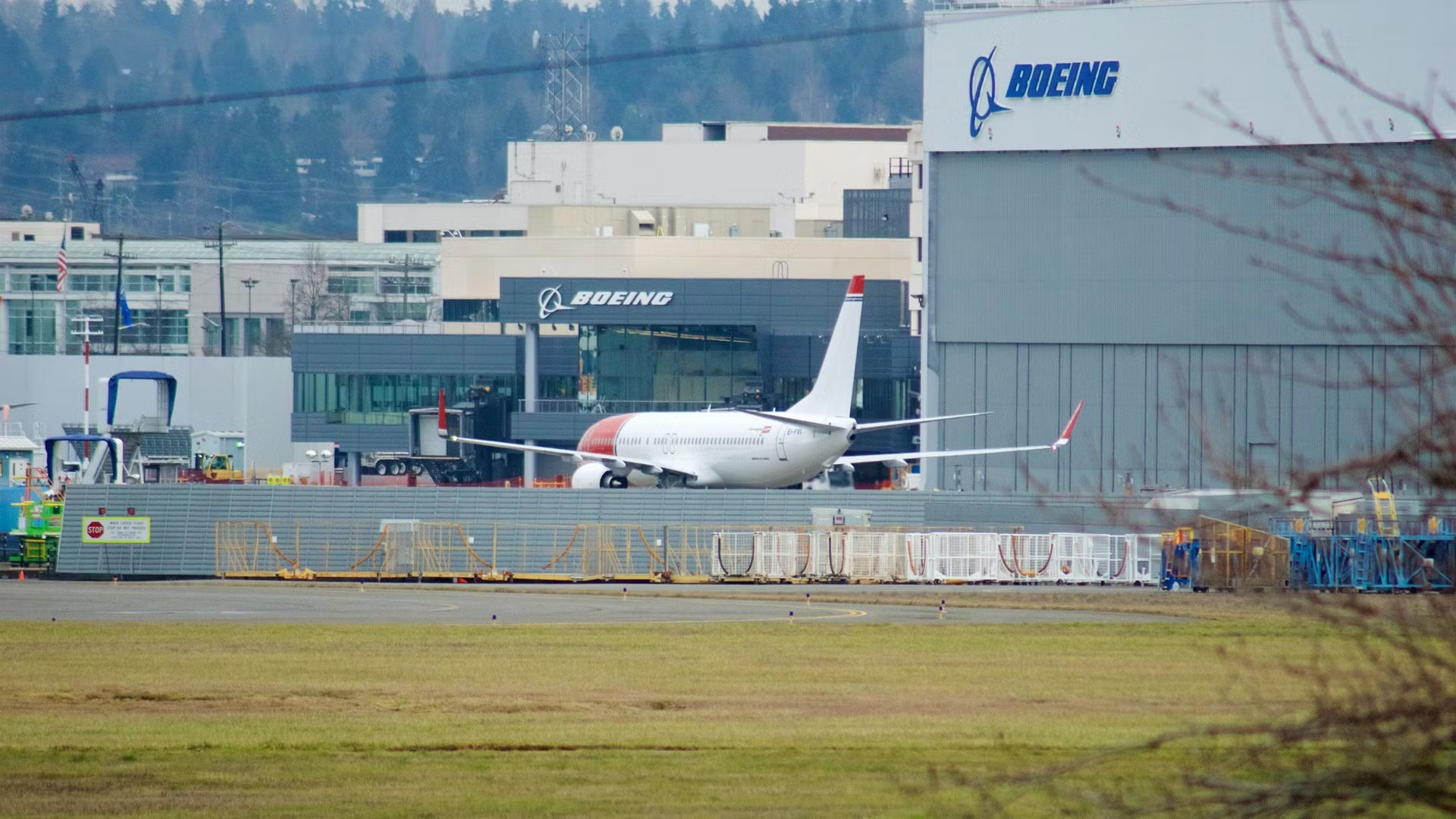
The People’s Republic of China has imposed sanctions on Boeing following the approval of a significant arms package to Taiwan by the United States, valued at approximately $11 billion. This decision comes in the context of heightened tensions between the U.S. and China regarding Taiwan’s status and security. The sanctions, announced by Chinese President Xi Jinping and the foreign ministry in Beijing, target ten individuals and twenty U.S. defense companies, including Boeing’s production hub in St. Louis, Missouri.
The arms deal, described as one of the largest ever approved for Taiwan, encompasses various military assets including missile systems and drones. Notably, it surpasses the value of previous arms sales made during the Biden Administration. While the deal has received the green light from President Donald Trump, it still requires approval from the U.S. Congress, which adds another layer of complexity to the situation.
China’s Strong Response
In a decisive statement, the Chinese foreign ministry condemned the arms sale, asserting that it undermines regional stability and could heighten the likelihood of conflict between the two nations. Officials emphasized that the Taiwan issue is a core matter of China’s national interest, with the ministry declaring, “Any provocative actions that cross the line on the Taiwan issue will be met with a strong response from China.”
As part of the sanctions, China will freeze any assets that Boeing currently holds within its territory and prohibit domestic companies and individuals from conducting business with the U.S. aerospace giant. Additionally, specific individuals, including Palmer Luckey, founder of Anduril Industries, have been banned from entering China. Luckey has publicly expressed strong support for Taiwan, suggesting that the island faces significant threats from the Chinese Communist Party.
The Broader Implications
These events signal an escalation in the ongoing geopolitical tensions between the U.S. and China, particularly concerning Taiwan’s status. The U.S. maintains unofficial diplomatic relations with Taiwan, which include a commitment to support the island with defensive weaponry. The U.S. State Department has indicated that such arms sales are intended to bolster regional security, promote political stability, and maintain military balance.
While the sanctions may not severely impact the affected companies in the short term, they reflect China’s increasing willingness to retaliate against U.S. actions that it perceives as provocative. The relationship between the People’s Republic of China and the Republic of China (Taiwan) remains fraught, rooted in a civil war that has not officially concluded. China views Taiwan as a breakaway province that must be reunified, while Taiwan considers itself an independent and democratic state.
The situation is further complicated by the fact that Taiwan operates with its own government, military, and constitution, and most Taiwanese people prefer maintaining the current status quo, fearing that a formal declaration of independence could provoke a military response from China. Only a few countries globally recognize Taiwan as an independent nation, and the international community continues to navigate this complex scenario with caution.
As the geopolitical landscape evolves, the implications of the arms deal and subsequent sanctions will likely continue to unfold, shaping the future of U.S.-China relations and Taiwan’s security.

Meta Plans Major Layoffs as AI Costs Surge

Alberta’s Referendum Could Pave Way for U.S. Statehood

Minooka District 201 Plans Enhanced Bilingual Support for Students

Canmore Approves Multiple Development Permits for New Projects

Remembering Bradly Castillo Shearsmith: A Life of Friendship and Joy

BIS Urges Watchdogs to Integrate Synthetic Risk Transfers in Stress Tests

Teva Transforms: Shifting Focus from Generics to Branded Success

Apple Launches AirPods Max 2 with Enhanced Audio Features

Ontario Ends Funding for Seven Supervised Injection Sites

Toyoake City Proposes Daily Two-Hour Smartphone Use Limit

Pedestrian Fatally Injured in Esquimalt Collision on August 14

B.C. Review Reveals Urgent Need for Rare-Disease Drug Reforms

Dark Adventure Game “Bye Sweet Carole” Set for October Release

Konami Revives Iconic Metal Gear Solid Delta Ahead of Release

Victoria’s Pop-Up Shop Shines Light on B.C.’s Wolf Cull

Jimmy Lai’s Defense Challenges Charges Under National Security Law

Snapmaker U1 Color 3D Printer Redefines Speed and Sustainability

Apple Expands Self-Service Repair Program to Canada
-
 Science12 months ago
Toyoake City Proposes Daily Two-Hour Smartphone Use Limit
-
 Top Stories12 months ago
Pedestrian Fatally Injured in Esquimalt Collision on August 14
-
 Health12 months ago
B.C. Review Reveals Urgent Need for Rare-Disease Drug Reforms
-
 Technology11 months ago
Dark Adventure Game “Bye Sweet Carole” Set for October Release
-
 Technology12 months ago
Konami Revives Iconic Metal Gear Solid Delta Ahead of Release
-
 Lifestyle12 months ago
Victoria’s Pop-Up Shop Shines Light on B.C.’s Wolf Cull
-
 World12 months ago
Jimmy Lai’s Defense Challenges Charges Under National Security Law
-
 Technology12 months ago
Snapmaker U1 Color 3D Printer Redefines Speed and Sustainability
-
 Technology12 months ago
Apple Expands Self-Service Repair Program to Canada
-

 Technology12 months ago
AION Folding Knife: Redefining EDC Design with Premium Materials
-

 Technology12 months ago
Solve Today’s Wordle Challenge: Hints and Answer for August 19
-

 Business12 months ago
Gordon Murray Automotive Unveils S1 LM and Le Mans GTR at Monterey